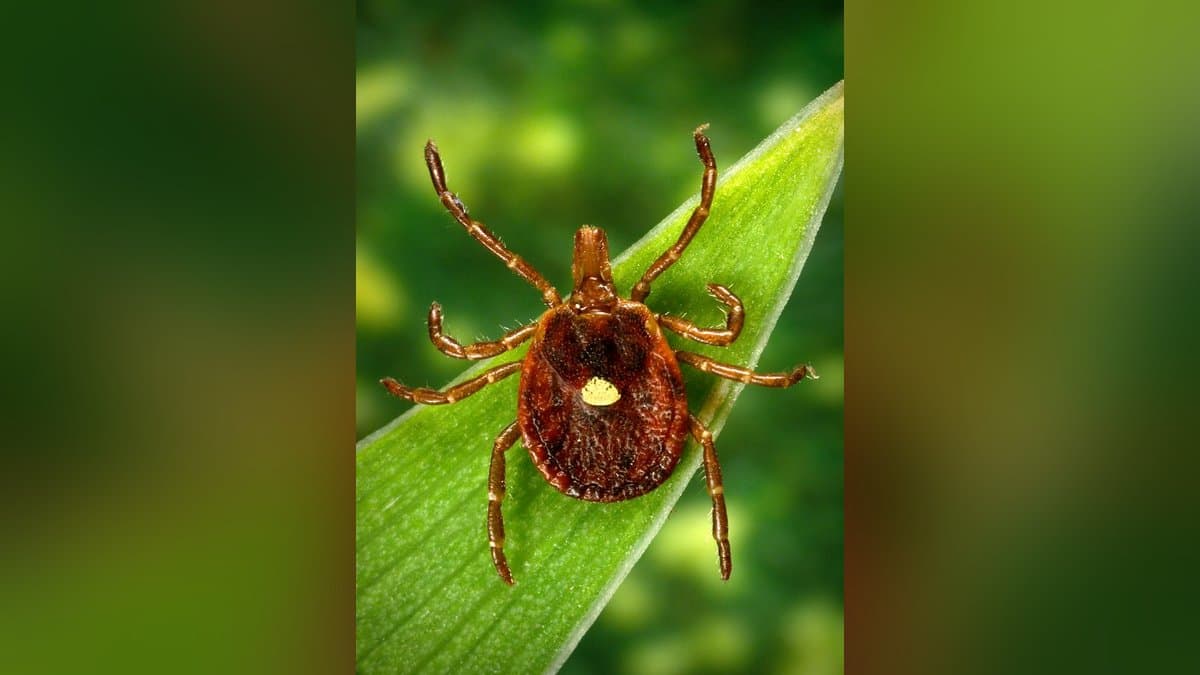
What a Lone Star Tick Looks Like and How to Identify One
The lone star tick (scientifically, Amblyomma americanum) is named for the single bright white dot on the back of the adult female. The dot is roughly the size of a pencil-tip mark and sits in the middle of a dark reddish-brown body. Adult males have several light streaks instead of a single dot. Nymphs are smaller and look like dark sesame seeds with no obvious markings. Larvae are tinier still and have only six legs (all other life stages have eight).
Adult lone star ticks are about the size of a small apple seed before feeding (4 to 6 mm) and can swell to the size of a pencil eraser after a full meal of blood. Nymphs are the more common biter because they are small enough to go unnoticed for hours and they are out in peak numbers from late spring through summer. Larvae usually bite in late summer through early fall. All three biting stages can transmit disease.
Two other ticks get confused with the lone star. The black-legged or deer tick (Ixodes scapularis) is the Lyme disease tick and is smaller and darker with no white dot. The American dog tick (Dermacentor variabilis) is larger and has a mottled gray-and-white shield on its back. Knowing which tick you have matters because the diseases each one transmits are different. Lone star ticks do not transmit Lyme disease. Black-legged ticks do not cause Alpha-Gal Syndrome with anywhere near the frequency that lone stars do.
Where Lone Star Ticks Live and Why Their Range Is Expanding
Historically, lone star ticks were a southeastern and south-central species, common in states like Texas, Oklahoma, Arkansas, Missouri, Tennessee, Georgia, the Carolinas, and Virginia. That picture has changed substantially in the last 30 years. The CDC now documents established populations in localized pockets as far north as Maine, including parts of New York, Connecticut, Rhode Island, and Wisconsin, with reported encounters and projected expansion across Minnesota, Michigan, Massachusetts, New Hampshire, Vermont, and the central Midwest (CDC Lone Star Tick Surveillance).
Several factors are at play in the expansion, and researchers do not fully agree on the relative weight of each. The most clearly documented driver is the recovery of white-tailed deer populations across the eastern United States since the 1940s. Deer are the keystone host for adult lone star ticks, and where deer populations rebounded after a century of overharvesting, the ticks reclaimed their historical range. Other contributing factors that have been proposed include the expansion of suburban-wildland interfaces (where humans, deer, and ticks share space more than they used to), reforestation of farmland, declines in tick predators, fragmented habitat patterns that concentrate hosts, broader land-use changes, and shifting weather patterns. The scientific debate over which factors matter most continues. What is not in dispute is that the lone star tick is showing up in places it was not commonly seen 30 years ago, and human encounters are increasing.
The 2026 tick season has been a hard one. Emergency department visits for tick bites in the Northeast hit 58 per 100,000 in 2026, the highest regional rate in CDC tracking, with the Midwest at 40 per 100,000 (CDC tick bite surveillance data, 2026). Public health departments in Massachusetts, Connecticut, and Long Island have specifically flagged the lone star tick as an emerging concern that residents need to learn to recognize the way they learned to recognize black-legged ticks for Lyme disease.
Alpha-Gal Syndrome Is the Most Recognizable Disease Lone Star Ticks Cause
Alpha-Gal Syndrome (AGS) is the reason most people who have heard of the lone star tick have heard of it. AGS is a delayed allergic reaction to red meat and other mammalian-derived products, caused by an immune response to a sugar molecule called galactose-α-1,3-galactose (alpha-gal). When a lone star tick bites, components of its saliva (including alpha-gal-containing molecules) enter the bloodstream and prompt some people to produce IgE antibodies to alpha-gal. Once those antibodies exist, exposure to alpha-gal through food (beef, pork, lamb, venison), medications (heparin, some monoclonal antibodies), or medical products (gelatin in vaccines and capsules, bovine surgical glues) can trigger an allergic reaction. Our Alpha-Gal Medication Checker screens any drug's FDA label, manufacturer by manufacturer, for these hidden ingredients.
The clinical hallmark of AGS is timing. Most food allergies cause reactions within minutes. AGS reactions usually show up 3 to 8 hours after eating mammalian meat, often in the middle of the night because dinner is the typical trigger meal. People wake up around 2 AM with hives, severe abdominal pain, vomiting, or full anaphylaxis, and rarely connect the symptoms to the steak they ate hours earlier. This delayed pattern is why many AGS patients cycle through gastroenterology, dermatology, and emergency medicine before someone orders an alpha-gal IgE test.
The CDC has documented more than 110,000 suspected AGS cases in the United States between 2010 and 2022 and estimates the true number affected is closer to 450,000, with the actual incidence likely three to four times higher than suspected counts because AGS is not nationally notifiable (CDC MMWR, 2023). Cases cluster in the southeastern and mid-Atlantic regions, but reports are increasing in newly endemic areas as the lone star tick expands. A single tick bite is enough to trigger AGS in susceptible people, and the more bites a person has, the higher the alpha-gal IgE level tends to climb.
Our companion guide on the medications, vaccines, and medical products that contain alpha-gal covers what AGS patients need to flag in healthcare settings, including heparin in IV flushes, gelatin in pill capsules, and bovine glues used in surgery. If you have been diagnosed with AGS or suspect you might have it, that guide is the practical companion to this one.
Other Diseases Lone Star Ticks Transmit
Alpha-Gal Syndrome gets most of the headlines, but the lone star tick transmits several other diseases worth knowing about. None of them are Lyme disease, despite frequent patient assumptions and physician confusion. The black-legged (deer) tick is the Lyme vector, not the lone star tick.
Ehrlichiosis
Ehrlichiosis is the most common bacterial infection transmitted by lone star ticks in the United States. Two organisms cause it. Ehrlichia chaffeensis is responsible for human monocytic ehrlichiosis (HME), and Ehrlichia ewingii causes a related illness more often seen in immunocompromised patients. Symptoms typically start 1 to 2 weeks after a bite and include fever, chills, severe headache, muscle aches, fatigue, nausea, and sometimes a rash. CDC surveillance data show 57% of reported cases require hospitalization and the case-fatality rate is roughly 1% to 2% overall, though higher in children under 5 and adults over 70 (CDC Ehrlichiosis Surveillance, 2008-2012 data). Doxycycline is the first-line antibiotic and should be started on clinical suspicion rather than delayed for confirmatory testing, because outcomes are best when treatment begins within the first week of illness.
Southern Tick-Associated Rash Illness (STARI)
STARI is a Lyme-like illness that occurs in the southeastern United States and follows lone star tick bites. The hallmark is a bull's-eye rash similar to the erythema migrans of Lyme disease, with associated fever, fatigue, and muscle aches. The pathogen causing STARI has not been definitively identified despite decades of investigation, which is unusual for a recognized clinical syndrome. STARI is typically milder than Lyme disease and resolves on its own or with doxycycline. The clinical importance is that a bull's-eye rash from a lone star tick bite in the South is more likely to be STARI than Lyme, which changes the diagnostic workup and the prognosis.
Heartland Virus and Bourbon Virus
Two emerging viruses transmitted by the lone star tick were discovered in the last two decades. Heartland virus was identified in Missouri in 2009 and has now been reported across the Midwest and Southeast. Bourbon virus was identified in Kansas in 2014. Both cause similar symptoms (fever, fatigue, low platelets, low white blood cells, body aches), both can be severe and occasionally fatal, and both have no specific treatment beyond supportive care. Reported cases remain rare (fewer than 100 documented for each virus), but underdiagnosis is likely because clinicians do not always test for them.
Tularemia
Tularemia is a rare bacterial infection caused by Francisella tularensis. It can be transmitted by lone star ticks (and other tick species) as well as by contact with infected animals. Symptoms vary by route of exposure but commonly include fever, an ulcer at the bite site, swollen lymph nodes, and in severe cases pneumonia. Tularemia is dangerous if untreated, with mortality up to 30% in some forms, but it responds well to antibiotics like streptomycin or gentamicin. Cases are uncommon in the United States (around 200 per year nationwide) but the lone star tick range overlaps with several endemic regions.
What to Do If You Find a Lone Star Tick Attached to You
Remove the tick promptly with fine-tipped tweezers. Grasp the tick as close to the skin's surface as possible and pull upward with steady, even pressure. Do not twist or jerk, which can break off the mouthparts in the skin. Avoid the home remedies that get passed around (matches, nail polish, petroleum jelly), because they do not work and can actually make the tick regurgitate saliva into the wound, increasing disease transmission risk.
After removal, clean the bite area with rubbing alcohol or soap and water. Wash your hands. Save the tick if you can in a sealed bag or vial with a small amount of rubbing alcohol or by sticking it to a piece of clear tape. Note the date and location on your body where you found it. If you develop symptoms in the following days or weeks, having the tick available for identification or species-specific testing can help your doctor make a faster diagnosis.
Watch the bite site and your overall health for 30 days. Most tick bites do not cause illness, but the symptoms to look out for include fever, an expanding rash (especially a bull's-eye pattern), severe headache, muscle aches, joint pain, swollen lymph nodes near the bite, and any unusual late-onset (3-8 hour) allergic reactions to red meat. Photograph any rash that develops. Even rashes that fade can be diagnostic when photographed with a date stamp.
How to Prevent Lone Star Tick Bites
Prevention is more effective than treatment, because the diseases lone star ticks transmit (especially AGS) are easier to avoid than to manage once they develop. The CDC's recommended approach combines repellents on skin, treated clothing, behavioral changes, and post-exposure tick checks.
Use EPA-registered insect repellents on exposed skin. DEET (20% to 30% concentration), picaridin (20%), oil of lemon eucalyptus (30%), IR3535, and 2-undecanone are all proven effective. Apply per product instructions, and reapply during long outdoor exposures. For children, follow age-specific guidance on each product label.
Treat clothing and gear with permethrin (0.5%). Permethrin is a fabric-applied insecticide that kills ticks on contact and remains effective through multiple washings. Pre-treated clothing is sold commercially, or you can spray your own outdoor clothing, shoes, socks, and pack covers. Do not apply permethrin to skin. The combination of skin repellent plus permethrin-treated clothing is the most effective prevention strategy currently available.
Wear long pants and tuck them into socks when walking in tick habitat. Stay on cleared trails rather than walking through tall grass and leaf litter where ticks wait for hosts. After outdoor exposure, do a full-body tick check using a mirror or a partner, paying extra attention to the scalp, behind ears, under arms, in the groin, behind the knees, and around the waistband. Shower within 2 hours of coming inside, which both rinses off unattached ticks and gives you a chance for a thorough check. Tumble-dry outdoor clothing on high heat for at least 10 minutes to kill any ticks that hitched a ride.
For your yard, the CDC recommends clearing tall grass and brush, especially at the edges of woods and around stone walls and woodpiles. Wood chip or gravel barriers between lawn and wooded areas reduce tick migration into yard space. Acaricide treatments are an option for high-risk yards. Keep playground equipment, decks, and seating areas away from yard edges and trees. Check pets daily during tick season and use veterinarian-recommended tick preventives.
When to See a Doctor and Get Tested
Most tick bites do not cause illness, but several symptoms warrant a medical visit. Any fever, body aches, or flu-like illness within 30 days of a known or possible tick bite needs evaluation. An expanding rash at the bite site, especially a bull's-eye pattern, needs to be photographed and shown to a clinician. Severe headache, neurological symptoms, or significant fatigue after a tick bite warrants prompt assessment. Delayed-onset (3-8 hour) hives, gut symptoms, or anaphylactic reactions after eating red meat are the classic presentation of Alpha-Gal Syndrome and warrant testing.
Testing for Alpha-Gal Syndrome is a simple blood test that measures IgE antibodies specific to galactose-α-1,3-galactose. The test is offered by major commercial labs (Quest, LabCorp) and is covered by most insurance when ordered for symptoms consistent with delayed meat allergy. A positive result confirms sensitization, but the diagnosis of AGS also requires clinical correlation, meaning the IgE positivity plus a history of consistent symptoms after mammalian meat exposure. Some sensitized people never develop clinical AGS, and IgE levels can wax and wane over time.
Ehrlichiosis and other tickborne bacterial infections are typically diagnosed clinically (symptoms plus tick exposure) and treated empirically with doxycycline. Confirmatory antibody testing exists but takes weeks to return and should not delay treatment. Heartland and Bourbon virus testing is available through state health departments and the CDC for cases with consistent presentations and lab abnormalities. STARI does not have a specific diagnostic test and is diagnosed by the rash pattern and exclusion of Lyme disease.
One email when Alpha-Gal Syndrome trials change or an FDA decision lands. No newsletter, no spam.
Frequently Asked Questions About Lone Star Ticks
What does a lone star tick look like?
An adult female lone star tick is dark reddish-brown with a single bright white dot in the middle of her back. Adult males have several light streaks instead of a single dot. The adult is about the size of a small apple seed (4 to 6 mm) before feeding and swells to the size of a pencil eraser when engorged. Nymphs are smaller and look like dark sesame seeds. Larvae are tinier still and have only six legs (all other life stages have eight).
Do lone star ticks carry Lyme disease?
No. Lone star ticks do not transmit Lyme disease. Lyme disease is carried by the black-legged tick (Ixodes scapularis), also known as the deer tick. Lone star ticks can cause STARI, an illness with a Lyme-like bull's-eye rash, but STARI is a different syndrome with a less severe course, and its causative pathogen has not been identified.
Can a single lone star tick bite cause Alpha-Gal Syndrome?
Yes, a single lone star tick bite can trigger Alpha-Gal Syndrome in susceptible people. Most cases follow a single recognized bite or a few bites in someone with regular outdoor exposure. The more lone star tick bites a person has, the higher the alpha-gal IgE level tends to climb, but susceptibility appears to vary substantially between individuals.
Where in the United States do lone star ticks live?
Lone star ticks are established across the Southeast, mid-Atlantic, and south-central United States, including Texas, Oklahoma, Arkansas, Missouri, Tennessee, Georgia, the Carolinas, and Virginia. The CDC now documents established populations as far north as Maine and as far west as central Iowa, with reported encounters in Minnesota, Wisconsin, Michigan, New York, Massachusetts, New Hampshire, and Vermont. The range has expanded substantially over the past three decades because of white-tailed deer recovery and climate change.
How do I remove a lone star tick?
Use fine-tipped tweezers to grasp the tick as close to the skin as possible. Pull upward with steady, even pressure. Do not twist, jerk, burn, or apply substances like nail polish or petroleum jelly. After removal, clean the bite area with rubbing alcohol or soap and water. Save the tick in a sealed bag or piece of clear tape in case it is needed for identification later.
What diseases can lone star ticks cause?
Lone star ticks can cause Alpha-Gal Syndrome (a delayed allergic reaction to red meat and other mammalian-derived products), ehrlichiosis (a bacterial infection causing fever, chills, headache, and muscle aches), STARI (Southern Tick-Associated Rash Illness, a Lyme-like rash without a confirmed pathogen), Heartland virus disease, Bourbon virus disease, and tularemia. They do not transmit Lyme disease.
How long does a lone star tick need to be attached to transmit disease?
The attachment time required for disease transmission varies by pathogen. Ehrlichiosis transmission can occur within hours of attachment. The exact threshold for alpha-gal sensitization is not well-defined and may not require prolonged attachment, since tick saliva enters the wound at the start of feeding. Faster removal generally reduces disease risk for all tick-borne illnesses, so prompt detection and removal matter regardless of pathogen.
How do I test for Alpha-Gal Syndrome after a tick bite?
Alpha-Gal Syndrome is diagnosed with a blood test that measures IgE antibodies specific to galactose-α-1,3-galactose. The test is offered by commercial labs (Quest, LabCorp) and most insurance plans cover it when ordered for symptoms consistent with delayed meat allergy. Diagnosis requires both a positive IgE result and a clinical history of consistent reactions to mammalian meat exposure.
Can lone star ticks survive winter?
Yes, lone star ticks can survive winter in leaf litter and other protected habitats. Warmer winters from climate change have allowed populations to establish farther north, and some ticks remain active during mild winter days even in northern parts of their range. The lifecycle can take up to two years to complete depending on host availability and conditions.
Do dogs and cats get Alpha-Gal Syndrome from lone star ticks?
Dogs and cats are bitten by lone star ticks routinely and can contract ehrlichiosis and other tick-borne diseases. Whether pets develop Alpha-Gal Syndrome the way humans do is not well-established, although case reports of meat-related allergic reactions in dogs after tick bites exist. Pets do play a role in carrying ticks into homes and yards, so veterinary-recommended tick prevention matters for both pet and human health.
Find Alpha-Gal Syndrome Trials and Resources
If you suspect you may have Alpha-Gal Syndrome after one or more lone star tick bites, the next step is a conversation with an allergist who has experience with AGS. Diagnosis is more straightforward than the typical food allergy workup because the alpha-gal IgE test is specific, but treatment is mostly avoidance plus management of accidental exposures with antihistamines and (when appropriate) epinephrine auto-injectors.
Active research into AGS continues. Several clinical trials are studying immunotherapy approaches that might desensitize patients to alpha-gal, faster diagnostic tests, and the mechanism by which tick saliva drives the immune response in the first place. Trial Friend lists active Alpha-Gal Syndrome trials in plain language, including which subgroups each trial enrolls and where the sites are. If you have a confirmed AGS diagnosis and want to participate in research, that is the place to start.
If you found this post because someone in your life is dealing with AGS or you are worried after a bite, our Alpha-Gal Syndrome medications and medical products guide is the practical reference for what to flag in healthcare settings, including the heparin and gelatin exposures that catch most patients off guard. The lone star tick is small. The systems people need to build around it after a bite are not.