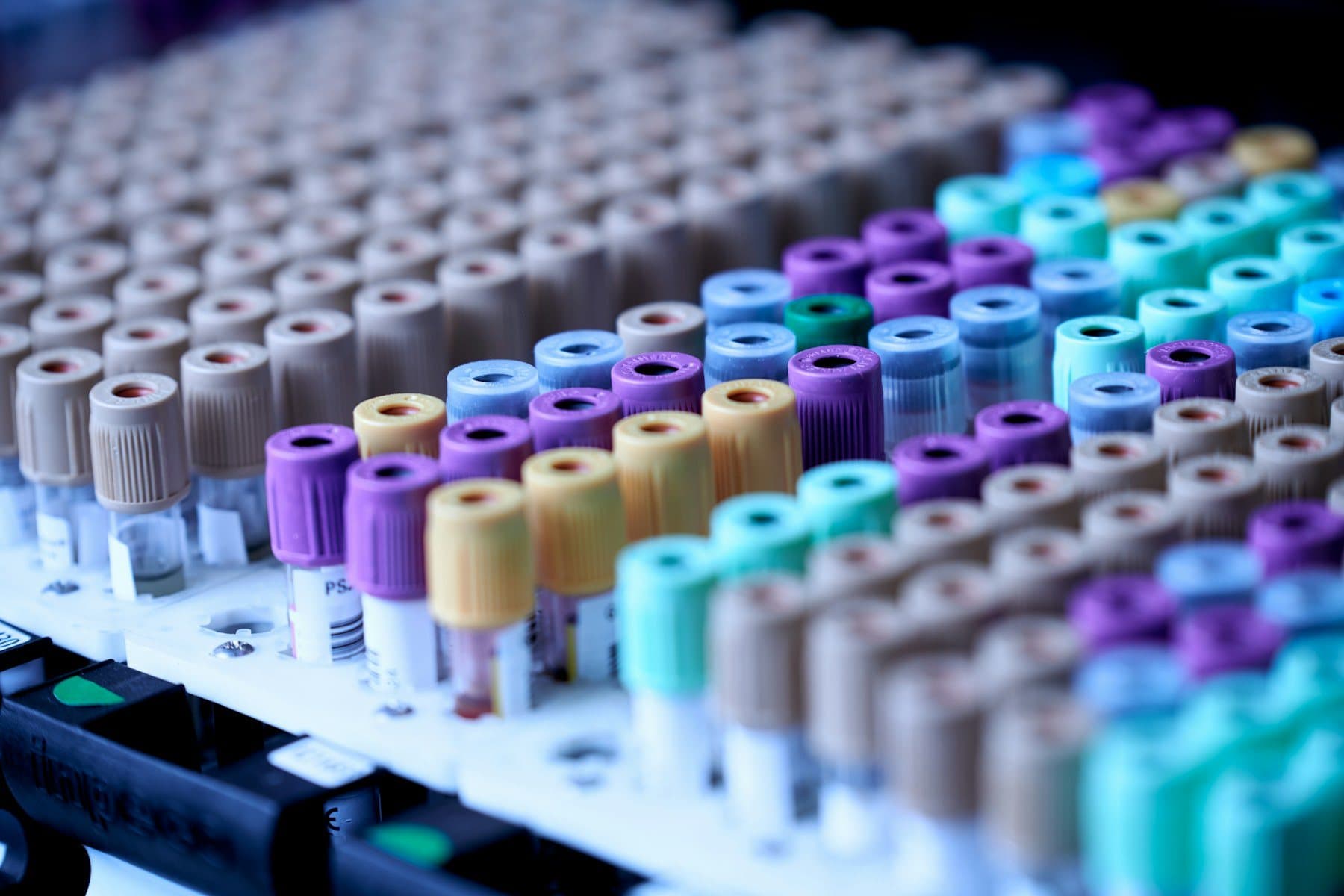
Before a nurse in Maryland draws your blood for a Lyme disease test, state law requires that you be handed a written notice. It says that standard Lyme tests often give false negative and false positive results. A negative result, the notice adds, does not necessarily mean you do not have Lyme disease (Maryland Health-General § 20-1701). Only a handful of states require a notice of this kind. In most of the country the blood goes to the lab without a word about what the test can and cannot find.
That notice is a fair summary of the problem this guide tackles. At least 14 different laboratory tests look for Lyme disease and its tick-borne coinfections. They range from the standard 2-step antibody test to urine antigen assays, T-cell tests and an enrichment culture that needs 3 blood draws in 8 days. Each one takes a different sample, catches the infection at a different stage and is scored by a different rulebook. A typical primary care visit offers 1 of them. This guide explains what each test needs from you and who decided what counts as positive. It also shows where the CDC and the physicians who treat persistent Lyme disagree, and it lists the published prices. The last sections give the questions that get a fuller picture out of an 18-minute appointment.
Which Lyme Disease Tests Exist, and What Each One Looks For
Lyme tests fall into 2 families. Antibody tests look for your immune system's response to the bacterium Borrelia burgdorferi, and direct tests look for the bacterium itself, its DNA or its proteins. Every FDA-cleared Lyme test is an antibody test, and no direct test has been cleared by the FDA as of October 25, 2026 (IDSA 2020; openFDA 510(k) database). The table below lists the 9 Lyme tests a patient is most likely to meet. For each one it gives the sample needed, who sets the positive rule and the price when a lab publishes one.
| Test | Sample | Who sets the positive rule | FDA status | Best published figures | Listed price |
|---|---|---|---|---|---|
| First-tier immunoassay (ELISA or EIA, including C6 and VlsE1/pepC10) | Blood serum, or a finger stick for the Sofia 2 point-of-care version | The kit maker sets a numeric cutoff; under CDC rules a positive is never final on its own | Cleared; dozens of kits since 1989 | C6 ELISA alone found 66.5% of people with the early rash, 2-tier found 35.2% (Wormser 2013) | IGeneX $95; not found on Quest or Labcorp pages |
| Standard 2-tier test (STTT), immunoassay then IgM and IgG Western blot | Same serum sample; the blot runs only if the first test is positive or equivocal | CDC, 1995 band rules: 2 of 3 IgM bands, 5 of 10 IgG bands | Cleared blot kits since 1996 | Early rash 25-48%, late Lyme 100%, specificity 99.5% (Branda 2011, Branda 2017) | Not found on Quest or Labcorp pages |
| Modified 2-tier test (MTTT), 2 immunoassays and no blot | Same serum sample | FDA-cleared kit pairings; both immunoassays must be positive | Cleared July 29, 2019; CDC accepted August 16, 2019 | Early rash 36-54% against 25% for STTT, same specificity (Branda 2017) | Not published; Labcorp code 164226, Quest code 39733 |
| IGeneX Lyme ImmunoBlot IgM and IgG | Serum, mailed in an IGeneX kit with a $20 deposit | IGeneX's own criteria, with the CDC reading printed beside it | Lab test not cleared; the kit it is built on was cleared in 2024 and 2025 under a third rule | FDA review of the kit: stage 1 IgG 58.3% against 30.0% for STTT (K233367) | $225 each; panels $490.50-$1,299 |
| PCR (DNA) on blood, spinal fluid, joint fluid, skin or urine | Depends on the site; joint fluid needs a needle aspiration, spinal fluid a lumbar puncture | Each lab's own assay and cutoff | None cleared | Joint fluid in Lyme arthritis 85%; blood in early untreated disease 34-62%; spinal fluid 17-38%; urine 7-13% | IGeneX $265 per sample type; culture-enhanced PCR $765 |
| Culture | Skin biopsy of the rash or several tubes of blood, grown for weeks | Growth of spirochetes confirmed by microscope and PCR | None cleared; rarely offered even at referral centers (IDSA 2020) | Blood 44% and skin 51% in the early rash stage (Wormser 2001; Nowakowski 2001) | No price found |
| Spinal fluid tests for nerve involvement (antibody index and CXCL13) | Spinal fluid and blood drawn at the same time | A ratio of antibody in spinal fluid to blood; CXCL13 against a lab cutoff | Antibody index runs as a lab-developed test; CXCL13 not cleared in the US | Antibody index 75% sensitive, 97% specific; CXCL13 89% and 96% (Blanc 2007; Rupprecht 2018) | No price found |
| T-cell tests (ELISpot, iSpot Lyme, IGeneX IgXSpot, LTT-MELISA) | Whole blood in special tubes that must reach the lab with the cells alive | Each lab counts spots against its own cutoff | None cleared | Developers report 84-89% sensitivity; the independent VICTORY study found 30-54% (Baarsma 2022) | IGeneX $295; Armin Labs by email only |
| Urine antigen tests (IGeneX Lyme Dot Blot Assay, Nanotrap urine test) | Urine; the Nanotrap test needs at least 40mL | Each lab's own reading | None cleared; CDC and FDA named urine antigen tests as unvalidated in 2005 | Nanotrap developer study: 24 of 24 early rash cases positive, 0 of 117 asymptomatic controls (Magni 2015); no independent study since | IGeneX price not listed; Galaxy publishes no prices |
The first 3 rows are what nearly every US clinic and hospital uses, and together they are what the CDC means by a recommended test. Everything from the fourth row down is either a research tool or a laboratory-developed test. That term means a test designed and run inside one certified laboratory without FDA review. The distinction decides what your insurer pays, which lab can run the test and whether a state warning notice applies. It is the thread that runs through the rest of this guide.
Timing shapes every antibody test in the table. The CDC's clinician page says antibody tests may be falsely negative during the first 4-6 weeks after infection. The FDA's consumer page says it may take several weeks for antibodies to develop. In a prospective study of 76 people with the Lyme rash, only about one third tested positive at the first visit. Almost two thirds were positive a few weeks later (Steere 2008). Early antibiotics can also blunt the antibody response. The CDC says treated patients may be less likely to seroconvert, and Johns Hopkins says results can remain negative despite infection after antibiotics.
Who Decides When a Lyme Western Blot Is Positive?
Three different rulebooks exist for reading the same Lyme blot, and a strip that is negative under one can be positive under another. The CDC's 1995 criteria count 10 IgG bands and 3 IgM bands, and IGeneX's in-house criteria count 6 and 5. The FDA-cleared iDart ImmunoBlot kits from 2024 and 2025 use a third rule that neither camp uses in practice.
A Western blot separates Borrelia proteins by size along a strip, measured in kilodaltons (kDa), and your antibodies darken the bands they recognize. The scoring rules decide which bands count and how many you need. The chart below draws one strip and reads it 3 ways.
The CDC rules come from the 1995 MMWR report of the Dearborn conference. The IGeneX criteria are from its Test Interpretations page, and the iDart rules are from the FDA decision summaries K233367 and K242872. The 21, 23 and 24 kDa labels used by the CDC and IGeneX all refer to the same OspC protein, whose size varies by strain. Trial Friend drew this on October 25, 2026 to show which bands each rule counts, not to score any individual result.
The 31 kDa and 34 kDa bands are the heart of the dispute. They are the outer surface proteins OspA and OspB, and the 1995 CDC report does not mention them at all. The band lists came from studies in 1993 and 1995 that chose the bands which best told Lyme patients from controls. OspA and OspB were not among them (Dressler 1993; Engstrom 1995). ILADS describes the Dearborn criteria as having been selected for a specificity of 99%. Its argument is that a rule built to avoid false positives in surveillance will miss real cases in the clinic (ILADS provider basics, 2026). The CDC's 2019 update describes the same 1994 conference as the origin of the 2-test method without stating a specificity target.
IGeneX built its criteria around those 2 bands, and it reports both readings on every result. Its position, published in the journal Pathogens in 2024, is that every blot is read by both in-house and CDC criteria. Both results go to the ordering physician (Shah and Ramasamy 2024). The critics answered in the same journal. Applying IGeneX-style criteria to FDA-cleared blot kits produced false positive or equivocal results in 12.4% of healthy controls, against 1.0% under CDC criteria (Porwancher 2023). Both sides disclosed commercial interests. The IGeneX authors work for IGeneX, and the lead critic holds Lyme diagnostic patents and consults for Pfizer, which has a Lyme vaccine under review in Europe.
The third rulebook almost nobody has heard of
A sister company of IGeneX called ID-FISH Technology took the ImmunoBlot through FDA review as a kit. The FDA cleared the IgG version on August 12, 2024 and the IgM version on June 12, 2025. In its review the FDA accepted a reading rule that differs from both the CDC's and IGeneX's. The kit requires a screening band called LSA plus bands from at least 2 protein groups. It counts the 31 and 34 kDa bands (FDA decision summaries K233367 and K242872). On the CDC's own reference panel the cleared IgG kit found 58.3% of stage 1 cases, against 30.0% for standard 2-tier testing, with 0 of 190 control samples positive. Those data were generated by the company and reviewed by the FDA rather than produced by an outside lab.
What has drawn almost no attention is where the cleared kits can be ordered. As of its August 2026 update, IGeneX's own site says the FDA-cleared kits are not yet available from any laboratory. It adds that results on the kits follow new criteria rather than CDC criteria. IGeneX's lab test, the one patients can order today, still runs as a laboratory-developed test with the disclaimer that it has not been cleared or approved by the FDA. Aetna's clinical policy bulletin (last reviewed July 21, 2026) already lists both iDart kits by name among tests it considers experimental. That leaves an odd situation in October 2026. The only FDA-cleared Lyme blot that counts OspA and OspB cannot be ordered anywhere. At least 1 large insurer already lists it as experimental, which usually means it is not covered.
Direct Lyme Tests, From Joint Fluid PCR to the Urine Dot Blot
Direct tests skip the immune system and look for the bacterium, which is why patients who feel ill after a negative antibody test are drawn to them. Their accuracy depends almost entirely on where the sample comes from. Borrelia DNA was found in the joint fluid of 85% of people with Lyme arthritis and in none of 64 controls (Nocton 1994). A biopsy of the rash itself found the bacterium's DNA in 80.9% of cases (Nowakowski 2001). Blood is a poorer hunting ground because few spirochetes circulate. Spinal fluid is poorer still, with PCR positive in 17-38% of nerve involvement cases across studies, and urine PCR found 7-13% (Lebech 2000; Nocton 1996).
The IDSA guideline accepts PCR in one setting, joint fluid or tissue from someone who already has a positive antibody test. It recommends against routine PCR of blood or spinal fluid (IDSA 2020). IGeneX sells Lyme PCR on 5 sample types for $265 each and recommends it when antibody tests are negative. Its own test interpretation page concedes that a negative blood or urine PCR has questionable value, because the number of organisms is often low or absent. Both statements can be true at once, which is the pattern with most tests in this guide.
Culture is the oldest direct method and the rarest. Growing Borrelia from blood takes several tubes and weeks of incubation, and it succeeds in roughly 44% of early rash cases in research hands (Wormser 2001). A commercial culture offered by Advanced Laboratory Services reported positive results in 94% of patients by week 16 (Sapi 2013). CDC scientists later found that 80% of the patient-derived sequences were identical to a laboratory reference strain, and said contamination could not be ruled out (Johnson 2014). That test is no longer central to the debate, but the episode shaped how the CDC talks about specialty labs.
The urine dot blot and the Nanotrap test
Patients ask about a urine test that looks for Lyme proteins rather than antibodies, and 2 exist. The IGeneX Lyme Dot Blot Assay reacts to the 23-25, 31, 39 and 93 kDa antigens in urine. IGeneX recommends it when blood tests including PCR come back negative. Its own limitations note says other microorganisms in urine can cross-react. The Nanotrap Lyme Antigen test, licensed from Ceres Nanosciences and offered by Galaxy Diagnostics, concentrates a fragment of the OspA protein from at least 40mL of urine. In the developer study all 24 newly diagnosed patients with the rash were positive and 0 of 117 asymptomatic people were. Among 100 patients under evaluation for persistent Lyme, 41 tested positive (Magni 2015). Trial Friend found no independent evaluation published since, and Galaxy's own FAQ says its validation data are unpublished.
The CDC and FDA addressed urine antigen tests together in 2005. Their joint notice grouped them with lymphocyte transformation tests and staining for cell-wall-deficient forms as tests whose accuracy had not been adequately established (MMWR, February 11, 2005). The IDSA guideline lists urine antigen among tests to avoid, and Columbia's Lyme center calls it relatively experimental. On the other side, ILADS names antigen capture techniques among emerging methods. The physicians who order these tests argue that a direct signal from the bacterium is the kind of evidence antibody tests cannot give. The Nanotrap numbers are striking, and they are a single developer study from 2015 that nobody has repeated.
Do T-Cell Tests Like ELISpot Work for Lyme Disease?
Developers of T-cell tests report 84-89% sensitivity, and the only large independent study found 30-54% sensitivity with specificity as low as 31%. Both sets of numbers are real, and they come from different hands.
T-cell tests measure a different arm of the immune system from antibody tests. White blood cells from a fresh blood sample are exposed to Borrelia proteins, and the lab counts the cells that release interferon-gamma in response. The appeal is that T-cell responses can appear before antibodies and may fade after treatment, which developers say makes the test useful for both early infection and follow-up. IGeneX calls its version IgXSpot and charges $295. Armin Labs in Germany sells an EliSpot and accepts blood from patients without a doctor's signature. A Dutch team developed Spirofind with Oxford Immunotec, which returned the license in 2018.
Developer figures come from Jin and colleagues (2013, Pharmasan Labs authors) and von Baehr and colleagues (2012). The independent figures come from the VICTORY study (Baarsma and colleagues, Lancet Infectious Diseases, 2022), which concluded these cellular tests were unfit for clinical use at that stage. In the same study the standard 2-tier test found 28.1% of mostly early cases, so no test performed well early.
The CDC and FDA named lymphocyte transformation tests in their 2005 notice, and the IDSA guideline says they should be avoided for lack of independent validation. A second independent study found that T-cell counts did not differ between people with active nerve involvement, people treated years earlier and healthy people who had been exposed. Its conclusion was that the test tracks exposure rather than active infection (van Gorkom 2018). Developers and the labs that sell the tests point to their own validation data and to a study showing interferon-gamma responses fading after treatment (Callister 2016). ILADS lists T-cell activation testing among the emerging methods it is watching. A patient weighing a $295 IgXSpot is choosing between those 2 bodies of evidence.
Coinfection Tests for Babesiosis, Anaplasmosis, Bartonella and Relapsing Fever, and Why They Are Rare Disease Tests
The same blacklegged tick can carry the parasite behind babesiosis, the bacterium behind anaplasmosis and a relapsing fever spirochete called Borrelia miyamotoi. None of them shows up on a Lyme test, and each needs its own order. At Quest the coinfection antibodies sit under code 16220, separate from the Lyme antibody code 39733. The CDC's own page says anaplasmosis occurs in up to about 10% of people with Lyme disease. Babesiosis matters most to catch because it is a parasite. Antibiotics that treat Lyme and anaplasmosis, such as doxycycline, do nothing against it. Babesiosis needs atovaquone with azithromycin, and a once-weekly antimalarial called tafenoquine is in trials for babesiosis, including one for long-lasting cases.
These are rare diseases in the formal sense. Babesiosis had 3,586 reported US cases in 2023. Babesiosis, anaplasmosis and bartonellosis are all listed by the NIH's GARD, NORD and Orphanet, as Trial Friend's coinfection guide explains. The testing problem looks the way it does for many rare diseases. The tests exist, but a clinician has to think of the disease to order them. The CDC's most recent clinician survey found that providers in high-incidence states were far more likely to know Lyme occurs locally than to know the same about ehrlichiosis (Adams 2026). Ehrlichiosis is a sister infection to anaplasmosis. The table below covers what each coinfection test needs and how it is read.
| Infection and tests | Sample and timing | How it is read | What is known about accuracy | Listed price |
|---|---|---|---|---|
| Babesiosis: blood smear, PCR, IFA antibody | Whole blood for smear and PCR during illness; serum for antibody | Smear: parasite rings inside red cells, read by a person, not a machine; ask for a manual review (CDC). IFA: an antibody titer | IFA finds 88-96% of B. microti cases (Krause 1994); PCR stays positive after the smear turns negative (Wang 2015); a West Coast infection can read negative on a B. microti test | IGeneX IFA $160, PCR $230, FISH $220, ImmunoBlot $225 |
| Anaplasmosis: PCR, blood smear, paired IFA | Whole blood in the first week for PCR; a second blood draw 2-10 weeks later for antibodies | PCR positive or negative; smear shows clusters called morulae inside white cells; antibodies must rise 4-fold between draws | PCR found 75% (9 of 12) in one New York series and morulae 25-80% (Aguero-Rosenfeld 1996; Bakken 1996); CDC says a single IgM result should not be used, and treatment should not wait for results | IGeneX IFA $160, PCR $230; part of Co-infection Panel 5 at $816 |
| Borrelia miyamotoi (hard tick relapsing fever): PCR, GlpQ antibody | Whole blood during fever for PCR; serum at least 14 days in for antibody | PCR positive or negative; GlpQ antibody against a lab cutoff, a protein that Lyme Borrelia lack | Among 24 PCR-confirmed cases, 22 (91.7%) also reacted on the Lyme C6 ELISA, so this infection can masquerade as Lyme (Molloy 2018); no FDA-cleared test exists | IGeneX TBRF ImmunoBlot $225, PCR $265 |
| Bartonella: IFA antibody, PCR, enrichment culture with digital PCR | Serum for IFA; whole blood for PCR; Galaxy's enrichment method needs 3 draws on different days within 8 days | IFA titer; PCR positive or negative; Galaxy grows the blood in a liquid medium for a week, then splits it into thousands of partitions to look for DNA | IFA finds 88-100% of cat scratch cases but false positives run 3-30% depending on the kit (Regnery 1992; Sander 1998); Galaxy's founders report enrichment finds infections single-draw PCR misses; no independent human evaluation of the method has been published | IGeneX IFA $160, PCR $230, IgXSpot $295; Galaxy requires prepayment and publishes no prices |
| Ehrlichiosis and spotted fever rickettsia: PCR, paired IFA | Whole blood early for PCR; paired serum 2-10 weeks apart | Same 4-fold rise rule as anaplasmosis | CDC's 2024 clinician survey found ehrlichiosis knowledge lagged Lyme knowledge even in high-incidence states (Adams 2026) | IGeneX IFA $160 each; Ehrlichia or Anaplasma PCR $230 |
Bartonella is where the 2 camps are furthest apart, and the test is the reason. The CDC says there is no evidence that Bartonella spreads through tick bites. It suggests that people diagnosed with it as a coinfection consider a second opinion (CDC Lyme testing page, 2024). The physicians who order bartonellosis workups point to data from Galaxy Diagnostics and its founders at North Carolina State University. In that work, 30.4% of people with Bartonella in their blood had negative antibody tests, and single-draw PCR would have missed 34.7% of them (Maggi 2011). Those studies were run by people who hold the patent and own the company, and Trial Friend found no independent human evaluation of the enrichment method. A healthy-donor study by the same group found Bartonella DNA in about 1 in 30 Brazilian blood donors after enrichment (Pitassi 2015). That finding cuts both ways, since it supports the method's sensitivity and raises the question of what a positive means.
Relapsing fever borrelia creates a quieter problem. B. miyamotoi infection lights up the Lyme C6 screen in most convalescent samples. A person can therefore be told they have Lyme disease when they have a different infection with a different course. The CDC's own hard tick relapsing fever page notes that patients may have false positive Lyme results and that testing is available only through a limited number of laboratories. Treatment overlaps, since a 2-week course of doxycycline treats both, but a patient tracking symptoms against the wrong diagnosis loses information.
Why the Voices Outside the CDC on Lyme Testing Keep Getting Louder
The disagreement over Lyme testing is older than most patients realize, and the side that questions the standard tests has gained institutions, laws and federal money over 25 years. ILADS was founded in 1999, 5 years after the Dearborn conference set the band rules, and its 2014 guideline was built with the same GRADE evidence system the IDSA uses. Its current position is that widely used Lyme tests are unreliable. Laboratory results, it says, can support a diagnosis but cannot make or rule one out on their own (ILADS provider basics, 2026). The IDSA wrote its 2020 guideline with the American Academy of Neurology and the American College of Rheumatology. It holds that a negative IgG test in an untreated person with months of symptoms essentially rules Lyme out.
Academic centers now sit between those poles and lean toward the patients. Columbia University opened the first academic center devoted to the chronic aspects of Lyme in 2007, funded by the Global Lyme Alliance and the Lyme Disease Association. Its testing page says a negative test early in infection is meaningless and that perfect blood tests do not exist. Johns Hopkins opened its Lyme Disease Research Center in 2015 and reports that 14-20% of properly treated patients have lasting symptoms. It says there is no FDA-approved treatment for them and no test that measures treatment success (Johns Hopkins, 2026). The Hopkins group uses the CDC's term (post-treatment Lyme disease syndrome) and the CDC's treatment courses, while publishing data that chronic Lyme advocates cite.
State legislatures moved in 2 waves. From 2002 to 2017, Rhode Island, Massachusetts, New Hampshire, New York, Vermont, Maine and Iowa passed laws shielding physicians from discipline for prescribing long-term antibiotics for Lyme. Rhode Island also required insurers to cover diagnostic testing and long-term treatment of chronic Lyme disease. Virginia and Maine in 2013, Maryland in 2016 and Virginia again in 2019 passed laws about the tests themselves. Virginia's 2013 law made physicians hand patients a written notice about test limits, and it expired on July 1, 2018. In 2019 the state instead put a duty on laboratories. Every result from an office-ordered Lyme test must now carry a warning, in capital letters, that the tests vary and may produce inaccurate results.
Washington followed the states a few years later. The 21st Century Cures Act created the federal Tick-Borne Disease Working Group in December 2016, with patients and advocacy groups on it by statute. Its 2018 report to Congress said there is essentially no test for cure. The 2020 report said development of direct detection tests is greatly needed, and the 2022 report asked Congress to fund a diagnostics innovation accelerator. The Kay Hagan Tick Act of 2019 authorized $10 million a year for regional centers of excellence and $20 million a year for state and local health departments through 2025. A reauthorization signed on September 30, 2026 (Public Law 119-118) extends both through fiscal year 2030. NIH spending on Lyme disease research sat between $20 million and $28 million a year from 2008 through 2017. It reached $54 million in fiscal year 2025 (NIH RePORT, June 2026). The HHS LymeX Diagnostics Prize, paid for by the Steven and Alexandra Cohen Foundation, has awarded $5.1 million across 3 phases to teams building new tests. Its final phase now runs to September 30, 2027, with up to $3 million more for a test that reaches FDA clearance.
The CDC has moved too, in ways both sides notice. In 2019 it accepted the modified 2-tier test as an acceptable alternative, the first time since 1994 that a recommended path did not require a Western blot. Its chronic symptoms page, reviewed in June 2026, says prolonged symptoms can have devastating effects on a person's life and that the cause is not known. The agency says it is working with patients and advocacy groups on a shared research agenda for infection-associated illnesses. The same page says extended antibiotics are no better than placebo and discourages the term chronic Lyme disease. A 2017 CDC report described 5 patients who developed septic shock, C. difficile colitis, a spinal infection or an abscess during long-term IV antibiotics or IV immunoglobulin. One of them died (Marzec 2017). The IDSA position is unchanged: carefully performed trials have not found improvement beyond placebo from more antibiotics.
Independent data keep arriving on the early-stage question. In April 2026 the Bay Area Lyme Foundation reported results from its biobank of 107 early Lyme cases from New York and Wisconsin. According to the foundation's release on its Journal of Clinical Microbiology paper, the FDA-cleared 2-tier algorithms missed 64-78% of early cases. Only 39% were positive on any of the 4 algorithms. A reader can hold 2 thoughts at once here. The CDC's recommended tests perform well in late disease and poorly in the first weeks, which every side now says. The 2 camps still disagree about whether a negative test months or years into illness should end the search. Trial Friend's position is only that both views reach patients through this site with the names of the people who hold them attached.
Why Do Patients Rarely Hear About Lyme and Coinfection Tests Beyond the Standard One?
Most clinicians were never taught the testing details, the visit is short and the lab report hides the choice of algorithm. Insurers do not pay for the alternatives, and the doctors who order them face scrutiny. No single person is hiding the tests, and the published evidence supports each of those reasons.
The doctor often does not know
The CDC's own survey of 4,517 US clinicians asked when a Lyme test is useful. Only 36.0% chose testing for a patient in a high-incidence state with a swollen knee, and only 39.5% for a new heart block. The authors concluded that knowledge about appropriate testing is low (Beck 2021). Connecticut has the longest Lyme history of any state. A survey of 285 of its primary care physicians found 6, about 2 in 100, who said they diagnose and treat chronic Lyme disease. Half said they do not believe it exists (Johnson and Feder 2010). A patient hoping to hear about T-cell tests or Bartonella enrichment cultures from a randomly chosen primary care office is unlikely to.
The lab data say the same thing about the recommended tests. Labcorp switched its entire Lyme antibody workflow to the modified 2-tier algorithm in 2022. Over the next 2 years, 11.6% of orders for the new algorithm still came with a separate order for the old Western blot on top. Labcorp's authors took that as a sign that clinicians needed education on the updated recommendations (Gillim 2024). Quest ran both algorithms side by side in the same years, with the modified version nearly twice as likely to return a positive in adults (Li 2025). Which test you get at Quest depends on which code your doctor picks, and most patients never see the code.
The visit is 18 minutes
An analysis of 21 million US primary care visits in 2017 put the average exam at 18.0 minutes (Neprash 2021). By 2016 more than half of visits were managing 3 or more problems (Landon 2023). A primary care physician following every guideline for a typical panel of patients would need 26.7 hours a day (Porter 2023). The physicians who treat persistent Lyme describe a different clock. In a 2022 LymeDisease.org survey of 155 of them, 69% said a first consultation runs an hour or more and 25% said more than 2 hours (Johnson and Maloney 2022). The tests in this guide take time to explain, and the standard visit does not have it.
Insurance, prepayment and one CDC sentence
The CDC's patient page carries a sentence that explains a lot of what patients run into. Laboratories that do not accept private insurance, it says, may be offering tests that are not cleared by the FDA. IGeneX's requisition form dated June 1, 2026 states that it does not accept assignment from health insurers, Medi-Cal or Medicaid. Patients sign a line acknowledging they will file their own claims. It does accept Medicare for its tests. Galaxy Diagnostics requires prepayment, is not in any insurance network and is not a Medicare provider. Aetna's policy bulletin lists PCR for Lyme, CD57 counts, CXCL13, urine antigen tests, the iSpot Lyme assay and both iDart kits as experimental. A footnote adds that tests lacking FDA clearance are not advised. In LymeDisease.org's 2014 survey of 3,090 people with chronic Lyme, 69% reported more than $2,000 in out-of-pocket costs in the prior year and 43% more than $5,000 (Johnson 2014).
The FDA's own authority over these tests has shifted twice in 2 years. In May 2024 the agency issued a rule bringing laboratory-developed tests under device regulation, which would have required IGeneX, Galaxy and similar labs to seek FDA review. A federal court in Texas vacated the rule on March 31, 2025. On September 19, 2025 the FDA formally reverted the regulation to its earlier text (FDA, Federal Register). Laboratory-developed Lyme tests therefore remain legal to sell under laboratory certification rules without FDA review, and the CDC's sentence about tests that are not cleared remains accurate for them.
Doctors who order the tests say they get reported
The clinicians who treat persistent Lyme are a small, mostly out-of-network group, and they describe their position as exposed. In the 2022 survey of 155 of them, 89% belonged to ILADS, 74% did not participate in insurance networks and 85% had no hospital privileges. Among them, 39% had been reported to a medical board or insurer or faced a hospital quality inquiry, and 19% had a medical board inquiry (Johnson and Maloney 2022). The authors, who are affiliated with LymeDisease.org, say respondents were recruited rather than randomly sampled. State medical board records show the other side of that history. New York's medical conduct board placed a past ILADS president on 3 years' probation in 2017. The order says he could not successfully defend against at least 1 of the allegations, which included negligence and record-keeping failures. It does not mention Lyme disease. New York had already passed a 2014 law barring its board from acting on complaints that rest solely on a Lyme treatment not universally accepted by the profession.
The 2 stories a negative test tells
A negative Lyme test means different things depending on who reads it, and patients hear both versions. The CDC says FDA-cleared tests have good sensitivity after 4-6 weeks, and that Lyme is especially unlikely to explain prolonged symptoms when a recommended test is negative. LymeDisease.org says 20-30% of patients have falsely negative antibody tests and cites a figure of 56% missed by 2-tier testing. The Global Lyme Alliance says up to half of tests can be false negatives early. The 56% comes from an analysis Trial Friend could not locate on PubMed, and it should be read as LymeDisease.org's claim. The CDC figures come from validation studies of cleared tests in later disease. Both sides agree the tests miss early infection, and they part ways on how often later illness is missed. That is the question a patient with months of symptoms most needs answered.
The reason this matters beyond Lyme is that the same pattern runs through rare disease diagnosis. LymeDisease.org's surveys report that half of its respondents saw at least 7 physicians before diagnosis. In its registry, 72% were first told they had something else, most often a psychiatric condition, fibromyalgia or chronic fatigue (Johnson 2011; Johnson 2018). Those are self-selected registries of people with persistent symptoms, and the numbers would look different in a clinic that mainly sees the early rash. They are also the numbers families with Fabry disease, Pompe disease or hereditary ATTR describe, where the test exists and the delay comes from nobody ordering it.
One email when trials change or decisions land for the conditions you care about. No newsletter, no spam.
You'll get new recruiting trials, changes to trials, FDA decisions and condition news. Turn any of these off from the link in every email.
Questions to Ask Before and After a Lyme or Coinfection Test
Each question below is tied to something in this guide, and most can be answered from the lab report or the order itself. The first 5 come from the Global Lyme Alliance's advice for people whose test came back negative, and the rest from the lab codes, laws and prices documented above.
- Do my symptoms, my tick exposure and my timing point to Lyme disease, and was the blood drawn more than 4-6 weeks after the bite?
- Which test was run, only the first immunoassay, or the second step as well, and was the second step a Western blot or a second immunoassay?
- If a Western blot was run, which bands were present, and can I have the band-by-band report rather than the summary?
- Should I be retested in a few weeks, and would a different algorithm change the answer?
- Could I have another tick-borne infection, and were Babesia, Anaplasma and relapsing fever Borrelia tested separately?
- At Quest, was the order the modified 2-tier code (39733) or a legacy Lyme-with-reflex-to-Western-blot order, and was the tick-borne panel (16220) added?
- If you are suggesting a specialty lab, which criteria will it use to call the result positive, does it report the CDC reading as well, and what is the prepay price?
- Will my insurer treat this test as experimental, and does the lab accept Medicare?
- Does my state require a written notice about test limits, and did I receive one? Maryland, Rhode Island and Virginia do, in different forms.
- If my result is positive at one lab and negative at another, which rule produced each result, and what would each of you do next?
Which New Lyme and Coinfection Tests Are in Clinical Trials Now?
Three recruiting studies on ClinicalTrials.gov list diagnosis as their primary purpose, and only 1 is in the United States. That one is a tick-bite immune response study at the NIH rather than a test validation. Trial Friend searched the registry on October 25, 2026 for recruiting and not-yet-recruiting Lyme, Borrelia and tick-borne studies and found 65.
The NIAID study in Bethesda places clean laboratory ticks on volunteers to study the skin and immune response (NCT05036707). The other 2 are a Copenhagen study of a PET scan tracer for Lyme nerve involvement (NCT06392815) and an Italian serology study in an endemic area (NCT06374615). Four more are developing tests without that label. A Zurich study is building an antibody-secreting-cell ELISpot for early Lyme in children (NCT06045416). Studies in Slovenia, Strasbourg and Denmark are testing antiphospholipid antibodies, Borrelia-specific T cells and joint fluid PCR in arthritis patients. No recruiting trial anywhere is validating a commercial Lyme blood test. The 6 recruiting or not-yet-recruiting coinfection and relapsing fever studies are treatment, prevention or case-series studies, none of them diagnostic.
The research that could change the table at the top of this guide is happening outside the registry. The LymeX Diagnostics Prize site lists 7 teams in its final phase, including Galaxy Diagnostics, working toward an FDA-cleared direct test. The deadline is September 30, 2027, and a winner announcement is listed for December 2027. The NIAID is funding a cytokine-based immunoassay, rapid lateral-flow tests and metabolic biomarker patterns. In one study those patterns identified Lyme in samples the standard antibody test had called negative. The institute also says it is working with the CDC on diagnosis in people with anaplasmosis or babesiosis coinfections. Trial Friend's babesiosis, anaplasmosis and bartonellosis pages list the open treatment trials. The FDA-cleared iDart kits, once a laboratory offers them, would be the first change to the Lyme blot rulebook since 1995.
Lyme and Coinfection Testing Questions Patients Ask
How accurate is the Lyme disease blood test?
It depends on the stage. In studies of the early rash, standard 2-tier testing found 25-48% of cases and the modified 2-tier test found 36-54%. Both found close to 100% of late Lyme arthritis, with specificity around 99.5%, meaning about 1 healthy person in 200 gets a false positive (Branda 2011, Branda 2017). ILADS and LymeDisease.org argue the standard tests also miss later cases, and the CDC and IDSA say a negative IgG test months into untreated illness essentially rules Lyme out.
What is the best test for Lyme disease?
There is no single best test, and the answer changes with timing. In the first weeks the rash itself is the diagnosis and antibody tests often read negative. After 4-6 weeks, the FDA-cleared 2-tier tests are what the CDC recommends, and the modified 2-tier version catches more early cases. For a swollen joint, PCR on joint fluid found Borrelia DNA in 85% of Lyme arthritis cases. Specialty tests such as IGeneX ImmunoBlots, T-cell tests and urine antigen tests are read by their labs' own rules and have not been cleared by the FDA.
What is the difference between a Lyme Western blot and an ImmunoBlot?
A Western blot separates whole Borrelia proteins by size on a strip, while an ImmunoBlot sprays purified recombinant antigens onto a strip at fixed positions. IGeneX replaced its Western blots with ImmunoBlots and reads them 2 ways. Its own criteria count the 31 and 34 kDa bands, and the CDC's 1995 criteria do not. FDA-cleared Western blot kits are read only by the CDC rule.
Is the IGeneX Lyme test FDA approved?
No, the IGeneX ImmunoBlot you can order today is a laboratory-developed test, and every result carries a statement that it has not been cleared or approved by the FDA. The kit it is built on, made by sister company ID-FISH Technology, was FDA-cleared in August 2024 (IgG) and June 2025 (IgM) under a different reading rule. IGeneX said in August 2026 that no laboratory yet offers the cleared kits.
Which Lyme test is best in the first 2 weeks after a tick bite?
None of the antibody tests works well that early, because antibodies take weeks to appear. In a study of 76 people with the Lyme rash, about one third were positive at the first visit. The rash itself is diagnosed by eye under both IDSA and ILADS guidance. A biopsy of the rash tested by PCR found Borrelia DNA in 80.9% of cases in one study, though that test is rarely offered.
What does an indeterminate or equivocal Lyme test mean?
An equivocal first-tier result sits near the cutoff and, under CDC rules, sends the sample on to the second step. An indeterminate IGeneX ImmunoBlot means only 1 of its counted bands was present, and IGeneX recommends retesting after 6-8 weeks. Neither is a positive, and both are reasons to ask about timing and retesting.
Can a Lyme antibody test stay positive years after treatment?
Yes, the CDC says antibody levels stay elevated for months to years once they rise and cannot be used to judge cure. The IDSA says they can persist for decades. A positive IgG years later does not by itself show active infection, and a negative antibody test after early antibiotics does not rule out that an infection happened.
What is the Lyme dot blot urine test?
The IGeneX Lyme Dot Blot Assay looks for Borrelia proteins (the 23-25, 31, 39 and 93 kDa antigens) in urine rather than antibodies in blood. IGeneX suggests it when blood tests, including PCR, are negative. The CDC and FDA named urine antigen tests as unvalidated in 2005, the IDSA says to avoid them, and Trial Friend found no independent study of this assay.
Does insurance cover IGeneX or Galaxy Diagnostics testing?
Usually not directly, since neither lab bills private insurers. IGeneX does not accept assignment from private insurers or Medicaid, and patients prepay and file their own claims, though it does accept Medicare. Galaxy requires prepayment and is not in any insurance network. Aetna's policy lists most specialty Lyme tests as experimental, and other insurers publish their own lists.
Is there a reliable blood test for Bartonella?
No FDA-cleared Bartonella test appears in the FDA's 510(k) database, so every option is a laboratory-developed test. Standard antibody tests find most cat scratch cases but miss some infections and cross-react in others. Galaxy Diagnostics' enrichment culture with digital PCR across 3 blood draws finds infections that single-draw PCR misses, according to studies by the company's founders. Trial Friend found no independent evaluation in people. The CDC says there is no evidence Bartonella spreads through ticks.
What is a Babesia FISH test?
FISH stands for fluorescence in situ hybridization. IGeneX uses fluorescent probes that bind Babesia RNA inside red blood cells and calls a sample positive when rings light up in at least 2 cells. The standard test is a Giemsa-stained blood smear read by a person, and PCR is more sensitive than either smear. IGeneX reports improved sensitivity over smears without publishing numbers, and no independent evaluation exists.
Can Borrelia miyamotoi cause a positive Lyme test?
Yes, in a study of 24 people with PCR-confirmed Borrelia miyamotoi infection, 22 reacted on the Lyme C6 ELISA and mostly on later samples. The infection needs its own PCR during the fever or a GlpQ antibody test at least 14 days in. The CDC says these tests are available through only a limited number of laboratories.
Which states require a warning about Lyme test limits?
Maryland requires a written notice at the time blood is drawn, and Rhode Island requires the ordering physician to give written information. Virginia requires laboratories to print a warning on results from office-ordered tests. Virginia's earlier 2013 law put the duty on physicians and expired on July 1, 2018. Maine requires providers to give patients a copy of their results but no warning text.