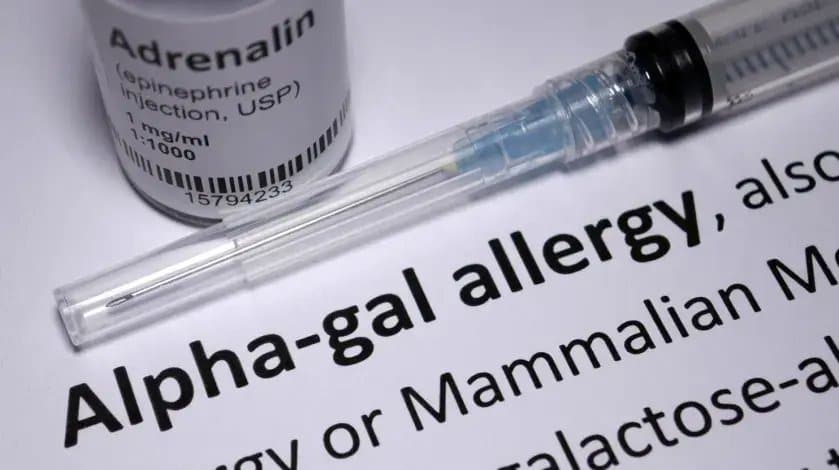
Why Alpha-Gal Syndrome Is About More Than Red Meat Avoidance
If you have Alpha-Gal Syndrome, the hardest part is rarely the meat you can't eat. It's the alpha-gal you can't see. The same sugar molecule your immune system reacts to in beef and pork hides in places most patients (and most clinicians) don't think to check, like a standard hospital flush for an IV line, a stabilizer in some childhood vaccines, the glue used to seal wounds in cardiac surgery, certain heart valve replacements, and the inactive binders holding some prescription pills together.
Most clinicians have not been trained on this, because AGS is recent in the literature and the at-risk products are rarely flagged on standard pre-procedure allergy checklists. A hospital screening form catches penicillin and latex; it does not catch the porcine source on a heparin label or the gelatin in a vaccine excipient list. That makes the AGS patient the safety check, which is what the rest of this post is for.
Heparin and Anticoagulants in Alpha-Gal Syndrome
Heparin is the single most important hidden alpha-gal exposure in hospital medicine. Standard unfractionated heparin and most low-molecular-weight heparins (enoxaparin, dalteparin, tinzaparin) are derived from porcine intestinal mucosa and contain alpha-gal. Reactions in AGS patients have been documented, including anaphylaxis during procedures.
Heparin is used in essentially every hospital admission, every dialysis session, every cardiac catheterization, and most surgeries. Heparin flushes are standard for IV line maintenance. Many pre-filled saline syringes contain a heparin lock. Heparin is often added to dialysis circuits, ECMO circuits, and bypass machines without explicit consent. AGS patients have to flag the issue proactively because clinical staff often do not.
Safer alternatives exist. Argatroban is a synthetic direct thrombin inhibitor used in heparin-induced thrombocytopenia and works for AGS patients. Bivalirudin (Angiomax) is another non-mammalian anticoagulant. Fondaparinux (Arixtra) is a synthetic Factor Xa inhibitor with no mammalian content. The direct oral anticoagulants (apixaban, rivaroxaban, edoxaban, dabigatran) are also synthetic and can be used for outpatient anticoagulation.
Before any IV line, surgery, dialysis, or cardiac procedure, ask the prescriber and the nurse whether heparin will be used in any form, including line flushes and circuit priming. If a procedure genuinely requires heparin and no synthetic alternative is feasible, the right next conversation is about premedication with antihistamines and steroids, plus whether an allergist or anesthesiologist familiar with AGS can be on the team for the procedure itself.
Vaccines and Gelatin: Which Vaccines Are Safe With Alpha-Gal Syndrome
Gelatin is derived from collagen extracted from cattle and pig hides, bones, and connective tissue. It is widely used as a stabilizer in vaccines and in many capsule formulations. Gelatin contains alpha-gal and can trigger reactions in AGS patients, though the alpha-gal content varies by product and not every gelatin-containing product causes reactions in every AGS patient.
Vaccines that historically contain gelatin include the MMR vaccine (M-M-R II from Merck), MMRV (ProQuad), some influenza vaccines (FluMist, the live attenuated nasal spray), yellow fever vaccine (YF-VAX), and the older zoster vaccine (Zostavax, now largely replaced by Shingrix, which does not contain gelatin). Vaccines that generally do not contain gelatin include most injected influenza vaccines, COVID-19 mRNA vaccines (Pfizer and Moderna), Tdap, hepatitis A and B, HPV (Gardasil 9), Shingrix (the recombinant zoster vaccine), and the inactivated polio vaccine.
Before any vaccination, ask the prescriber to check the product insert for gelatin. The CDC's Pink Book lists excipients for every vaccine on the U.S. schedule, and each vaccine's own package insert spells them out as well. When a needed vaccine contains gelatin and there is no gelatin-free alternative on the market, the standard approach is to bring an allergist into the conversation for either premedication or a graded-dose protocol given in a setting equipped to handle a reaction.
Monoclonal Antibodies and Biologic Drugs in Alpha-Gal Syndrome
Monoclonal antibodies are produced in cell lines, and the cell line determines whether the final drug carries alpha-gal residues. Drugs produced in mouse myeloma cell lines (such as Sp2/0 and NS0) tend to carry more alpha-gal than drugs produced in CHO (Chinese hamster ovary) cells, which are the workhorse cell line for most modern biologics and produce drugs with minimal alpha-gal.
Cetuximab (Erbitux), produced in mouse Sp2/0 cells, is the historically documented high-alpha-gal monoclonal antibody. AGS patients have had severe first-dose anaphylaxis to it. Other biologics that have been associated with reports of alpha-gal-related reactions in AGS patients include abciximab (ReoPro, no longer marketed in many regions but still on some hospital formularies), some older infliximab formulations, and certain antivenoms produced in animal sera.
Biologics produced in CHO cells include most modern monoclonal antibodies: rituximab (Rituxan), trastuzumab (Herceptin), bevacizumab (Avastin), pembrolizumab (Keytruda), nivolumab (Opdivo), adalimumab (Humira), and most newer biologics. These are generally considered low-risk for AGS reactions, though individual patient reports of reactions to CHO-produced biologics do exist and are not impossible.
Before any biologic infusion, ask the prescriber which cell line was used to manufacture the drug. The package insert lists the manufacturing organism (usually in the CLINICAL PHARMACOLOGY or HOW SUPPLIED section), and your infusion pharmacy can also pull the information from the manufacturer. If the drug is produced in mouse cells, an allergist should weigh in on premedication or alternative therapies before the first dose. If it's CHO-produced, the risk is much lower, but the infusion team should still know your AGS status going in.
Surgical Materials and Implants to Avoid With Alpha-Gal Syndrome
Many surgical materials contain mammalian-derived components. Bovine pericardium is used in some heart valve replacements (Carpentier-Edwards, Magna Ease, others). Porcine valves (Hancock, Mosaic) are also widely used. Bioprosthetic valves derived from cattle or pigs both contain alpha-gal. Some surgical glues and sealants are bovine-derived, including BioGlue (cross-linked bovine serum albumin) and certain fibrin sealants. Hemostatic gelatin sponges (Gelfoam, Surgifoam) are bovine or porcine. Collagen-based wound dressings can also contain alpha-gal.
Hernia mesh is one of the most common implants people with AGS ask about. According to the FDA, most hernia meshes are made either from synthetic materials or from animal tissue, and the animal-derived ones are processed intestine or skin, mostly from pigs or cows (FDA, Surgical Mesh Used for Hernia Repair). Those biologic meshes are the ones to ask about. Synthetic meshes are not made from animal tissue, but some have an absorbable coating that can be made from animal-derived collagen, so ask the surgeon about the whole product, including any coating, and, if it is animal-derived, whether an alternative is suitable for your repair.
Synthetic and mechanical alternatives exist for most of these. Mechanical heart valves are non-biological. Synthetic vascular grafts are widely available. Some fibrin sealants are made from human plasma rather than bovine sources, but ingredients vary by product, so ask about the specific one. Synthetic wound dressings are widely available. The right choice depends on the surgery and your reaction history.
Before any cardiac, vascular, or orthopedic surgery, ask the surgeon explicitly which materials and implants will be used. Most surgical teams do not know your AGS status unless you flag it, and the team that prepares the OR is often not the same team that took the allergy history at intake. A pre-operative letter from your allergist describing AGS and listing the specific materials to avoid is genuinely useful here, because it gets photocopied into the pre-op checklist and seen by everyone in the room.
Gelatin Capsules and Pill Excipients: What's in Your Medications
Pill capsules are commonly made of gelatin (bovine or porcine sources), which can trigger AGS reactions in sensitive patients. The capsule contents are usually fine, but the capsule shell itself is the issue. Hydroxypropyl methylcellulose (HPMC) capsules are a plant-based alternative and are widely used in OTC supplements and some prescription products.
Magnesium stearate, a common pill lubricant and excipient, can be derived from animal or vegetable sources. The animal-derived form (typically beef or pork) carries some alpha-gal risk; the vegetable-derived form does not. Manufacturers do not always specify the source on the label.
For prescription medications, ask the pharmacist whether the specific brand and formulation uses gelatin capsules, and whether a tablet or non-gelatin-capsule alternative exists. For supplements, the label usually says HPMC or vegetarian capsules when the shell is plant-based; if it doesn't say so, assume gelatin. If you must take a gelatin-shelled medication and your reactions to small exposures are mild, opening the capsule and dissolving the contents in food or liquid is sometimes safe; the pharmacist can confirm whether that's appropriate for your specific drug, because some are designed to release in the small intestine and lose effect when opened.
Common Medications People Ask About With Alpha-Gal Syndrome, From Prednisone to Coricidin
Most of the questions we see are about ordinary drugs, not heparin or cetuximab. Can I take prednisone? Is Rocephin safe? What about a cold medicine? For almost all of these, the medicine itself is made in a lab and contains no alpha-gal. The question is the inactive ingredients, the fillers, coatings and capsule shells around it, and those change from one manufacturer to the next. The same generic drug can come in a plain tablet from one company and a gelatin softgel from another.
To show how much that varies, we pulled the FDA labels for 8 commonly asked-about medicines from the openFDA database on September 26, 2026, and counted how many list gelatin, an ingredient with a clear mammalian source, or magnesium stearate, a lubricant that can come from animal or plant fat and whose source the label almost never states. The counts cover up to the first 100 labels the database returned for each drug, which is not a random sample, so they give a rough picture of the labels on file, not market share and not your bottle. The CDC also lists glycerin, which the chart does not count, among ingredients that may contain alpha-gal.
- Prednisone
- Prednisone is a synthetic steroid with no alpha-gal of its own. Of 100 FDA labels for prednisone, none listed gelatin and all 100 listed magnesium stearate (source undisclosed) and lactose, a milk sugar that matters mainly to people who also react to dairy. The question for the pharmacist is whether the manufacturer's magnesium stearate is plant-derived. Check your prednisone.
- Ceftriaxone (Rocephin)
- Ceftriaxone is a semisynthetic antibiotic, usually supplied as a sterile powder. Of 35 FDA labels for ceftriaxone, 33 listed no inactive ingredient, and the other 2, premixed IV products, add only dextrose and pH adjusters; none listed gelatin, heparin or stearate. It is often mixed with lidocaine for an intramuscular shot; lidocaine is also synthetic. Check ceftriaxone.
- Coricidin HBP and other cold medicines
- Coricidin HBP contains gelatin in some products and not others. Of 10 Coricidin HBP labels in the FDA database, 2 listed gelatin (liquid-filled products) and 5 listed magnesium stearate; of the other 3, 2 list glycerin or stearic acid, which can also come from animal fat. The specific box you buy decides the answer. Check a Coricidin product.
- Diphenhydramine (Benadryl) and cetirizine (Zyrtec)
- Both antihistamines are synthetic, but their liquid-gel and softgel forms often have gelatin shells: 24% of 100 over-the-counter diphenhydramine labels and 23% of 100 cetirizine labels listed gelatin. Plain tablets and many liquids do not, though many list glycerin, which can come from animal or plant sources. For a serious reaction, epinephrine comes first; antihistamines are an add-on, not a substitute. Check diphenhydramine.
- Amoxicillin and other antibiotic capsules
- Amoxicillin capsules often have gelatin shells: 31 of 100 amoxicillin labels in the FDA database listed gelatin. Amoxicillin tablets and oral suspensions are available from many manufacturers. Check amoxicillin.
- Levothyroxine versus desiccated thyroid
- Levothyroxine (Synthroid and generics) is synthetic thyroid hormone and contains no alpha-gal of its own; about half of levothyroxine tablet labels list magnesium stearate. One brand, Tirosint, is a gelatin capsule (its label lists gelatin, glycerin and water), so ask for a tablet if you avoid gelatin. Desiccated thyroid products such as Armour Thyroid, NP Thyroid and RenThyroid are made from pig thyroid glands, and their labels say so. Check your thyroid medicine.
- Epinephrine auto-injectors
- Epinephrine injections contain no listed mammalian ingredient: none of 55 epinephrine injection labels in the FDA database listed gelatin, heparin or magnesium stearate. If your allergist has prescribed epinephrine, keep it with you, and never delay using it over ingredient concerns. Check your epinephrine.
Other Hidden Alpha-Gal Exposures in Healthcare
Topical and personal care products
Some lotions, soaps, and cosmetics contain animal-derived ingredients including tallow, lanolin, collagen, hyaluronic acid (depending on source), and gelatin. Reactions to topical products are less common than to oral or injected exposures but have been reported. Patients with severe AGS often switch to vegan personal care products as a precaution.
Dialysis and ECMO circuits
Dialysis machines and ECMO circuits often use heparin in their priming and circulation. Some dialysis membranes and tubing components have included mammalian-derived materials historically. Patients with AGS who require dialysis should work with a nephrologist who can coordinate non-heparin anticoagulation (citrate is a common alternative) and verify the materials used in the dialysis circuit.
Antivenoms and other biologics
Some antivenoms are produced in animals (sheep, horse, goat) and contain alpha-gal. Snake antivenoms vary by product. If you live in an area with venomous snakes and have AGS, this is worth knowing in advance, since envenomation is a medical emergency where the alpha-gal content has to be weighed against the alternative.
Pancreatic enzymes and bile acids
Pancreatic enzyme replacement therapies (Creon, Pancreaze, Zenpep, Pertzye) are derived from porcine pancreas and contain alpha-gal. Patients with cystic fibrosis or pancreatic insufficiency who develop AGS face a difficult clinical situation. Ursodiol (synthetic bile acid) does not contain alpha-gal, but cholic acid and chenodeoxycholic acid products may be animal-derived; check with the pharmacist for each specific product.
Hyaluronidase, corticotropin gel and other drugs made from animal tissue
Hyaluronidase is an enzyme injected alongside other drugs and fluids so they spread and absorb faster under the skin, which means it usually arrives mixed into something else rather than as a prescription of its own. According to their FDA labels, Amphadase and Hydase are purified from cow testes and Vitrase from sheep testes. Hylenex is human hyaluronidase made in genetically engineered hamster (CHO) cells, and the under-the-skin versions of drugs such as Darzalex Faspro and Vyvgart Hytrulo list human recombinant hyaluronidase as well. If a procedure or injection calls for hyaluronidase, ask which product the team plans to use.
A handful of other drugs are made directly from animal tissue, and their labels state it in the description section rather than the ingredient list. Acthar Gel and Purified Cortrophin Gel contain corticotropin (ACTH) extracted from pig pituitary glands, in a gelatin base. Defitelio (defibrotide), used for a severe liver complication after stem cell transplant, is made from pig intestinal tissue. Ruconest, for hereditary angioedema attacks, is purified from the milk of genetically engineered rabbits, and Sevenfact, for hemophilia with inhibitors, is also produced in genetically engineered rabbits. The alpha-gal medication checker reads each label's description for statements like these and quotes the sentence it found.
What to Tell Every Doctor Before Surgery or Hospital Procedures
AGS does not show up on most pre-procedure screening forms. The patient has to bring it. A short, written summary handed to every new clinician is more reliable than verbal disclosure that may not get charted.
What an Alpha-Gal Reaction Looks Like (And What to Do)
AGS reactions follow a pattern that throws even experienced clinicians off. Most food allergies cause symptoms within minutes of eating the trigger. With AGS, the reaction shows up 3 to 8 hours after a meal containing mammalian meat, often in the middle of the night because dinner is the typical trigger meal. A patient wakes up around 2 AM with hives, abdominal pain severe enough to mimic a kidney stone, vomiting, or full anaphylaxis, and rarely connects the symptoms to the steak they ate hours earlier. Wilson and Platts-Mills's 2020 series of 2,500 AGS patients in Annals of Allergy, Asthma & Immunology identified this delayed pattern as the single biggest reason for diagnostic delay; many patients had cycled through gastroenterology, dermatology, and emergency medicine before anyone ordered the alpha-gal IgE test.
Medication and medical-product reactions follow a different timeline. Heparin reactions during a procedure can appear within minutes, because intravenous alpha-gal goes directly into the bloodstream and bypasses the slow gut absorption that creates the food-related delay. The same fast-onset pattern was visible in the original cetuximab cases described above (Chung et al., NEJM 2008), where 17 patients had severe reactions, including hypotension, bronchospasm, and angioedema, during the first infusion of the drug before any standard sensitization should have been possible.
Reactions span a wide severity range. Mild reactions are hives, isolated GI upset, or itching that resolves on its own. Moderate reactions add wheezing, throat tightness, severe abdominal pain, and a measurable drop in blood pressure. Severe reactions are full anaphylaxis with airway swelling, profound hypotension, and loss of consciousness. A meaningful share of AGS patients have had at least one reaction severe enough to require emergency care or epinephrine, and some patients have only ever experienced GI symptoms (cramping, vomiting, diarrhea) and have not realized those episodes were allergic reactions until a severity escalation made it obvious.
Real-world reactions documented in the literature
Beyond the cetuximab cases, several other published reactions illustrate what AGS patients face in real medical settings. Heparin reactions during cardiac procedures, dialysis sessions, and routine line flushes have been published as case reports from groups in the United States and Australia, with most reactions appearing within minutes of administration. Several were initially misattributed to anesthesia or other procedural causes before AGS was confirmed by alpha-gal IgE testing after the fact, and the diagnosis changed how those patients were managed for any subsequent procedure.
Surgical glue and bioprosthetic valve reactions are less common but documented. The Wilson and Platts-Mills 2020 series describes cases where patients had unexplained reactions during cardiac surgery that were eventually traced to BioGlue or bovine pericardium components, and at academic centers familiar with AGS, pre-operative alpha-gal testing has begun to influence surgical material selection in some cardiac and orthopedic programs. The current pattern is that the reaction is recognized only after it happens; preventing it requires the patient flagging AGS in advance and the surgical team selecting accordingly.
What to do if you suspect a reaction
The 2020 Joint Task Force on Practice Parameters anaphylaxis guidelines, published in the Journal of Allergy and Clinical Immunology and reaffirmed by the AAAAI, are the action protocol allergists actually want AGS patients to follow. The recognition-to-treatment window matters: epinephrine is most effective when given early, and antihistamines or steroids do not substitute for it.
One email when Alpha-Gal Syndrome trials change or an FDA decision lands. No newsletter, no spam.
Frequently Asked Questions
Does every AGS patient react to heparin?
Heparin reactions in AGS are well-documented but not universal. Reactions appear to depend on the alpha-gal IgE titer, prior reaction severity, and possibly the specific heparin formulation and dose. Some AGS patients tolerate heparin without obvious reaction; others have severe reactions including anaphylaxis. The consequences of an unrecognized heparin reaction during a procedure are severe, and synthetic alternatives (argatroban, bivalirudin, fondaparinux) exist, so most allergists who treat AGS recommend default avoidance of heparin in AGS patients with documented reaction histories or high IgE titers, and at minimum a discussion with the procedural team before any heparin exposure.
Are mRNA COVID-19 vaccines safe for AGS patients?
The Pfizer-BioNTech and Moderna mRNA COVID-19 vaccines do not contain gelatin or other mammalian-derived ingredients and are generally considered safe for AGS patients. The Johnson & Johnson Janssen vaccine (now largely withdrawn) used a different platform. There have been rare anaphylaxis reports to mRNA vaccines, but they have not been linked to alpha-gal mechanism. As with any vaccine, AGS patients should still review the product insert with the prescriber and discuss any prior reactions before vaccination.
Can I have a pig heart valve or porcine surgical material if I have AGS?
Bioprosthetic valves from pigs or cattle contain alpha-gal and have been associated with reactions in AGS patients. For valve replacement, mechanical valves (titanium and pyrolytic carbon) are non-biological alternatives that do not contain alpha-gal, though they require lifelong anticoagulation. The choice between mechanical and bioprosthetic valves involves trade-offs around durability, anticoagulation requirements, age, and other factors. AGS adds another factor in favor of mechanical for affected patients. This decision should be made with both your cardiothoracic surgeon and an AGS-aware allergist.
What about gummy vitamins, marshmallows, and Jell-O?
Gummy vitamins, marshmallows, Jell-O, and many candies use gelatin derived from cattle and pigs, which contains alpha-gal. AGS patients often have to avoid these. Plant-based alternatives using pectin or agar (derived from seaweed) do exist for marshmallows, gummies, and gelatin desserts. Some pharmaceutical-grade gelatin in capsules and certain medical products may have lower alpha-gal content than food-grade gelatin, but reactions are still possible and avoidance is the safer default.
Can my AGS go away over time?
Yes, in some patients. Alpha-gal IgE antibody titers tend to decline over time when no further tick bites occur. Some AGS patients are eventually able to reintroduce mammalian meat under medical supervision, sometimes within 2 to 5 years of their last known tick bite. Other patients see persistent high titers for many years. The trajectory cannot be reliably predicted. Repeat IgE testing every 6 to 12 months helps track whether your levels are falling. Subsequent tick bites can re-sensitize patients and reverse improvement, which is why ongoing tick prevention is part of long-term AGS management.
Is there a treatment that can cure AGS?
There is no FDA-approved cure for AGS as of 2026. Research into tolerance induction (similar in concept to peanut allergy oral immunotherapy) is in early stages at academic centers. Some AGS patients see spontaneous remission as alpha-gal IgE levels fall over years without further tick bites. The current standard of care is strict avoidance of triggers (food, medications, medical materials) plus emergency preparedness with epinephrine auto-injectors. The Alpha-Gal Foundation tracks emerging research and treatment options.
Should I tell every doctor I have AGS, or only allergists and surgeons?
Tell every clinician. AGS is unfamiliar to many doctors, and exposures can come from places people don't expect. Routine procedures like blood draws (heparin in some collection tubes), routine IV insertion (heparin flushes), routine vaccination, dental work (gelatin in some sutures and hemostatic agents), and outpatient prescriptions (gelatin capsules) all carry potential exposures. Add AGS to your medical record problem list, ensure it appears on your medication allergy list in your EMR, wear medical alert jewelry, and bring a written AGS card to every encounter. The goal is to make sure no clinician can fail to flag the issue because they did not know.
Where can I find a doctor who knows AGS?
Allergists and immunologists are the most likely specialists to be familiar with AGS, particularly those who practice in tick-endemic regions of the southeastern and south-central U.S. The University of North Carolina (where Dr. Scott Commins's group has published extensively) and the University of Virginia (where AGS was originally characterized by Dr. Thomas Platts-Mills's group) are major academic referral centers. The Alpha-Gal Foundation maintains a provider directory and patient-to-patient referral information. NORD's rare disease specialist directory can also help locate AGS-aware clinicians outside the southeastern U.S.
If I have alpha-gal syndrome, do I need to avoid all medications with animal ingredients?
Not always. According to the CDC, people with alpha-gal syndrome might not react to every product containing alpha-gal, and while some patients need to avoid certain medications, others do not; which ones to avoid is decided with an allergist or other healthcare provider. Medication ingredients fall into 2 groups worth separating: those with a known mammalian source, such as gelatin, heparin and pork- or beef-derived products, and those whose source is not disclosed on the label, such as magnesium stearate or glycerin, which can come from animal or plant sources. The first group is where reactions are best documented; the second is a question for the pharmacist.
Can I take prednisone if I have alpha-gal syndrome?
Prednisone itself does not contain alpha-gal, because it is a synthetic steroid. The question is its inactive ingredients. A Trial Friend review of 100 prednisone labels in the FDA's openFDA database in September 2026 found that none listed gelatin, while all 100 listed magnesium stearate, a tablet lubricant that can be made from animal or plant fat and whose source labels rarely state, and lactose, which matters mainly to people who also react to dairy. People with AGS who react to trace ingredients can ask their pharmacist whether their manufacturer's magnesium stearate is plant-derived.
Is hyaluronidase a problem for people with alpha-gal syndrome?
It depends on the product. According to their FDA labels, Amphadase and Hydase are purified from cow testes and Vitrase from sheep testes, so those are mammalian-derived. Hylenex, and the hyaluronidase in under-the-skin drugs such as Darzalex Faspro, is human hyaluronidase made in hamster cell culture. Because hyaluronidase is usually mixed into another injection, ask the care team which product they plan to use and tell them you have alpha-gal syndrome.
Is hernia mesh safe with alpha-gal syndrome?
It depends on what the mesh is made from. According to the FDA, most hernia meshes are made either from synthetic materials or from animal tissue, and animal-derived meshes are processed intestine or skin, mostly from pigs or cows. Synthetic mesh is not made from animal tissue, but some synthetic meshes carry a coating that can be made from animal-derived collagen, so ask about the whole product. People with alpha-gal syndrome should tell their surgeon about the diagnosis before the operation and ask whether the planned mesh, including any coating, contains animal-derived material.
Does every lone star tick bite cause alpha-gal syndrome?
No. According to the CDC, not every person bitten by a lone star, blacklegged or western blacklegged tick develops alpha-gal syndrome, and the reason some people do and others do not is not known. In the United States, AGS is most often linked to the lone star tick, and the CDC estimates that as many as 450,000 people may be affected. Preventing tick bites remains the best protection.