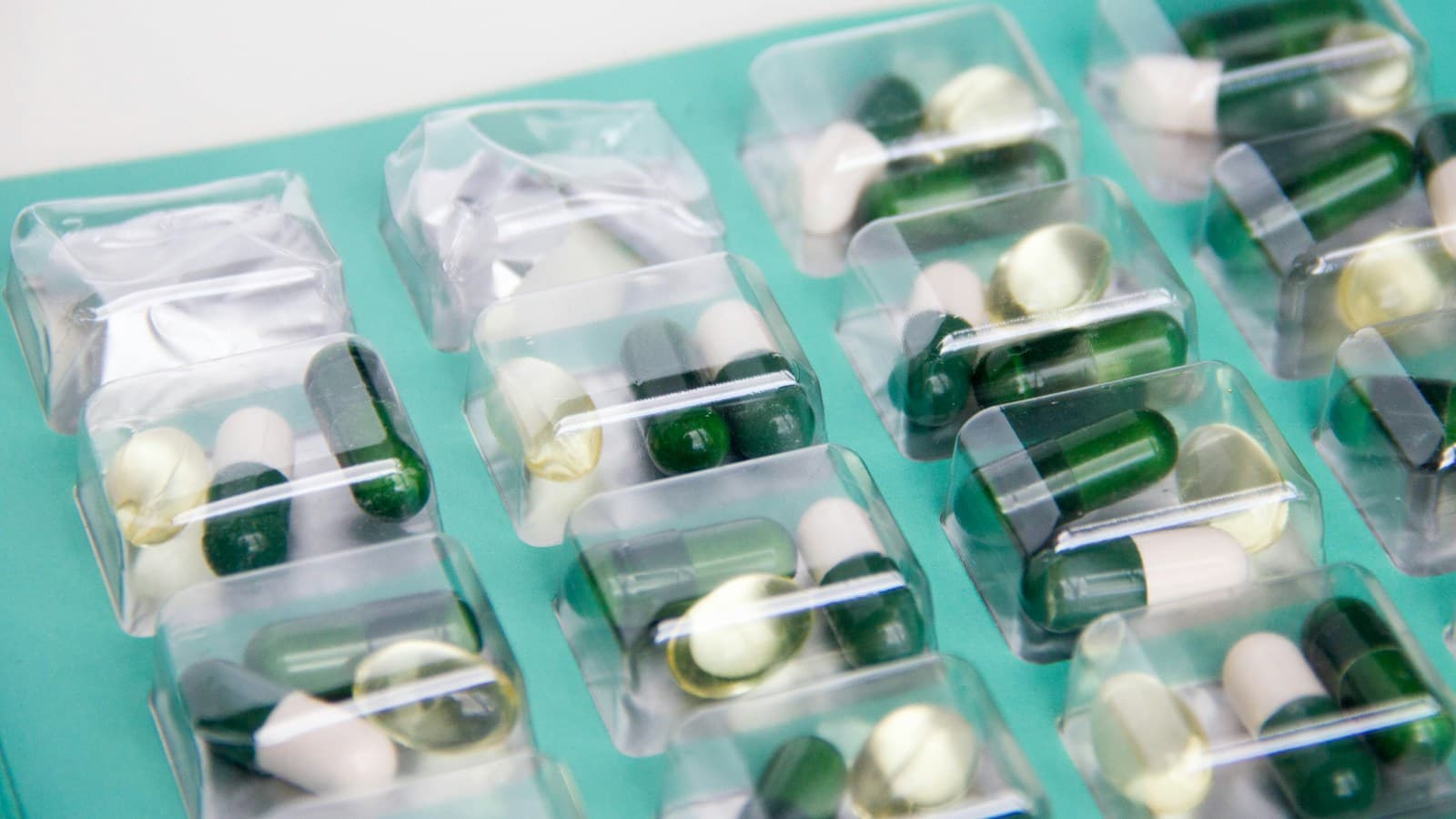
Our guide to medications and medical products with alpha-gal syndrome became the most-read thing on this site. People arrive at 2am and stay for 15 or 20 minutes, working through it line by line, usually with a pill bottle in hand and a question no list can fully answer: is THIS one, from THIS manufacturer, okay for me?
A list cannot answer that question because the honest answer changes by manufacturer. One company's omeprazole comes in a gelatin capsule, another company's comes as a tablet. Everyone learns the meat rule on day 1 of an alpha-gal diagnosis; almost nobody tells you the same molecule that makes a burger dangerous is in the capsule around your blood pressure pill. So we built the tool that list wanted to be. The Alpha-Gal Medication Checker is live today, free, with no login and no tracking.
The Cancer Drug That Exposed a Hidden Allergy
The reason a medication checker for a food allergy makes sense at all goes back to a medical mystery from the mid-2000s. Cancer patients in the southeastern United States were having severe allergic reactions to cetuximab, a colorectal cancer drug, and they were reacting on their first dose. That detail broke the rules. A first-dose reaction means the immune system had seen something in that drug before the drug ever arrived, and nobody could say what, or why it was happening in Tennessee and Virginia but not Boston.
In 2008, Christine Chung, Thomas Platts-Mills, and colleagues published the answer in the New England Journal of Medicine: the patients carried pre-existing IgE antibodies against galactose-alpha-1,3-galactose, a sugar riding on the cetuximab molecule from the mouse cells used to produce it (Chung et al., 2008). The same antibody turned up in a second group of patients from the same region, people reporting a bizarre allergy to red meat that arrived hours after eating. The thread connecting them appeared during patient interviews, when a deer hunter showed up with his leg covered in tick bites. The team called back every patient to ask about ticks; more than 90% had a bite history, and the geography matched the range of the Lone Star tick (The Scientist, 2020).
Platts-Mills went on to develop the allergy himself, breaking out in hives after a lamb dinner following his own tick bites (UVA Today, 2019). The detail worth sitting with is this: the first definitive proof that alpha-gal hides in places other than food was a medication. The allergy announced itself through a drug before most doctors knew the allergy existed. Screening medications is not an afterthought for AGS. It is where the whole story started.
What the Alpha-Gal Medication Checker Does
Type a drug name. The checker pulls the FDA label of every manufacturer's version of that drug and screens each one against a curated dictionary of ingredients that matter in alpha-gal syndrome, the condition most people know as the red meat allergy from a Lone Star tick bite: known mammalian-derived materials like gelatin, heparin, and porcine pancreatic enzymes, and excipients like magnesium stearate and glycerin whose animal or plant source is not disclosed on any label. Each product gets its own verdict, because the same drug genuinely differs by maker.
- 82%Ingredient of undisclosed origin, ask the pharmacist
- 10%Contains a mammalian-derived ingredient
- 8%No flagged ingredients on the label
That chart is the whole argument for building this as a tool. A thyroid patient with AGS asking whether their medication is a concern gets a different answer depending on the manufacturer, including a handful of products that are porcine desiccated thyroid rather than the synthetic hormone. Most labels land in the middle slice: they contain something like magnesium stearate that can come from animals or plants, the label does not say which, and the only way to know is to ask the pharmacist the specific question the checker hands you. The checker shows every version side by side, each with the exact ingredient text from its label.
The scale of the inactive-ingredient problem is documented well beyond alpha-gal. Researchers at MIT and Brigham and Women's Hospital analyzed the full US oral drug supply and found the average pill contains 8.8 inactive ingredients, and 92.8% of oral medications contain at least 1 ingredient reported to cause allergic reactions in some patients (Reker et al., Science Translational Medicine, 2019). Their point was general; for the alpha-gal community it is daily life.
When a flagged ingredient has an undisclosed source, the checker gives you the precise question to ask, ready to hand to your pharmacist: can you confirm with the manufacturer whether the magnesium stearate in this specific product is vegetable-derived? Pharmacists can get that answer. Patients rarely know it is the right question.
A few more things worth knowing before you try it. You can search by the NDC number printed on any bottle to pull up that exact manufacturer's product. You can save your medications in the tool (stored in your browser only, never on our servers) and re-check them in one tap after each refill. Optional sensitivity settings raise certain flags for extra attention if you also react to dairy or to trace exposures; they never hide a flag or make anything look safer. Every result has a copy-link button, so you can text what you found to a spouse or show it to your pharmacist. Hover any ingredient or medical term on the page for a plain-English definition, and if the language still is not landing, the page's AI assistant will explain any result in whatever words work for you.
Why the Checker Never Calls a Medication Safe
The checker never uses the word safe. Alpha-gal sensitivity varies enormously between patients: many people with AGS tolerate oral gelatin without symptoms, while others react to trace exposures. A tool that stamped products as safe would be wrong for someone, eventually, in a way that matters. What a label contains is a fact we can screen for. How your body responds is a conversation for you, your allergist, and your pharmacist.
It also shows its work. Every result includes the full raw ingredient text we screened, a link to the official label on DailyMed, and the sources behind every dictionary entry, which come from the CDC, the peer-reviewed AGS literature, and FDA records. If a label carries no ingredient data at all, the checker says so and tells you to verify manually rather than quietly showing it as clean. Supplements and compounded medications are mostly outside the FDA label database, and the tool says that too.
When to Use the Alpha-Gal Medication Checker
The moments this tool was built for, drawn from the questions readers of our medication guide actually ask.
- A new prescription, before the first fill
- Check the drug the day it is prescribed. If every version your pharmacy stocks is flagged, this is the moment to act: pharmacies can order a different manufacturer's version, and your prescriber can often specify a tablet instead of a capsule. That conversation is easy before the first fill and annoying after.
- The refill that suddenly looks different
- Pharmacies switch generic manufacturers all the time, usually without mentioning it. Same drug, new maker, entirely different inactive ingredients. If your pills changed color or shape at refill, type the NDC number printed on the new bottle into the checker and see that exact product's label, or save your medications in the tool and re-check them in one tap after every refill.
- The supplement aisle
- Softgels are the classic trap: the top result in our own ibuprofen screening is a gelatin liquid-gel, and most fish oil and vitamin D3 products are gelatin capsules around an oil. Prescription-grade products appear in the checker; for store-brand supplements, which mostly sit outside the FDA label database, the ingredient list on the bottle is your tool, and gelatin will be printed right on it.
- Before surgery, dialysis, or a hospital stay
- Hospitals run on heparin, which is porcine-derived and rarely mentioned to patients. Run your admission medication list through the checker, then bring the surgical-materials section of our alpha-gal medication guide, which includes a pre-procedure card you can hand to the anesthesia team.
- A vaccine appointment
- Gelatin is the main alpha-gal concern in vaccines, and it is in some (MMR, Varivax, FluMist, yellow fever) and not others (Shingrix, most injected flu shots, the mRNA COVID vaccines). The checker page carries the full CDC-sourced table, so you can look before the appointment instead of quizzing the person holding the syringe.
- Checking a child's medications
- Pediatric formulations swap constantly between chewables, liquids, and capsules, and each form has different excipients. Liquids in particular lean on glycerin, one of the source-undisclosed ingredients the checker flags with a ready-made pharmacist question. Children with AGS in tick country are a growing group, and their parents do this checking at midnight; that is who the tool is for.
Fair question, because whether alpha-gal syndrome is rare depends on which number you trust. The red meat allergy from a tick bite has been documented in roughly 110,000 suspected US cases since 2010, comfortably under the 200,000-person threshold that defines a rare disease (Thompson et al., CDC MMWR, 2023). The CDC also estimates that as many as 450,000 Americans may actually be affected, most of them undiagnosed, which would make it not rare at all (CDC, 2023).
“42% of surveyed health care providers had never heard of alpha-gal syndrome, and another 35% were not confident in their ability to diagnose or manage it.”
Carpenter et al., CDC Morbidity and Mortality Weekly Report, 2023
The newest data pushes the question further. In July 2026, the CDC published a study of 3,000 blood donor samples across 10 states and found alpha-gal antibodies in 24% of donors in the 5 highest states, topping out at 31.2% in Arkansas, against just 1.1% in Washington state (CDC MMWR, 2026). Carrying the antibody is not the same as having the syndrome; only a minority of seropositive people develop reactions, and the precise fraction is unknown. Still: in Lone Star tick country, the immune fingerprint of this allergy is in roughly a quarter of the blood supply, for a condition 42% of providers have never heard of.
That gap between the documented number and the estimated one is exactly why we cover it. A condition most doctors cannot recognize behaves like a rare disease for the patient sitting in the exam room, whatever the true prevalence turns out to be: years to diagnosis, scattered information, and medical decisions made without specialist input. Those are the problems Trial Friend exists to work on. Alpha-gal also sits inside our coverage of the Lone Star tick and the diseases it carries, alongside conditions like babesiosis and bartonellosis that are unambiguously rare, and it has active research worth following on our alpha-gal syndrome page.
How the Ingredient Dictionary Was Built, for Clinicians and Researchers
The ingredient dictionary is deliberately conservative. It distinguishes 3 tiers: known mammalian-derived ingredients, variable-source excipients that require manufacturer verification, and nuanced cases like lactose and lanolin-derived vitamin D3 where the literature supports reassurance for most patients. We chose not to flag ingredients like polysorbate 80 that are overwhelmingly plant-derived in US pharmaceutical manufacturing, because over-flagging produces alarm fatigue and erodes trust in the flags that matter. The full dictionary, with sources and the deliberately unflagged list, is published on the checker page itself. If you see an entry we got wrong or an ingredient we missed, email jason@trialfriend.com and we will review it against primary sources the same day.
Is the alpha-gal medication checker free?
Yes. Free, no login, no tracking of your searches. It is part of Trial Friend, a free rare disease resource for patients and caregivers.
Does the checker tell me a medication is safe with alpha-gal syndrome?
No, deliberately. It reports what each manufacturer's FDA label contains and flags mammalian-derived and undisclosed-source ingredients. AGS sensitivity varies widely between patients, so medication decisions belong with you, your allergist, and your pharmacist.
Why do results differ between manufacturers of the same drug?
Inactive ingredients are chosen by each manufacturer, not standardized to the drug. One maker may use a gelatin capsule where another uses a tablet or a vegetable capsule, which is exactly why the checker screens every manufacturer's label separately.
How common is alpha-gal syndrome in the United States?
Roughly 110,000 suspected cases have been documented since 2010, and the CDC estimates as many as 450,000 Americans may be affected, most undiagnosed. A 2026 CDC study found alpha-gal antibodies in about 24% of blood donors across the 5 highest states, reaching 31.2% in Arkansas, though only a minority of people carrying the antibody develop the syndrome.
Is heparin a problem for people with alpha-gal syndrome?
Heparin and most low-molecular-weight heparins (enoxaparin, dalteparin) are made from pig intestinal tissue and carry alpha-gal, and they are given routinely in surgery, IV flushes, and dialysis, often without being named to the patient. Many AGS patients receive heparin without reacting, but it deserves a conversation with your care team before any procedure; synthetic alternatives such as fondaparinux, argatroban, and bivalirudin exist when the team judges them appropriate.
Which vaccines contain gelatin?
Per the CDC's vaccine excipient data, MMR (M-M-R II), MMRV (ProQuad), chickenpox (Varivax), the FluMist nasal spray, yellow fever (YF-VAX), and the RabAvert rabies vaccine contain gelatin. Shingrix, most injected flu shots, the mRNA COVID vaccines, Tdap, hepatitis A and B, and Gardasil 9 are gelatin-free. Formulations change, so confirm against the current package insert with your provider.
Can I take vitamin D3 with alpha-gal syndrome?
Most vitamin D3 is made from lanolin, the grease of sheep's wool, and documented reactions to lanolin-derived D3 are rare; most people with AGS take it without trouble. The gelatin softgel around the D3 is usually the bigger question than the vitamin itself. Tablet forms, vegetable capsules, and lichen-derived (vegan) D3 all exist for people who prefer zero mammalian sourcing.
Can I look up a medication by its NDC number?
Yes. Type the NDC number printed on your bottle, with its dashes, into the checker and it pulls up that exact manufacturer's product instead of every version of the drug. This is the fastest way to check the specific bottle in your hand, especially after a pharmacy switches which generic maker it stocks.
The checker joins the Symptom Finder, Match Me, and the Drug Decoder in the toolbox we are building for people the medical system was not designed around. If your organization serves the alpha-gal community and wants to point members to it, link freely, and if you want trial listings on your own site, our free embed widget covers alpha-gal syndrome too.
Eighteen years after a cancer drug revealed this allergy, the person holding a pill bottle at 2am finally has somewhere to type its name. That felt worth building.