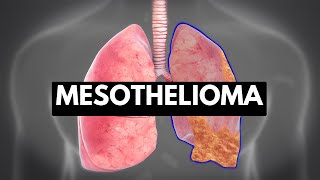
About Mesothelioma
Mesothelioma is a rare and aggressive cancer originating from mesothelial cells, the specialized cells lining the pleura (lungs), peritoneum (abdomen), pericardium (heart), and tunica vaginalis (testes). Approximately 80% of cases are pleural mesothelioma, and the vast majority are linked to asbestos exposure.
Asbestos fibers, when inhaled or ingested, become lodged in tissue and cause chronic inflammation that over decades can trigger malignant transformation. The long latency period means cases continue to be diagnosed despite asbestos regulations. Treatment typically involves multimodal approaches: surgery (pleurectomy/decortication or extrapleural pneumonectomy for eligible patients), chemotherapy (pemetrexed/cisplatin), and radiation. In 2020, the combination of nivolumab plus ipilimumab (checkpoint immunotherapy) was approved as first-line treatment, showing improved survival compared to chemotherapy alone. For peritoneal mesothelioma, heated intraperitoneal chemotherapy (HIPEC) combined with cytoreductive surgery has shown promise.
Common Symptoms of Mesothelioma
Recognizing the signs of Mesothelioma early can lead to faster diagnosis and better outcomes. Symptoms may vary in severity from person to person. If you or a loved one are experiencing any of the following, consider speaking with a specialist.
- Shortness of breath and chest pain (pleural type)
- Abdominal swelling and pain (peritoneal type)
- Unexplained weight loss
- Fatigue and muscle weakness
- Persistent dry cough
- Lumps of tissue under the skin on the chest
Who Mesothelioma Affects
Most commonly diagnosed in men over age 65 with occupational asbestos exposure. The latency period between asbestos exposure and diagnosis is typically 20-50 years. Military veterans, construction workers, shipyard workers, and industrial tradespeople are at highest risk. Can rarely occur without known asbestos exposure.
Find Your Next Step
Answer a few questions and we'll point you to the right tools and information for where you are right now.
Help Paying for Mesothelioma Treatment
Charity funds and drugmaker programs for Mesothelioma, checked at the source. Pick your insurance to see what fits.
- From a charity · Mesothelioma Applied Research FoundationPatient Travel Grant Program fundApply directly
Pays for: Travel (lodging, transportation) for specialist consultation or clinical-trial treatment; up to $1,000 per trip, up to $6,000 per year.
The foundation says: “Status not shown on page” - From a charity · Mesothelioma Applied Research FoundationBret A. Rosenthal Patient Assistance Fund fundApply directly
Pays for: Living and care expenses for patients age 49 and under (rent, utilities, childcare, equipment, caregiver travel; not copays or premiums), up to $2,000 per year.
The foundation says: “Status not shown on page”
Side Effect Explorer
Real-world side effect reports from the FDA Adverse Event Reporting System (FAERS). Includes both FDA-approved drugs and investigational therapies from active clinical trials. Click any drug to see what patients reported.
Loading side effect data...
Genetic Testing
Genetic testing can confirm a diagnosis, guide treatment decisions, and identify family members who may be at risk.
Finding labs...
Trusted Mesothelioma Resources
Reputable organizations and medical references for learning more about Mesothelioma, including disease registries, foundation resources, and clinical guidelines.