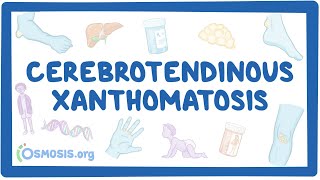
About Cerebrotendinous Xanthomatosis
CTX is caused by mutations in the CYP27A1 gene on chromosome 2, which encodes the mitochondrial enzyme sterol 27-hydroxylase. This enzyme normally catalyzes a key step in the conversion of cholesterol into bile acids, specifically chenodeoxycholic acid (CDCA), one of the two primary bile acids in humans. When the enzyme is deficient, the body cannot complete this pathway. Upstream substrates accumulate, and cholestanol (a sterol related to cholesterol) and cholesterol itself deposit in tissues, especially the brain, spinal cord, peripheral nerves, tendons, the lens of the eye, and arteries.
Clinically, CTX progresses through stages. Chronic intractable diarrhea often appears in infancy. Juvenile cataracts develop in childhood. Tendon xanthomas, soft fatty growths most often noticed on the Achilles tendons, emerge in adolescence or young adulthood. The most disabling component is neurological: cerebellar ataxia, pyramidal signs, peripheral neuropathy, cognitive decline, seizures, and behavioral changes typically appear in the second to fourth decades and progress without treatment. Cardiovascular complications including premature coronary artery disease, and skeletal complications including osteoporosis, are common.
Diagnosis is confirmed by elevated plasma cholestanol, characteristic urinary bile alcohols (such as 23S-pentol), and CYP27A1 gene sequencing. Early diagnosis is critical because long-term bile acid replacement therapy can stabilize or even prevent neurologic decline if started early. Many adult patients only learn they have CTX after years of unrelated diagnoses, by which point neurologic damage may already be irreversible. Newborn screening pilot programs such as ScreenPlus and Early Check are now investigating whether CTX should be added to routine newborn screening panels.
Common Symptoms of Cerebrotendinous Xanthomatosis
Recognizing the signs of Cerebrotendinous Xanthomatosis early can lead to faster diagnosis and better outcomes. Symptoms may vary in severity from person to person. If you or a loved one are experiencing any of the following, consider speaking with a specialist.
- Chronic intractable diarrhea, often beginning in infancy or early childhood
- Bilateral juvenile cataracts presenting in childhood or adolescence
- Tendon xanthomas, typically on the Achilles tendons, appearing in adolescence or young adulthood
- Progressive cerebellar ataxia and difficulty with balance
- Pyramidal signs, peripheral neuropathy, and movement disorders
- Cognitive decline, behavioral changes, and seizures in adulthood
- Premature coronary artery disease and atherosclerosis
- Osteoporosis and increased risk of pathologic fractures
Who Cerebrotendinous Xanthomatosis Affects
CTX is autosomal recessive, meaning a person must inherit two altered copies of the CYP27A1 gene (one from each parent) to develop the disease. Both sexes are affected equally, and it has been described in every population studied. Patients of consanguineous parents are at higher risk because the same recessive mutation can be inherited from both sides of the family.
Most patients first show symptoms in early childhood with chronic diarrhea or unexplained juvenile cataracts. Tendon xanthomas typically appear in adolescence, and the neurological component progresses through young adulthood. Diagnosis is often missed for years because each individual symptom (diarrhea, cataracts, xanthomas) is treated separately rather than recognized as part of a single underlying genetic disorder.
Find Your Next Step
Answer a few questions and we'll point you to the right tools and information for where you are right now.
FDA-Approved Treatments for Cerebrotendinous Xanthomatosis
There is currently 1 FDA-approved medication for Cerebrotendinous Xanthomatosis. These therapies represent the current standard of care and may be used alongside or compared against investigational treatments in active clinical trials.
Source: openFDA drug labeling data. This list may not include all treatments. Always consult your doctor.
Help Paying for Cerebrotendinous Xanthomatosis Treatment
Charity funds and drugmaker programs for Cerebrotendinous Xanthomatosis, checked at the source. Pick your insurance to see what fits.
- From a charity · NORD RareCareCTX Medical Assistance fundOpen
Pays for: Medical and medication costs.
The foundation says: “Accepting Applications” - From a charity · NORD RareCareCTX Premium Copay Assistance fundOpen
Pays for: Insurance premiums and copays.
The foundation says: “Accepting new applications and re-enrollments for current year”
Side Effect Explorer
Real-world side effect reports from the FDA Adverse Event Reporting System (FAERS). Includes both FDA-approved drugs and investigational therapies from active clinical trials. Click any drug to see what patients reported.
Loading side effect data...
Genetic Testing
Genetic testing can confirm a diagnosis, guide treatment decisions, and identify family members who may be at risk.
Finding labs...
Trusted Cerebrotendinous Xanthomatosis Resources
Reputable organizations and medical references for learning more about Cerebrotendinous Xanthomatosis, including disease registries, foundation resources, and clinical guidelines.