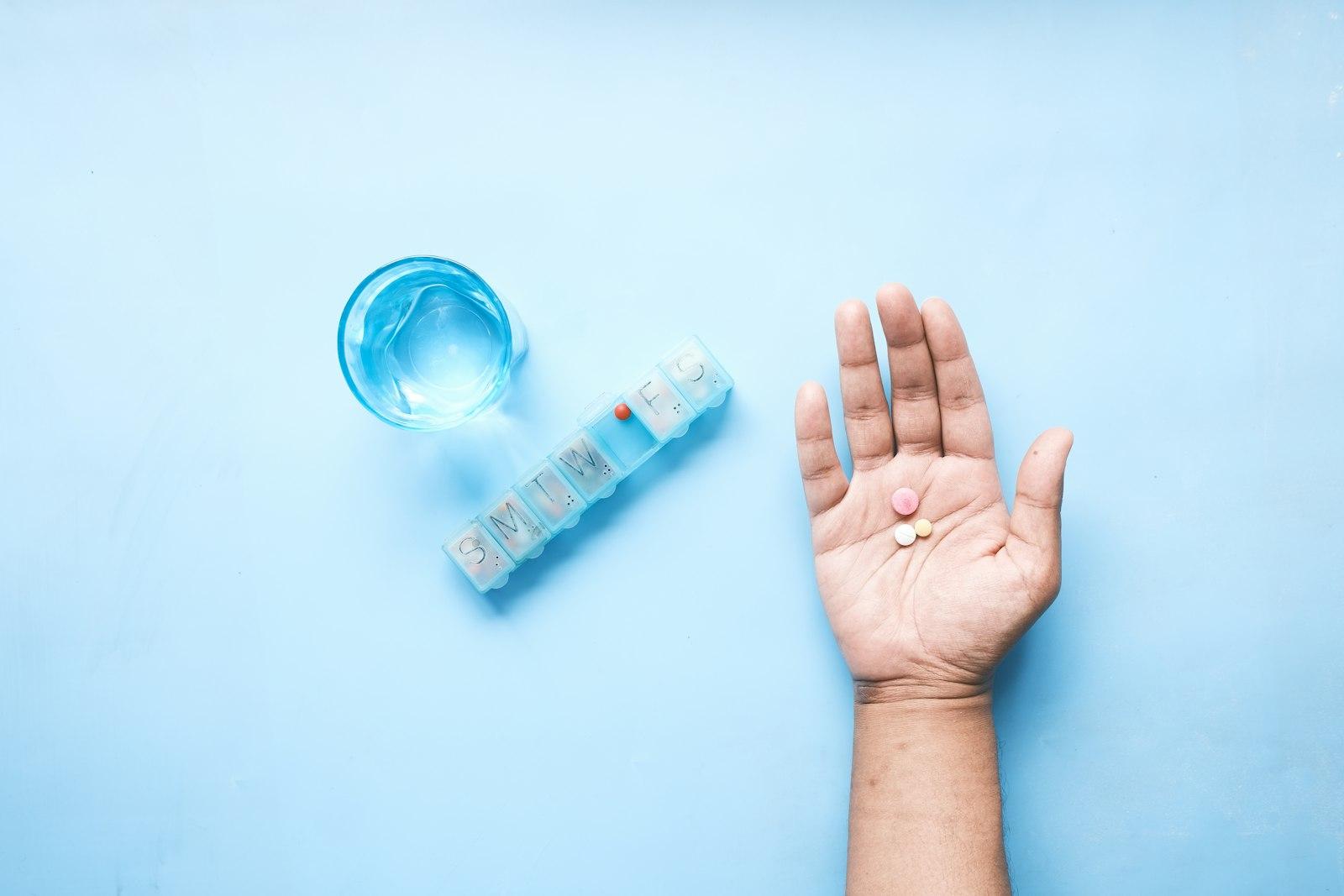
Thirteen trips to a clinic a year is what Sandostatin LAR asks of someone with acromegaly. Its label says a trained healthcare provider must mix the drug and inject it into the buttock muscle every 4 weeks. Somatuline Depot asks the same 13 visits, though some people who are well controlled can stretch to 7 to 9. The 2 pills on the market trade those visits for food rules, 730 capsules a year for Mycapssa and 365 tablets for Palsonify, each taken on an empty stomach. On December 18th the FDA is due to decide whether a fifth option joins them, a once-monthly octreotide pen called Oclaiz that patients would inject at home.
That logistics question, who gives the dose and what a year of it looks like, is the one that matters most to people deciding between these medicines. The drugs all aim at the same target, the growth hormone excess that drives acromegaly, and the 3 newer ones were each tested against placebo rather than against one another. What they differ on is the shape of the year, so this post counts it.
Oclaiz's FDA Decision Date Is December 18th, After 2 Letters About a Factory
The FDA has set December 18, 2026 as its target date for Oclaiz after accepting Camurus's resubmission on July 17, 2026. The same application has been turned down twice, and by the company's account both letters were about a factory rather than the medicine. Camurus says the October 22, 2024 complete response letter cited deficiencies found during a September 2024 inspection of a third-party manufacturer, and that the FDA raised no other concern, including about efficacy or safety.
The second letter, dated June 10, 2026, came after the company had resubmitted in December 2025. According to Camurus it again related to the observations from that same 2024 inspection and said a satisfactory resolution could require a reinspection. The letter also asked for a labeling change to the oxygen absorber in the packaging. The company states that the contract manufacturer has since put corrective actions in place and declared itself ready for inspection, which is the claim the December decision will test.
Outside the US the product is already on the market. The European Commission approved it as Oczyesa on June 30, 2025, and the UK followed in August 2025. Australia's regulator approved it in August 2026, and Health Canada cleared Oczyesa XR on October 12, 2026, according to Camurus. The European label is the clearest public picture of what an American one might say, which is why the next section leans on it.
Sandostatin LAR, Somatuline Depot, Oclaiz, Mycapssa and Palsonify Over One Year
Read side by side, the 5 labels describe 5 different years. The injections differ on who holds the needle and whether the box lives in a refrigerator. The pills differ on how many hours a day the stomach has to be empty, because food cuts how much of either one gets absorbed. Oclaiz is included on the terms of its European label and is marked as pending, since the FDA has not approved it and the US label could differ.
- Sandostatin LAR (octreotide)13 injections a yearA trained healthcare provider injects it into the buttock muscleKit kept refrigerated, out for 30 to 60 minutes before mixingNo food rules
- Somatuline Depot (lanreotide)13 injections a yearIntended for a healthcare provider, deep under the skin of the buttockRefrigerated, out 30 minutes before the injectionNo food rules; 7 to 9 a year if moved to 120mg every 6 or 8 weeks
- Oclaiz (octreotide pen), pending FDA review13 injections a yearSelf-injected in the belly, thigh or buttock after training, on the European labelRoom temperature, do not refrigerate, 3-year shelf lifeNo food rules; a dose may move 1 week either way
- Mycapssa (octreotide capsules)730 doses a yearTaken by mouth, 20mg twice a day to start, up to 80mg a dayUnopened wallets refrigerated; an opened wallet keeps 1 month at room temperatureEmpty stomach twice a day, 1 hour before or 2 hours after a meal
- Palsonify (paltusotine)365 doses a yearTaken by mouth once a day, 40mg to start, 60mg if neededRoom temperatureEmpty stomach once a day, 6 hours after a meal and 1 hour before the next
Counted from the FDA labels for Sandostatin LAR (2024), Somatuline Depot (2023), Mycapssa (2024) and Palsonify (September 2025), and from the European Oczyesa label for Oclaiz (June 2025). An every-4-weeks schedule comes to 13 doses in a 365-day year, and the Somatuline range of 7 to 9 is 365 divided by 56 or 42 days. Trial Friend's arithmetic, checked November 5, 2026.
The food rules are not small print. Palsonify's label reports that a high-fat meal cut absorption by 85% and a low-fat one by 72%. That is why the dose sits in a 7-hour window with nothing to eat, usually overnight into breakfast. Mycapssa's label puts its food effect at about a 90% drop, and it needs that empty stomach twice a day, once before breakfast and once at bedtime in the label's own example. What a year on the Palsonify schedule involves, and what it costs, is covered in our post on the first year of Palsonify. Someone who eats unpredictably, works nights or takes a proton pump inhibitor for reflux has a different problem with each pill, since both labels say those acid blockers can call for a higher dose.
The injections carry their own fine print, and it is about place rather than time. Sandostatin LAR's label says never to give it under the skin or into a vein, only into the buttock muscle through a 19-gauge needle. The kit lives in the refrigerator and sits out for up to an hour before mixing. Somatuline's label says it is intended for a healthcare provider and goes deep under the skin of the upper buttock. Oclaiz goes under the skin of the belly, thigh or buttock through a hidden 22-gauge needle, on its European label. The pen must not be refrigerated at all, which is the detail that makes a trip or a missed clinic slot easier to manage.
Latest for Acromegaly
See all trialsThe week in rare diseaseFree email alert
Email me the day the FDA decides on Oclaiz
One email when the decision is public, with what it means in plain language, plus new trials and FDA news for Acromegaly. Unsubscribe anytime.
You'll get trial alerts and disease updates for Acromegaly, and you can turn either off anytime. We never share your email. Privacy policy
What ACROINNOVA 1 and 2 Showed for Oclaiz in Acromegaly
ACROINNOVA 1 tested a single question: can a monthly self-injected octreotide pen hold the line in people whose acromegaly was already controlled on Sandostatin LAR or Somatuline? The 24-week trial, published in the Journal of Clinical Endocrinology and Metabolism in October 2024, enrolled 72 such patients at 45 sites and randomized 48 to Oclaiz and 24 to placebo. At weeks 22 and 24, IGF-1 stayed in the normal range in 72.2% of the Oclaiz group against 37.5% on placebo, a 34.6-point difference (Ferone et al., 2024).
The placebo number deserves a second look, because 37.5% is high for a group that stopped treatment. Long-acting octreotide and lanreotide leave the body slowly, so people in the placebo arm were still partly covered by their last clinic injection for weeks. Anyone who needed rescue treatment was counted as a failure. The median time to losing IGF-1 control on placebo was 8.4 weeks, according to the European label, which is roughly 2 missed monthly injections.
Two findings from that trial speak to the logistics question more than the hormone one. Most patients given the choice injected the pen themselves or had a partner do it, 35 of 48 in the Oclaiz group. The treatment satisfaction convenience score also rose more on Oclaiz than on placebo, though the European label notes the difference was not statistically significant. Injection site reactions, mostly mild, were reported by 40.4% of the Oclaiz group and by 62.5% of the placebo group, who received injections without the drug. Four of 47 patients on Oclaiz stopped because of a side effect, 3 of them for an injection site reaction and 1 for migraine (Ferone et al., 2024).
ACROINNOVA 2 ran for 52 weeks in 135 patients, 54 of whom rolled over from the first trial and 81 of whom were new, some controlled and some not. Its primary purpose was safety. Camurus reported in July 2024 that the most common side effects were mild to moderate injection site reactions and stomach upset. Two patients, 1.5%, stopped for side effects, and 1 had a treatment-related serious gallstone event that resolved. The European label records gallstones in 6 of those 135 patients, or 4.4%. That is the gallbladder risk every somatostatin analog carries, and the reason the label recommends an ultrasound every 6 to 12 months.
Why Oclaiz, Palsonify and Mycapssa Switch Results Cannot Be Ranked Against Each Other
All 3 newer acromegaly medicines reached the FDA with the same kind of study, in which people already controlled on injections were switched and then watched to see whether control held. That makes the headline numbers look comparable, and they are not. Mycapssa's label reports that 58% of patients maintained IGF-1 control at 9 months against 19% on placebo. Palsonify's label reports 83% at 36 weeks against 4% on placebo. Oclaiz's trial reports 72.2% at 24 weeks against 37.5% on placebo.
Put the placebo arms in a row and the problem shows itself. Three groups of people who all stopped injectable treatment ended up with 4%, 19% and 37.5% still controlled, and that is not a difference between placebos. It is a difference in how long each trial ran, how quickly it moved failing patients to rescue treatment, and how it averaged the final blood tests. Trial Friend lined up the 3 labels and the ACROINNOVA 1 paper to make this point, and nothing in those documents lets a reader rank the 3 drugs by the headline figure. The honest comparison is each drug against its own placebo, and by that measure every one of them held control in far more people than stopping did. Our September review of acromegaly trials charts each drug's result from its own study, and this is the caveat to read it with.
- 24 wkAverage of the week 22 and week 24 blood tests
Anyone who needed rescue treatment was counted as a failure. The placebo group lost control after a median of 8.4 weeks, so at the halfway point many were still covered by their last clinic injection. Ferone et al., 2024; European Oczyesa label, 2025
- 36 wkWeek 36 test, or the last test before rescue
Rescue treatment started when IGF-1 rose and symptoms returned. Seventeen of the 28 placebo patients were rescued, against 1 of the 30 on Palsonify, and each rescued person kept their last pre-rescue value. Palsonify FDA label, September 2025
- 9 monthsIGF-1 at the end of 9 months
Capsules began 1 month after the last injection, so the washout was built in. Rescue required IGF-1 at 1.3 times normal plus symptoms on 2 checks after 2 weeks at the top 80mg dose, and 25% of the Mycapssa group was rescued at some point. Mycapssa FDA label, July 2024
Trial Friend drew the 3 trials on one axis from the Mycapssa and Palsonify FDA labels, the ACROINNOVA 1 paper (Ferone et al., 2024) and the European Oczyesa label. The number of patients in each Mycapssa arm is not stated on its label, and 9 months is drawn as 39 weeks. Checked November 6, 2026.
That subgroup table in Palsonify's label is the clearest evidence of something the switch trials share. Prior responders, people whose acromegaly already answered to a somatostatin analog, do well on the new options because the new options are the same mechanism in a new package. Oclaiz is octreotide, Mycapssa is octreotide, and Palsonify acts on the same receptor. Someone whose hormone never came under control on Sandostatin LAR has no trial evidence that a pen or a pill of the same family will succeed where the injection did not. The European Oclaiz label limits its use to people who responded to and tolerated a somatostatin analog.
What an Oclaiz Approval on December 18th Would Change for Someone on Injections
An approval would make Oclaiz the first long-acting octreotide in the US that patients give themselves, according to Camurus. The Sandostatin LAR and Somatuline labels both place the injection in a healthcare provider's hands. For someone who drives an hour each way for a monthly clinic visit, that is 13 trips a year that could become a pen in a drawer. The European label also allows a week either side of the due date, which is slack that clinic schedules rarely offer.
The switch itself has a defined shape on the European label. The first Oclaiz dose goes in at the end of the previous injection's interval, on the day the next clinic shot would have been due. The dose is a fixed 20mg every 4 weeks with no titration step. The label says to consider switching back to another somatostatin analog if IGF-1 is not maintained on that dose, which makes the first few blood tests after a switch the ones to watch.
Several things would not change. IGF-1 would still need checking, the gallbladder would still need its periodic ultrasound, and blood sugar and thyroid levels would still need the same monitoring every somatostatin analog label calls for. The FDA could also approve a narrower or broader group than Europe did, set a different storage rule, or turn the application down a third time if the inspection question is not settled. No US price or launch date had been published as of November 5, 2026, so the first weeks after any approval will answer questions this post cannot.
Anyone weighing the options can see every approved acromegaly medicine compared on one page, the trials recruiting now, and the drugmaker programs and charity funds that help pay for treatment. The question for an endocrinologist is less which drug is best, since no trial has compared them, and more which year a person can keep to.
One email when the decision is public, with what it means in plain language, plus new trials and FDA news for Acromegaly. Unsubscribe anytime.
- Trial Alerts, when a new trial opens or a trial changes
- Disease Updates, FDA decisions and condition news, usually 1 or 2 emails a month
Questions People Ask About Oclaiz and Acromegaly
Has the FDA approved Oclaiz yet?
No. Oclaiz has no FDA approval as of November 5, 2026, and the FDA's target date for its decision is December 18, 2026. The same product is approved in the European Union, the United Kingdom, Australia and Canada under the name Oczyesa, according to Camurus.
Is Oclaiz the same drug as Sandostatin LAR?
Both contain octreotide, but Oclaiz is a different formulation that goes under the skin from a prefilled pen. Sandostatin LAR is a powder mixed into a suspension and injected into the buttock muscle by a healthcare provider. The European label reports that its formulation gives 4 to 5 times the octreotide bioavailability of the intramuscular long-acting form.
Can you inject Oclaiz yourself?
Yes on the European label, after training, into the belly, thigh or buttock. In the ACROINNOVA 1 trial, 35 of the 48 patients on Oclaiz chose to inject it themselves or have a partner do it (Ferone et al., 2024). The US label will say whether the FDA allows the same.
Does Oclaiz need to be refrigerated?
No, and the European label says not to refrigerate it. The pen is stored at room temperature in its original package and has a 3-year shelf life, unlike Sandostatin LAR and Somatuline Depot, which are kept refrigerated until shortly before injection.
What is the difference between Oclaiz and Palsonify?
Oclaiz is a monthly octreotide injection and Palsonify is a once-daily paltusotine tablet, and both act on the same somatostatin receptor. Palsonify must be taken on an empty stomach, at least 6 hours after a meal and 1 hour before the next, because its label reports food cuts absorption by 72-85%. Oclaiz has no food rules. Palsonify is FDA approved and Oclaiz is not yet.
Why did the FDA reject Oclaiz before?
Camurus says both complete response letters, in October 2024 and June 2026, related to a manufacturing inspection at a third-party factory and raised no concern about the drug's efficacy or safety. The June 2026 letter also asked for a packaging label change about the oxygen absorber, according to the company.