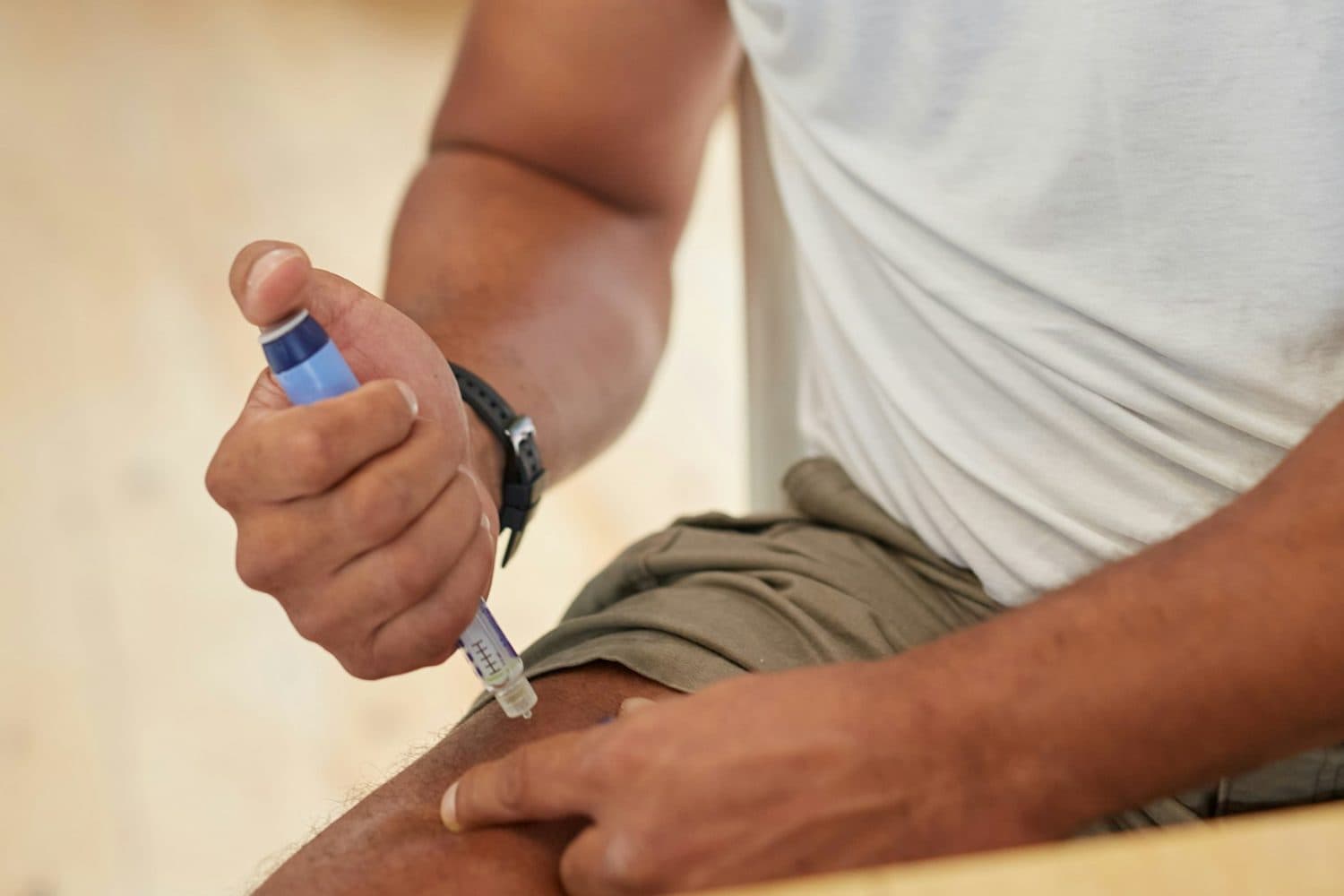
Scott lived with symptoms for 23 years and went through 25 attacks of pancreatitis before he learned he had familial chylomicronemia syndrome (FCS). Arrowhead Pharmaceuticals told his story in a December 2025 presentation for investors, noting that doctors had repeatedly blamed his attacks on alcohol.
The presentation says his triglycerides once reached 24,000mg/dL in the hospital. For a full year he spent 2 weeks out of every 8 in intensive care. Since December 2024, people with FCS have gained 2 FDA-approved medicines to add to their diet, Tryngolza (olezarsen) from Ionis Pharmaceuticals and Redemplo (plozasiran) from Arrowhead.
Both medicines quiet the same gene in the liver, but they differ in how often they are injected and in what their labels warn about. They also differ in price and in the paperwork an insurer asks for, and both of those changed during 2026.
No trial has tested the 2 drugs against each other. This comparison instead sets their FDA labels, list prices and insurance rules side by side from documents Trial Friend checked on October 29, 2026.
What Familial Chylomicronemia Syndrome Does to Triglycerides and the Pancreas
Familial chylomicronemia syndrome is an inherited disease in which an enzyme called lipoprotein lipase does not work properly. That enzyme normally breaks down chylomicrons, the particles that carry fat from a meal into the blood. Chylomicrons are about 90% triglycerides, a type of fat (Ionis, 2018).
When they pile up, triglycerides can climb above 10 times normal values, and the main danger is unpredictable acute pancreatitis (Ionis, 2018). Repeated attacks can lead to chronic pancreatitis and to diabetes caused by pancreatic damage, and many people also live with abdominal pain, fatigue and brain fog.
FCS is very rare, and Arrowhead estimates that about 6,500 people in the US have it, whether confirmed by a gene test or diagnosed clinically (Arrowhead, December 2025). Arrowhead and Ionis both put the number of Americans with severe hypertriglyceridemia, the broader group whose triglycerides are 500mg/dL or higher, at more than 3 million.
A very low-fat diet is the foundation of care, and both drug trials asked people to keep to 20g of fat a day or less. Both medicines are approved as an addition to that diet rather than a replacement for it (Tryngolza label; Redemplo label).
Waylivra, Tryngolza and Redemplo, the ApoC-III Drugs Behind FCS Treatment
All 3 medicines in this story aim at apoC-III, a protein made in the liver that slows the clearance of triglyceride-rich particles from the blood. Arrowhead describes lowering apoC-III as speeding the breakdown of those particles and helping the liver take them up without relying on lipoprotein lipase (Arrowhead, December 2025).
The first attempt ended in disappointment for families. Ionis and its affiliate Akcea announced on August 27, 2018 that the FDA had declined to approve Waylivra (volanesorsen) for FCS (Ionis, 2018). The decision came even though an FDA advisory committee had voted in the drug's favor that May.
The companies did not give the FDA's reasons in their announcement. They did list drops in platelets, the blood cells that help clots form, among the most common side effects in the Waylivra trial (Ionis, 2018).
Ionis returned with olezarsen, a newer antisense medicine with sugar tags that carry it into liver cells. The FDA approved it as Tryngolza in December 2024, more than 6 years after the Waylivra decision (Ionis, 2024). Ionis called it the first FDA-approved treatment for FCS.
Arrowhead's plozasiran followed on November 18, 2025 as Redemplo (Arrowhead, November 2025). It uses a different tool called small interfering RNA, or siRNA, which switches off the apoC-III message for months at a time.
For FCS, Tryngolza is injected 12 times a year and Redemplo 4 times a year, according to each FDA label. Either can go into the upper arm when a caregiver or health care provider gives the injection.
Redemplo vs Tryngolza Results in FCS, Read Side by Side
Tryngolza and Redemplo both lowered triglycerides and both saw fewer cases of pancreatitis than placebo in their FCS trials, but the trials measured at different times and in different ways. The table below lines up what each FDA label reports, and the rows on price and coverage come from company statements checked on October 29, 2026.
The 2 triglyceride numbers should not be set against each other directly. Balance reported an average change at 6 months, while PALISADE reported a median at 10 months, and a median is less pulled by a few very large swings.
The trial groups also differed, because every Balance participant had FCS identified by a gene test (Tryngolza label). In PALISADE, only 46% of people on the approved Redemplo dose had genetic confirmation, and the rest were diagnosed clinically (Redemplo label).
Pancreatitis counts were small in both trials, and each label describes the difference in FCS as numerical.
Side Effects of Tryngolza and Redemplo, From Platelets to Blood Sugar
Blood sugar rose on both medicines in people with FCS. Among trial participants without diabetes, signs of high blood sugar appeared in 52% of people on Tryngolza against 35% on placebo (Tryngolza label). On the approved Redemplo dose the same kind of measure reached 40% against 20% on placebo (Redemplo label). The 2 labels may not count these signs in exactly the same way, so the figures are a rough guide rather than a ranking.
Those signs were counted broadly, including lab values and new diabetes medicines, and the average rises were modest. HbA1c, a 3-month blood sugar measure, went up by less than 0.2 percentage points on Tryngolza and by up to 0.36 points on Redemplo.
Platelets carry the history of Waylivra with them. Tryngolza's label reports a drop in platelet count as a side effect in 12% of people with FCS across both doses tested, against 4% on placebo. Average platelet counts fell 6-10% across its trials, and the label reports no major bleeding linked to low platelets.
Liver findings are where the labels look most different, though timing explains part of it. Tryngolza gained a liver warning in June 2026, when the FDA approved it for severe hypertriglyceridemia based on trials in 1,061 people. In those trials liver enzymes rose to 3 times the upper limit of normal or more in 7% of people on 80mg, against 3% on placebo.
Redemplo's label reports liver enzyme rises that stayed within the normal range in FCS. Its larger severe hypertriglyceridemia trials have not yet been reviewed by the FDA. Arrowhead reported in August 2026 that those trials showed no meaningful liver enzyme rises against placebo (Arrowhead, August 2026).
LDL cholesterol rose on both drugs from very low starting levels. Tryngolza's label says LDL stayed under 70mg/dL in 74% of treated people, and Redemplo's says the average was under 50mg/dL at 12 months.
Why Tryngolza's List Price Fell 93% in 2026
Tryngolza's yearly list price fell 93% on April 1, 2026, in a cut Ionis tied to severe hypertriglyceridemia, a far larger condition than FCS. The price dropped from $595,000 to $40,000, and Ionis said it would stay the same for that broader use (Ionis, March 2026; Fierce Pharma, 2026). The FDA approved Tryngolza for severe hypertriglyceridemia on June 24, 2026.
Tryngolza's yearly list price fell 93%, from $595,000 to $40,000, and Redemplo's fell 25%, from $60,000 to $45,000. Trial Friend divided each current price by the injections in each FDA label to get the cost of 1 dose, checked October 29, 2026. Sources: Ionis statement of March 25, 2026; Arrowhead releases of December 2025 and May 7, 2026; Fierce Pharma for the launch price.
Arrowhead launched Redemplo at $60,000 a year in November 2025 and reported a new price of $45,000 on May 7, 2026 (Arrowhead, December 2025; Arrowhead, May 2026). The company calls its approach One-REDEMPLO, a single price meant to stay the same for FCS and for severe hypertriglyceridemia if that use is approved.
Arrowhead describes the $5,000 gap above Tryngolza as a premium it believes Redemplo's clinical evidence supports. Tryngolza's new yearly price is about one-fifteenth of its launch price.
One reading of Ionis's statement is that Tryngolza is now priced for a far larger group than the 66-person FCS trial that won its first approval. Whether that lowers what an FCS family pays depends on their insurance plan.
List price is mostly what insurers negotiate from, and both companies run copay programs for people with commercial insurance. Ionis Every Step and Rely On Redemplo each say eligible people may pay as little as $0. Ionis says its copay program is not open to people on Medicare, Medicaid or other government plans.
Does Insurance Require an FCS Gene Test for Tryngolza or Redemplo?
Some insurance plans do require a gene test for Tryngolza in FCS. Of 4 coverage policies Trial Friend read on October 29, 2026, 2 of the 3 for Tryngolza ask for genetic confirmation on the FCS route. Wellmark's Redemplo policy accepts a clinical score with a history of repeated pancreatitis or abdominal pain in place of one.
- 1A gene test confirming FCS, or a NAFCS score of 45 or more or a Moulin score of 10 or more only if the gene test was inconclusiveGene test
- 2Fasting triglycerides of 880mg/dL or more
- 3A very low-fat diet, and no use alongside Redemplo
- 1A diagnosis of FCS, with no gene test named
- 2No use alongside Redemplo
- 1A gene test confirming FCSGene test
- 2Untreated fasting triglycerides of 880mg/dL or more
- 3Other lipid medicines tried without success, and no use alongside Redemplo
- 1A gene test, or a clinical score with repeated pancreatitis or abdominal pain and other causes ruled out
- 2Untreated fasting triglycerides of 880mg/dL or more
- 3Other lipid medicines tried without success
Two of the 3 Tryngolza policies Trial Friend read ask for a gene test on the FCS route, while Wellmark's Redemplo policy lets a clinical score, together with repeated pancreatitis or abdominal pain, stand in for one. Sources: CVS Caremark policy 6786-A, UnitedHealthcare program 2026 P 1470-3 and Wellmark policies 05.05.82 and 05.06.15.
The NAFCS score is a points checklist for how likely FCS is. CVS Caremark accepts it only when a gene test was inconclusive, while Wellmark's Redemplo policy accepts it as an alternative to a gene test. The checklist gives points for a history of pancreatitis, for triglycerides that stay above 880mg/dL and for a lower body weight (Wellmark, March 2026). It also gives points when other causes, such as alcohol or certain medicines, have been ruled out.
Wellmark's 2 policies, read together, show how much the route matters. A person whose FCS was diagnosed without a gene test can qualify on Wellmark's written Redemplo route if the other criteria are met. The same person would not meet Wellmark's Tryngolza FCS route, which requires a gene test.
Each of the 3 Tryngolza policies rules out using it alongside Redemplo. Every plan also requires proof of a good response before it renews coverage, usually lower triglycerides or fewer pancreatitis attacks.
Sponsored FCS Gene Tests and Who Can Order Them
PreventionGenetics runs the Ionis-sponsored test for people in the US or Canada with 2 fasting triglyceride results in a row above 880mg/dL and no other known cause. Its program page says it will not accept samples after October 31, 2026, and points doctors to the lab's regular FCS panel afterward.
Arrowhead's FCS Seek program runs through Ambry Genetics and is open to people with a clinical history of severe hypertriglyceridemia. The FCS Foundation lists its criteria as age 17 or older with a fasting triglyceride result above 600mg/dL in the past 12 months. Arrowhead described the testing as no-cost when it launched the partnership in 2022 (Arrowhead, 2022).
The FCS Foundation, a Network Built by and for FCS Families
The FCS Foundation describes its mission as building a global support network for patients and caregivers living with FCS. It runs LivingWithFCS.org, which carries FCS-friendly recipes, patient stories, webinars and a page on speaking up for your own care.
Its genetic testing page explains both sponsored programs and still listed the Ionis program on October 29, 2026. Families can contact the foundation or ask their doctor which test is still open before a kit is ordered.
The foundation says its website is produced with unrestricted educational grants from Arrowhead and Ionis, the makers of the 2 drugs in this comparison. Its testing page describes the programs from both companies.
FCS Clinical Trials in 2026, From a Children's Tryngolza Study to Gene Editing
Neither medicine is approved for children, and the main US trial now recruiting aims to change that. Ionis is testing monthly olezarsen in about 12 children and teens aged 2-17 with FCS in an open-label study, meaning everyone receives the drug (ClinicalTrials.gov, NCT07727538).
Its 5 listed sites are the University of Alabama in Birmingham, UCSF Benioff Children's Hospital in San Francisco and UT Southwestern in Dallas. The other 2 are Cook Children's in Fort Worth and Mary Bridge Children's in Tacoma. The study began on July 31, 2026, and the registry estimates its main results in August 2030.
A further step is being tested in China. CorrectSequence Therapeutics is giving adults with FCS a single infusion of CS-121 in a study in Hefei (ClinicalTrials.gov, NCT07176923). CS-121 is a base-editing treatment carried in tiny fat particles and designed to edit the APOC3 gene in the liver.
A second CS-121 study at Shanghai Children's Medical Center is listed as recruiting children aged 4-17 (ClinicalTrials.gov, NCT07371767). Each study plans about 15 participants, neither has US sites, and no results have been posted.
The same target that Tryngolza reaches 12 times a year and Redemplo 4 times a year is now being tested as a 1-time edit. The FCS trials page keeps the live list of open studies.
One email when Familial Chylomicronemia Syndrome trials change or an FDA decision lands. No newsletter, no spam.
You'll get new recruiting trials, changes to trials, FDA decisions and condition news for Familial Chylomicronemia Syndrome. Turn any of these off from the link in every email.
Questions About Redemplo and Tryngolza for a Lipid Specialist
Choosing between the 2 medicines is a decision for a person and their lipid specialist, and each question below comes from a gap in the documents above.
- Has my FCS been confirmed by a gene test, and if not, should I be tested while a sponsored program is open?
- What does my insurance plan's policy require for each medicine, and which route would I qualify under?
- Would 4 injections a year or 12 fit my life better, and who would give them?
- How often should my blood sugar, HbA1c and platelets be checked on each drug?
- Should my liver enzymes be tested before starting Tryngolza, as its label suggests?
- Which copay or assistance program applies to my insurance, and what happens if I am on Medicare?
- Am I or my child eligible for the pediatric olezarsen study or any other FCS trial?
Redemplo and Tryngolza Questions, Answered Briefly
Is Redemplo better than Tryngolza for FCS?
No study has answered that, because Redemplo and Tryngolza have never been tested against each other. Their FCS trials enrolled different groups, with every Tryngolza participant genetically confirmed and fewer than half of people on the approved Redemplo dose confirmed by a gene test.
Does Redemplo raise blood sugar?
Redemplo can raise blood sugar, and high blood sugar was reported in 20% of people on it against 8% on placebo in its FCS trial. That figure covers both doses tested, and fasting glucose rose by up to 9mg/dL on average on the approved dose. High blood sugar was 1 of the 2 reasons people stopped the drug (Redemplo label).
Can you take Redemplo and Tryngolza together?
Taking Redemplo and Tryngolza together has not been studied, and the Tryngolza coverage policies Trial Friend read from CVS Caremark, UnitedHealthcare and Wellmark all rule out using it alongside Redemplo.
Can you switch from Tryngolza to Redemplo?
Some people already have switched, though no study has tested switching. Arrowhead reported in May 2026 that about 85% of Redemplo prescriptions were for people new to apoC-III drugs. Most of the rest were for people switching from another apoC-III medicine.
Is Redemplo approved for severe hypertriglyceridemia?
Redemplo is not yet approved for severe hypertriglyceridemia. Arrowhead plans to file with the FDA by the end of 2026 and to use a priority review voucher (Arrowhead, August 2026). In its 2 trials of 757 people, median triglycerides fell 79-81% at 12 months.
How much do Redemplo and Tryngolza cost with insurance?
What a person pays depends on their plan, because the yearly list prices of $45,000 for Redemplo and $40,000 for Tryngolza are starting points for insurer negotiations. Both makers offer copay programs that can bring commercial insurance costs as low as $0, and Arrowhead's line is 1-844-733-3675.