Half of the people treated for acute myeloid leukemia with intensive chemotherapy in a German registry of 2,263 patients had started it within 3 days of diagnosis (Röllig et al., Blood, 2020). The expert panel that writes the rules for AML care, the European LeukemiaNet, asks labs to return the FLT3, NPM1, IDH1 and IDH2 results within 3 to 5 days, a target quoted by the academic labs that studied their own turnaround times. Put those 2 facts side by side and you have the quiet problem of a new AML diagnosis: for a large share of patients, the gene results that decide which drugs they can take arrive after the first bag of chemotherapy is already running.
That does not mean the treatment was wrong. Most first treatments for AML do not depend on a gene result, and some patients cannot wait a single day. It does mean that a family sitting in a hospital room this week, watching the nurse hang that first bag, should know which tests were sent, when each result is due, and which 2 of them can change what goes into the line before it starts. This guide covers that, in plain words, with the evidence on whether a short wait is safe.
Which Genetic Tests Are Run at an AML Diagnosis, and What Each One Finds
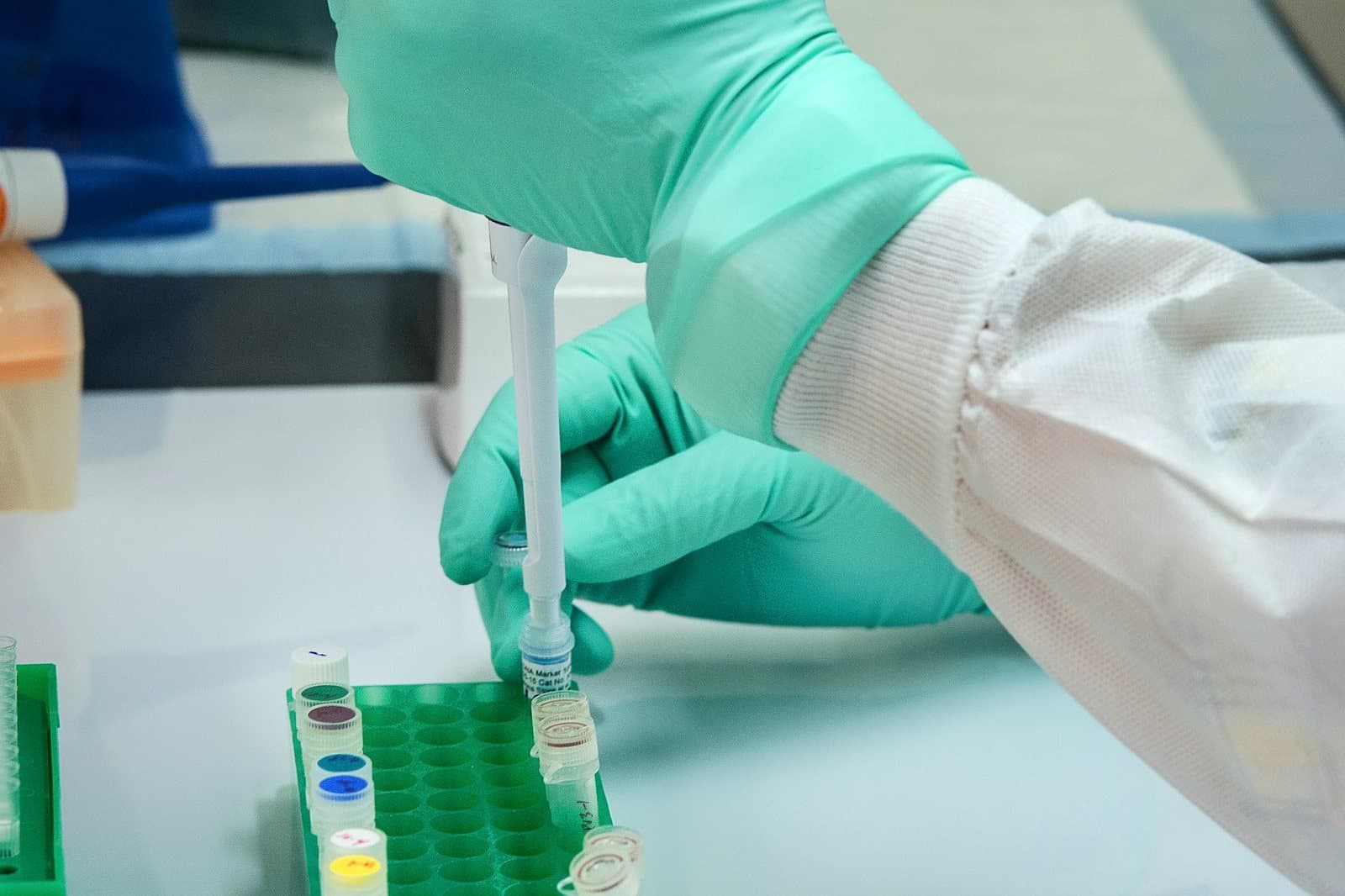
An AML workup runs 5 kinds of tests on the same bone marrow sample, and they answer different questions at different speeds. Flow cytometry confirms the diagnosis within a day or so by reading proteins on the surface of the leukemia cells. A karyotype grows the cells in a dish and photographs their chromosomes, which is why it takes a week or 2. FISH uses glowing probes to find specific rearrangements without growing anything. Targeted PCR tests read 1 gene at a time, fast. A next-generation sequencing panel reads 40 or more genes at once and is the slowest of the group.
The College of American Pathologists and the American Society of Hematology set out which of these should be routine in a 2017 guideline, and a survey of 234 pathologists, run as the guideline was being written, found karyotyping was routine for 96% of them while "other molecular studies" were routine for 78% (Arch Pathol Lab Med, 2017). Testing has spread since, but the gap is a reminder that where you are diagnosed still shapes what gets tested. Blood Cancer United, the organization formerly known as the Leukemia & Lymphoma Society, puts it in 11 words on its diagnosis page: "DNA sequencing should be done when the cancer is first diagnosed."
The gene names that matter most for treatment are FLT3 (both the ITD and TKD kinds of change), NPM1, IDH1, IDH2 and KMT2A, which older reports call MLL. TP53 and CEBPA matter for prognosis and for choosing between intensive and gentler chemotherapy, but neither has an FDA-approved targeted drug. The next sections take the 5 with drugs one at a time.
How Long AML Mutation Test Results Take, From 2 Days to 3 Weeks
A rapid single-gene test for FLT3, IDH1 or IDH2 usually comes back in 3 to 5 working days, and a full sequencing panel anywhere from 2 days to 3 weeks depending on the lab. Those are the ranges reported by the GOAL Consortium, a group of academic hematopathology labs, 18 of which answered its 2021 survey (Blood Advances, 2023). A karyotype has to wait for cells to grow in culture, and the European LeukemiaNet asks for it within 5 to 7 days, though it often takes longer. For urgent acute leukemia cases, 5 of 15 labs returned a sequencing panel within a week, 8 took 8 to 14 days, and 2 took 15 to 21 days.
The chart leaves out the private reference labs, because their published turnaround pages could not be read reliably for this post. Ask your center directly. Some centers send FLT3 as a rush test and let the rest follow, and the question to put to your team is simply whether a rush test was ordered on day 1.
Is It Safe to Wait for FLT3 and NPM1 Results Before Starting AML Chemotherapy?
For a clinically stable adult, waiting several days for genetic results did not shorten survival in the 3 largest studies that asked the question, and the Beat AML trial showed that older adults could safely be assigned treatment by their gene results within 7 days. The exceptions are real, though. Anyone whose white count is climbing fast, whose organs are under strain, or whose leukemia is the acute promyelocytic kind needs treatment within hours, and that call belongs to the team at the bedside.
The German SAL registry is the biggest piece of evidence. Across 2,263 adults given intensive chemotherapy, 2-year survival was 51% for those treated within 5 days of diagnosis, 48% at 6 to 10 days, 44% at 11 to 15 days and 50% beyond 15 days, differences that were not statistically significant (Röllig et al., Blood, 2020). The result held whether patients were under or over 60. The authors wrote that it "may be a feasible approach to wait for genetic and other laboratory test results" in stable patients. A French single-center series of 599 patients, where the median wait was 8 days, found the same (Bertoli et al., Blood, 2013).
An older American study pointed the other way for younger patients. Sekeres and colleagues reported in 2009 that a longer wait was tied to fewer remissions and shorter survival in people under 60, but not in older ones, and opened their paper by calling AML "an oncologic emergency" (Blood, 2009). That study predates most rapid testing and the drugs that now depend on it, which is part of why the newer registry carries more weight today, but it is one reason some teams still move quickly for a fit younger patient.
Beat AML tested the waiting question on purpose. Between 2016 and 2019, 487 adults aged 60 and older at 14 US centers had their marrow sent for central genetic testing before any treatment was chosen; 395 turned out to be eligible, and 94.7% of them had a treatment assignment within 7 days (Burd et al., Nature Medicine, 2020). Deaths in the first 30 days were 3.7% among those who entered one of the trial's study arms, against 20.4% among those who chose standard care instead, and median survival was 12.8 months against 3.9. Those 2 groups were not randomly assigned, so the gap partly reflects who chose what, and the authors say so. The trial also changed its own rules after its first 2 deaths: both patients had KMT2A rearrangements and white counts rising by the day, and the protocol was amended to let that group start treatment before full results were in.
“it is safe to delay treatment initiation for up to 7 d”
Burd et al., Beat AML master trial, Nature Medicine, 2020, who add that there are notable exceptions
The 5 AML Mutations With an FDA-Approved Targeted Drug, and the 8 Drugs
Eight FDA-approved pills target 5 mutations in AML, but only 3 of them are approved for the very first treatment, which is why the FLT3 and IDH1 results are the 2 that can change what starts on day 1. The other 5 drugs are approved for leukemia that has come back or never went away, so their results matter later. Every one of these drugs needs the mutation to be present, and most labels name the specific test.
- FLT3 is changed in about 22% of younger adults in intensive-treatment trials (ITD type; another 7% have the TKD type) and in 12% of adults 60 and older for ITD (Papaemmanuil et al., NEJM, 2016; Beat AML, Blood Cancer Journal, 2025). At the first treatment, Rydapt (midostaurin) from Novartis is added to standard chemotherapy for any FLT3 mutation, and Vanflyta (quizartinib) from Daiichi Sankyo is added for the ITD type only, then continued as maintenance. At relapse, Xospata (gilteritinib) from Astellas is taken on its own. All 3 labels name the LeukoStrat CDx FLT3 test.
- IDH1 is changed in about 9% of adults 60 and older (Beat AML, 2025). Tibsovo (ivosidenib) from Servier is approved with azacitidine, or alone, as a first treatment for people 75 and older or too unwell for intensive chemotherapy, and also at relapse. Rezlidhia (olutasidenib) from Rigel is approved at relapse. Both labels name the Abbott RealTime IDH1 test.
- IDH2 is changed in about 19% of adults 60 and older, closer to 1 in 5 than 1 in 10 (Beat AML, 2025). Idhifa (enasidenib), marketed by Bristol Myers Squibb under license from Servier, is approved at relapse, with the Abbott RealTime IDH2 test named in its label. There is no IDH2-targeted drug approved for the first treatment.
- NPM1 is the single most common change, found in 28% of younger adults and 20% of adults 60 and older (Papaemmanuil, 2016; Beat AML, 2025). Two menin inhibitors are approved at relapse for people with no satisfactory alternative: Revuforj (revumenib) from Syndax, approved for NPM1 on October 24, 2025, and Komzifti (ziftomenib) from Kura Oncology, approved November 13, 2025. Both labels state that no FDA-approved companion test for NPM1 exists yet, so a lab's own validated test is used.
- KMT2A rearrangements, found in about 2 to 3% of adults, were the first use for Revuforj, approved November 15, 2024, for relapsed acute leukemia in anyone 1 year or older. The FDA authorized a FISH test kit from Cytocell for that use in September 2025. This is also the group the Beat AML trial learned not to make wait.
Put the frequencies and the labels together and a pattern appears that no single source states. Among adults 60 and older in the Beat AML cohort, 20.5% had a FLT3 mutation and 8.7% had an IDH1 mutation, so somewhere between 1 in 5 and nearly 1 in 3 of them carried a result that could have changed the first treatment under an FDA label, depending on how often the 2 overlap, which the paper's main text does not report. Counting every mutation with an approved drug at any point in the disease, the Beat AML authors themselves put the share at 48%. Trial Friend's arithmetic, checked October 19, 2026, is simply those 2 label-matched frequencies added with and without overlap; the trial-enrolled cohort and the fitness rules in each label mean the real figure at any one hospital will differ.
Venclexta Needs No Gene Test, So Why Your Team Still Wants the AML Panel
Venclexta (venetoclax) with azacitidine, the most common first treatment for adults who are 75 or older or not fit for intensive chemotherapy, requires no mutation result under its label, yet the same combination produced a median survival of 26.5 months in one genetic group and 5.5 months in another in the trial that approved it and an earlier study of the same combination. That spread is the practical reason the panel still matters for someone who will never take a targeted pill.
The numbers come from the VIALE-A trial, run by AbbVie and Genentech, which compared venetoclax plus azacitidine with azacitidine alone in 431 adults and improved median survival from 9.6 to 14.7 months overall (DiNardo et al., NEJM, 2020). Analyses by mutation, which pooled VIALE-A with an earlier phase 1b study of the same combination, told a more specific story. People with an IDH1 or IDH2 change reached a complete or near-complete remission 79% of the time on the combination against 11% on azacitidine alone, with median survival of 24.5 months against 6.2 (Pollyea et al., Clinical Cancer Research, 2022). People with a FLT3 change responded 67% of the time against 36% (Konopleva et al., Clinical Cancer Research, 2022). People with a TP53 change plus poor-risk chromosomes responded 41% of the time, but their median survival, 5.2 months, was no better than the 4.9 months on azacitidine alone (Pollyea et al., 2022).
A 2024 analysis of 279 of those venetoclax patients by Hartmut Döhner and colleagues sorted them with just 4 genes. The 52% with no TP53 change, no FLT3-ITD and no NRAS or KRAS change had a median survival of 26.5 months on venetoclax and azacitidine; the 25% with FLT3-ITD or a RAS change but normal TP53 had 12.1 months; the 23% with a TP53 change had 5.5 months (Blood, 2024). The authors concluded that the standard risk groupings, built for intensive chemotherapy, "did not adequately stratify" survival on this regimen. For a family deciding whether a 78-year-old should start the combination, or ask about a trial instead, those 4 gene results are the difference between a plan with a 2-year horizon and one measured in months.
What to Ask in the First 48 Hours After an AML Diagnosis
The questions below assume you are in a hospital, possibly already on fluids and antibiotics, with a treatment start planned within days. They are built from the NCCN patient guideline's own list and from what the evidence above says actually changes the plan.
- Which genetic tests were ordered on the marrow sample, and was FLT3 sent as a rush test? Ask for the list by name: FLT3, NPM1, IDH1, IDH2, TP53, a karyotype, and the sequencing panel.
- When is each result due, and will FLT3 and IDH1 be back before the first treatment starts? If not, ask whether it is safe in my case to wait for them, and if the answer is no, ask what the reason is. A rising white count, organ strain or a suspected acute promyelocytic leukemia are good reasons.
- If my FLT3 result comes back positive after chemotherapy has begun, can Rydapt or Vanflyta still be added to this cycle? The Rydapt trial started the pill on day 8 of chemotherapy, so a late result is not always a missed chance.
- Is my leukemia the kind that should not wait? Ask specifically about acute promyelocytic leukemia, which has its own treatment, and about a KMT2A rearrangement with a fast-rising white count.
- Will my insurance pay for these tests? The NCCN patient guideline lists this as a question in its own right, and the answer affects whether the full panel is run now or later.
- Is there a center nearby that specializes in my subtype, and is there a trial that assigns treatment by gene results? The Beat AML master trial (NCT03013998) was still recruiting adults 60 and older at its September 2026 update, and Trial Friend's AML trial list is pulled from ClinicalTrials.gov each day.
If the diagnosis came through a community hospital, the single most useful thing a family can do in the first 2 days is get the marrow slides and the test list in front of a leukemia specialist, even by phone. Blood Cancer United's information specialists (1-800-955-4572) and the Aplastic Anemia and MDS International Foundation's helpline (800-747-2820, option 2) both help families find one, and neither charges for it.
Why AML Gene Results Took 20 Years to Matter, and Why They Matter Now
The FLT3 duplication was first described in leukemia cells in 1996 (Nakao et al., Leukemia). The first drug that required the result, Rydapt, was approved in April 2017, 20 years and 4 months later. NPM1 was reported in the New England Journal of Medicine in January 2005; the first drug approved specifically for it arrived in October 2025, 20 years and 9 months on. The KMT2A gene was cloned at its chromosome breakpoint in 1991 and waited 33 years for Revuforj. IDH1 and IDH2 moved faster, 9 and 7 years from discovery in AML to an approved drug. Across the 5 markers, Trial Friend counts an average of 18 years between the day a mutation was first reported in AML and the day a drug needed the test, with each discovery dated to its PubMed record and each approval to Drugs@FDA, checked October 19, 2026.
For 2 decades, then, a positive FLT3 or NPM1 result told doctors something about the odds and nothing about the prescription, and a culture of starting chemotherapy before the results were back made sense. The 8 drugs above are the reason that culture is now a question rather than a rule. The test that used to arrive too late to matter now arrives too late to use, unless someone asks for it on the first day. That someone is often the person sitting in the visitor's chair.
One email when Acute Myeloid Leukemia trials change or an FDA decision lands. No newsletter, no spam.
You'll get new recruiting trials, changes to trials, FDA decisions and condition news for Acute Myeloid Leukemia. Turn any of these off from the link in every email.
Common Questions About AML Genetic Testing
How long do FLT3 test results take in AML?
A rapid FLT3 test usually comes back in 3 to 5 working days at labs that offer one, which matches the European LeukemiaNet's target, while a full sequencing panel that includes FLT3 took 8 days or more at 10 of 15 academic labs surveyed by the GOAL Consortium for urgent cases. The NCI's myeloMATCH research assay reports in under 48 hours, but it is not yet how most hospitals test.
Should I wait for genetic test results before starting AML chemotherapy?
For a clinically stable adult, a wait of several days did not worsen survival in the 2,263-patient SAL registry or the 599-patient French series, and the Beat AML trial safely assigned treatment by gene results within 7 days in adults 60 and older. People with acute promyelocytic leukemia, a fast-rising white count, organ strain or, as Beat AML found, a KMT2A rearrangement with rising counts should not wait, and a 2009 study found that delay hurt patients under 60, so the decision is individual and belongs to your team.
Which AML mutations have FDA-approved targeted drugs?
Five do: FLT3 (Rydapt, Vanflyta and Xospata), IDH1 (Tibsovo and Rezlidhia), IDH2 (Idhifa), NPM1 (Revuforj and Komzifti) and KMT2A rearrangements (Revuforj). TP53 and CEBPA are tested because they shape prognosis and the choice between intensive and gentler chemotherapy, but as of October 2026 neither has an approved targeted drug.
What is a companion diagnostic test for AML?
A companion diagnostic is a specific test the FDA has reviewed alongside a drug, so that the drug's label can say the mutation must be found by an FDA-approved test. For AML those are the LeukoStrat CDx FLT3 assay for Rydapt, Xospata and Vanflyta, the Abbott RealTime IDH1 assay for Tibsovo and Rezlidhia, and the Abbott RealTime IDH2 assay for Idhifa. For NPM1 both Revuforj's and Komzifti's labels say no FDA-approved companion test exists yet, so hospitals use their own validated tests.
Does venetoclax require a mutation test for AML?
No. Venclexta's label approves it with azacitidine, decitabine or low-dose cytarabine for newly diagnosed AML in adults 75 and older or those unfit for intensive chemotherapy, with no gene requirement. The results still matter because median survival on the combination ranged from 26.5 months to 5.5 months depending on 4 genes in the 2024 analysis of the VIALE-A and phase 1b patients.