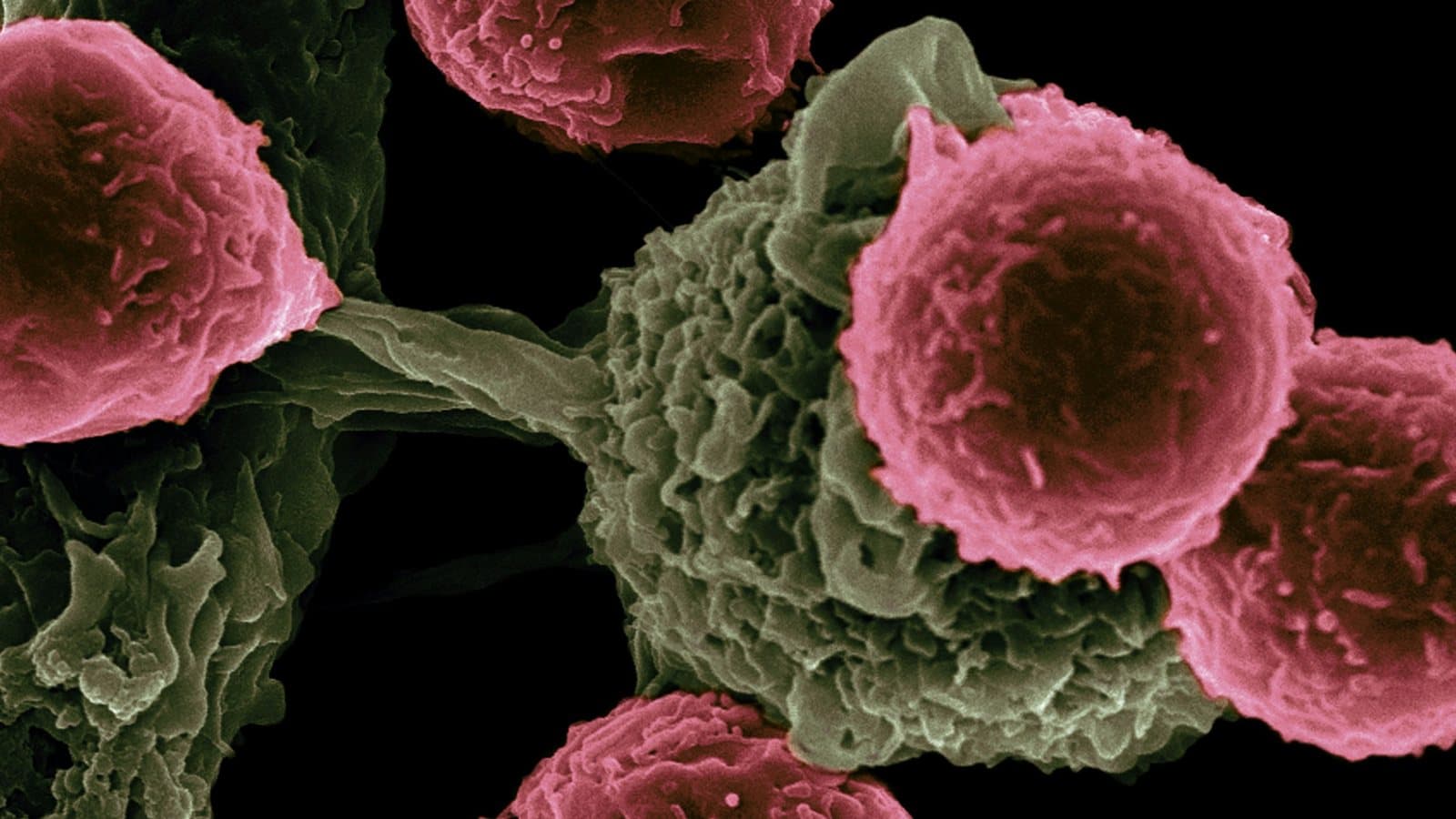
Three of the most widely used multiple sclerosis drugs in the United States do the same thing. Kesimpta, Ocrevus and Briumvi each carry an antibody that finds a protein called CD20 on the surface of B cells, the immune cells that help drive the attacks on nerve coating in MS, and clears those cells out of the blood. Every head-to-head question a patient asks, which one has fewer side effects, which one is easier, which one works better, is really a question about the 3 ways of delivering that one idea: a pen you press into your thigh at home once a month, a 2-hour infusion twice a year, or a 1-hour infusion twice a year.
Multiple sclerosis is not a rare disease. The National MS Society puts the US count near 1 million people, which is why some readers of Trial Friend have asked what it is doing on a site built for conditions that affect a few thousand. The answer is in the drugs. The anti-CD20 antibodies that treat MS are the same mechanism, and in several cases the same molecules, that have been reaching rare autoimmune diseases one at a time: NMOSD in 2020, pemphigus vulgaris in 2018, vasculitis in 2011, IgG4-related disease and generalized myasthenia gravis in 2025. MS is where B-cell therapy has the most patients, the longest safety record and the deepest trial data, so it is the clearest place to learn how these drugs behave before meeting one in a rare disease where the evidence is thinner. The second half of this guide follows the thread into those conditions. The first half answers the questions people type into Google about Kesimpta, Ocrevus and Briumvi, from the labels.
| Kesimpta | Ocrevus | Briumvi | |
|---|---|---|---|
| Generic name and maker | Ofatumumab, Novartis | Ocrelizumab, Genentech (Roche) | Ublituximab, TG Therapeutics |
| Target | CD20 on B cells | CD20 on B cells | CD20 on B cells |
| FDA approval for MS | August 20, 2020 | March 28, 2017 | December 28, 2022 |
| Approved for | Relapsing forms of MS in adults | Relapsing forms and primary progressive MS in adults; relapsing-remitting MS in children 10 and older | Relapsing forms of MS in adults |
| How it is given | Under the skin with a prefilled Sensoready pen, at home after the first supervised dose | IV infusion at a clinic, or a 10-minute under-the-skin injection (Ocrevus Zunovo) given by a clinician | IV infusion at a clinic |
| Schedule | 20 mg at weeks 0, 1 and 2, then 20 mg once a month | Two 300 mg infusions 2 weeks apart, then 600 mg every 6 months | 150 mg, then 450 mg 2 weeks later, then 450 mg every 24 weeks |
| Time per dose | About a minute | First 2 infusions 2.5 hours or longer; later ones 3.5 hours, or 2 hours if no serious reaction so far | First infusion 4 hours; every later infusion 1 hour |
| Premedication | None required | Steroid and antihistamine before every infusion | Steroid and antihistamine before every infusion |
| Pivotal trials and comparator | ASCLEPIOS I and II vs teriflunomide (Aubagio) | OPERA I and II vs interferon beta-1a (Rebif) | ULTIMATE I and II vs teriflunomide (Aubagio) |
| Relapse reduction vs comparator | 51% and 58% | 46% and 47% | 59% and 49% |
| Most common side effects | Upper respiratory infections 39%, injection-related reactions 21%, headache 13%, injection site reactions 11% | Upper respiratory infections 40%, infusion reactions 34% | Infusion reactions 48%, upper respiratory infections 45% |
| PML on the label | No cases in MS trials; seen with high-dose ofatumumab in leukemia | Cases reported in MS patients after approval | Cases seen with anti-CD20 antibodies including Briumvi |
| Extra label warnings | Liver injury, low immunoglobulins, fetal risk | Liver injury, low immunoglobulins, possible cancer risk including breast cancer, immune colitis | Liver injury, low immunoglobulins, fetal risk |
| Trial Friend drug page | Kesimpta | Ocrevus | Briumvi |
What Kesimpta, Ocrevus and Briumvi Have in Common Before Any of Them Differ
B cells make antibodies, but in MS their bigger role is as organizers, presenting fragments of nerve coating to T cells and releasing signals that keep inflammation running. Removing them was a bet that paid off faster than most in neurology. When Stephen Hauser's team at UCSF published the OPERA trials in the New England Journal of Medicine in January 2017, ocrelizumab had cut relapses by nearly half against interferon and became the first drug ever approved for primary progressive MS (Hauser et al., NEJM 2017). Three years later the same group's ASCLEPIOS trials put ofatumumab, a drug first approved in 2009 as a leukemia infusion, into a monthly pen at a dose about 1/100th of the cancer dose (Hauser et al., NEJM 2020). Ublituximab, engineered with less of a sugar called fucose so that immune cells kill the B cells it tags more efficiently, which is what allows a lower dose and a 1-hour infusion, followed in 2022 (Steinman et al., NEJM 2022).
“In the key clinical studies, this breakthrough treatment produced a profound reduction in new brain lesions, reducing relapses and slowing underlying disease progression.”
Stephen L. Hauser, MD, Director of the UCSF Weill Institute for Neurosciences, on Kesimpta's approval, August 2020
Because they share a mechanism, the 3 labels share most of their fine print, and that shared fine print is the part a reader should learn first. All 3 require a hepatitis B blood test before the first dose, because killing B cells can let a dormant hepatitis B infection reactivate, and the Ocrevus and Briumvi labels both record that happening. All 3 require baseline immunoglobulin and liver tests, warn that serious infections have occurred, tell you to finish live vaccines at least 4 weeks before starting and inactivated ones 2 weeks before, and say the drug may harm a pregnancy. All 3 mention progressive multifocal leukoencephalopathy, the rare JC virus brain infection, though the wording differs in a way worth reading closely below.
The differences are real, and they are mostly about delivery, time and 2 warnings that appear on only 1 label.
Kesimpta Side Effects, Dosing and What the Monthly Injection Involves
Kesimpta is the only one of the 3 you give yourself. The label calls for 20 mg under the skin at weeks 0, 1 and 2, then 20 mg once a month from week 4, with the first injection done under a clinician's eye and the rest at home from a single-use Sensoready pen into the thigh, abdomen or upper arm (Kesimpta prescribing information, April 2026). There is no premedication and no infusion chair, which is the reason the drug exists in this form. Novartis built it on a bet that patients would trade a clinic's supervision for a routine they control.
The side effects are the ones you would expect from a monthly shot that lowers immune defenses. In the pooled ASCLEPIOS trials, 39% of people on Kesimpta had an upper respiratory infection against 38% on teriflunomide, 21% had a systemic injection-related reaction such as fever, chills or headache against 15%, 13% had headache, 11% had a local injection site reaction and 10% had a urinary tract infection. The most common reason people stopped was a drop in IgM antibodies, 3.3%, which the trials defined as IgM falling 10% below the normal range (Kesimpta prescribing information, Table 1). Serious infections were 2.5% on Kesimpta against 1.8% on teriflunomide.
Two label details answer questions people search for. The Kesimpta label says no cases of PML were reported in its MS trials, then notes that PML deaths did occur in leukemia patients given ofatumumab at far higher IV doses, and that PML has been seen with other anti-CD20 drugs. The label also carries a liver injury warning, with liver tests required before the first dose and during treatment as needed, which Ocrevus and Briumvi share.
Ocrevus Infusions, Ocrevus Zunovo and the Only Approval for Primary Progressive MS
Ocrevus is the oldest of the 3 and the only one with 3 indications: relapsing MS in adults, relapsing-remitting MS in children 10 and older who weigh at least 25 kg, and primary progressive MS, the form with no relapses and no other approved drug. The IV schedule starts with two 300 mg infusions 2 weeks apart, each run over 2.5 hours or longer, then 600 mg every 6 months, run over 3.5 hours or over 2 hours for people who have had no serious infusion reaction (Ocrevus prescribing information, May 2026). Every infusion is preceded by a steroid and an antihistamine, and the label asks for an hour of observation afterward.
Since September 13, 2024 there has been a second way to get the same drug. Ocrevus Zunovo pairs ocrelizumab with hyaluronidase, an enzyme that lets a large volume spread under the skin, and is given as an approximately 10-minute injection twice a year by a healthcare professional. Genentech's OCARINA II trial found blood levels and a safety profile consistent with the IV form (Genentech, September 2024). It is not a home injection, but it turns a half-day in an infusion chair into a short clinic visit.
The OPERA trials randomized 1,656 people to Ocrevus or interferon beta-1a, and the annualized relapse rate was 0.156 against 0.292 in OPERA I and 0.155 against 0.290 in OPERA II, reductions of 46% and 47%, with 12-week confirmed disability progression at 9.8% against 15.2% in the pooled analysis, a 40% risk reduction (Ocrevus prescribing information, Table 6). In the ORATORIO trial of primary progressive MS, 32.9% of people on Ocrevus had confirmed disability progression at 12 weeks against 39.3% on placebo, a 24% risk reduction, which is the number the whole PPMS approval rests on.
Two warnings sit on the Ocrevus label and not the others. The first is that cases of PML have been reported in MS patients treated with Ocrevus after approval, including in people who had never taken natalizumab and had no other known risk factor. The second is that an increased risk of cancer, including breast cancer, may exist, and the label asks patients to follow standard breast cancer screening. Immune-mediated colitis was added from post-marketing reports. Infusion reactions affected 34% of people in the relapsing trials against 10% on interferon, and upper respiratory infections 40% against 33% (Ocrevus prescribing information, Table 1).
Briumvi, the 1-Hour Infusion and the Newest Anti-CD20 Data
Briumvi was approved on December 28, 2022 for relapsing forms of MS in adults. Its selling point is time. The first infusion of 150 mg runs 4 hours, the second of 450 mg 2 weeks later runs 1 hour, and every infusion after that, 450 mg every 24 weeks, runs 1 hour (Briumvi prescribing information, February 2026). Like Ocrevus it requires a steroid and antihistamine beforehand, and the label asks for an hour of observation after the first 2 infusions, with later observation at the doctor's discretion.
The ULTIMATE trials randomized 1,094 people to Briumvi or teriflunomide. Annualized relapse rates were 0.076 against 0.188 in ULTIMATE I and 0.091 against 0.178 in ULTIMATE II, reductions of 59% and 49%. On MRI, Briumvi cut the number of active gadolinium-enhancing lesions by 97% in both trials. Where it did not separate from its comparator was disability: 12-week confirmed progression was 5.2% against 5.9%, a difference the label reports as not statistically significant (Briumvi prescribing information, Table 3). Progression was rare in both arms over the 96 weeks, 5.2% against 5.9%, so the trials had too few events to show a difference either way, but the result is on the label and a neurologist will know it.
Infusion reactions are the dominant side effect, 48% of people against 12% on teriflunomide, most of them with the first infusion (43%) and far fewer with the second (10%), and mostly mild. Upper respiratory infections were 45% against 41%, and the most common reason for stopping was infection, at 1.3%. The Briumvi label records 1 hepatitis B reactivation in its MS trials and states that PML has been observed in patients treated with anti-CD20 antibodies including Briumvi.
Relapse Reductions for Kesimpta, Ocrevus and Briumvi, Weighted by Trial Size
The relapse numbers get quoted constantly and compared constantly, and both habits need a caveat that this chart tries to make visible. Each drug ran 2 identical trials, and the primary result in each was the annualized relapse rate, the average number of relapses a person had per year. The chart plots that rate for the drug and for its comparator on the same line, so you can see the absolute numbers behind each percentage. Kesimpta and Briumvi were measured against teriflunomide, a once-daily pill; Ocrevus was measured against interferon beta-1a, an older and generally weaker injection. A 46% reduction from 0.29 and a 59% reduction from 0.19 are different achievements against different yardsticks, and no trial has put 2 of these 3 drugs in the same room.
Annualized relapse rates from the 6 pivotal trials: Briumvi 0.076 vs 0.188 and 0.091 vs 0.178 against teriflunomide, Kesimpta 0.11 vs 0.22 and 0.10 vs 0.25 against teriflunomide, and Ocrevus 0.156 vs 0.292 and 0.155 vs 0.290 against interferon beta-1a.
Disability is where the 3 labels diverge most. Kesimpta reduced 3-month confirmed disability progression by 34% in the pooled ASCLEPIOS analysis, 10.9% against 15.0%. Ocrevus reduced 12-week progression by 40%, 9.8% against 15.2%. Briumvi's 16% reduction did not reach significance. Those figures come from different definitions over different trial lengths, so again they describe each trial rather than rank the drugs, but a patient whose main fear is disability rather than relapses will want to see them side by side.
Kesimpta vs Ocrevus vs Briumvi Dosing, a Year on the Calendar
Patients rarely choose among these drugs on a relapse rate. They choose on what the year looks like. This chart lays the 3 label schedules on the same 12 months, starting from the first dose, with each infusion drawn to the size of the time it takes.
Year 1 by the label: Kesimpta is 15 self-injections of 20 mg, 3 in the first 2 weeks and then monthly; Ocrevus is 3 IV infusions of 2.5, 2.5 and 3.5 hours on days 0 and 14 and at month 6; Briumvi is 3 IV infusions of 4, 1 and 1 hours on days 0 and 14 and at week 24.
Those hours are infusion time only. Each infusion visit adds the premedication beforehand and an hour of observation afterward on both infusion labels, so a 1-hour Briumvi infusion is closer to a 3-hour appointment. Ocrevus Zunovo replaces the Ocrevus row with 2 clinic injections of about 10 minutes each, with an hour of observation after the first and at least 15 minutes after later ones. From year 2 the pattern settles: 12 pens a year, or 2 infusions a year.
“Multiple sclerosis (MS) is a complex disease, and response to disease modifying treatment will vary among individuals. ... This makes it important to have a range of treatments available with different mechanisms of action and routes of administration.”
Bruce Bebo, PhD, Executive Vice President of Research, National Multiple Sclerosis Society, August 2020
Choosing Between Kesimpta, Ocrevus and Briumvi in Real Situations
A newly diagnosed 28-year-old with relapsing MS, a job with no sick days to spare and a comfort with needles is the Kesimpta patient the drug was designed for: 15 minutes a month at home, no steroids, no chair. The same person who faints at the sight of a needle, or who would rather not think about MS between appointments, is often happier with 2 infusions a year, and the choice between Ocrevus and Briumvi then comes down to whether a 1-hour infusion beats a 2-hour one enough to matter and what the insurer prefers.
A 52-year-old with primary progressive MS has 1 option among the 3, Ocrevus, because it is the only anti-CD20 drug with that indication, and the number to understand is the 24% reduction in disability progression from ORATORIO rather than any relapse figure. A 12-year-old with relapsing-remitting MS likewise has 1 option, Ocrevus, approved for children 10 and older who weigh at least 25 kg in May 2026.
Someone with a prior hepatitis B infection, a history of serious infections or low immunoglobulins on the baseline blood test needs the conversation that all 3 labels mandate, and may be steered toward a different class entirely. A woman planning a pregnancy will hear that all 3 labels ask for contraception for 6 months after the last dose, because the drugs cross the placenta and can deplete B cells in a newborn, and that Kesimpta and Briumvi carry a formal fetal risk warning on top of that. A woman with a family history of breast cancer will want to ask about the Ocrevus-specific cancer warning, which the other 2 labels do not carry. None of this is a recommendation; it is the set of label facts a neurologist weighs, laid out so you can walk in knowing them.
Paying for Kesimpta, Ocrevus and Briumvi
All 3 makers run copay programs for commercially insured patients and free-drug programs for people who qualify by income. Novartis Patient Support for Kesimpta is at 855-537-4678 and includes a bridge supply while coverage is decided. Ocrevus Access Solutions, at 800-888-2882, covers the drug and separately helps with infusion-center costs, which for an IV drug can be the larger bill. Briumvi Patient Support from TG Therapeutics is at 833-274-8684. Trial Friend's patient assistance finder lists each program's offers and the charity funds that cover MS, and re-checks every week whether each fund is open. One practical difference: Kesimpta is usually a pharmacy benefit and the infusions are usually a medical benefit, which changes which deductible you hit and which of the makers' programs applies.
Where B-Cell Drugs Reach Rare Diseases, From NMOSD to Myasthenia Gravis
This is the part that explains the post. The same B-cell idea has been moving through rare autoimmune diseases for 15 years, usually starting with rituximab, the original anti-CD20 antibody from 1997, used off label by specialists who had nothing else, and then being proven and approved one disease at a time. The map below plots the year each B-cell drug was first FDA-approved for each condition, with one line per molecule. A disease with no dot has no approved B-cell drug, which is not the same as no use.
B-cell depleting antibodies have 8 FDA approvals across 6 autoimmune diseases: rituximab for GPA and MPA vasculitis in 2011 and pemphigus vulgaris in 2018, ocrelizumab, ofatumumab and ublituximab for multiple sclerosis in 2017, 2020 and 2022, and inebilizumab for NMOSD in 2020 and for IgG4-related disease and generalized myasthenia gravis in 2025.
Follow the lines and the pattern is that each MS drug maker has stayed in MS, while the rare disease approvals have gone to rituximab and to Uplizna, which Viela Bio, then Horizon and now Amgen have run through 3 rare conditions in 5 years. The trials now in progress are where the next dots would go. Ublituximab, the Briumvi molecule, is in a Phase 2 trial as maintenance therapy after an efgartigimod start in myasthenia gravis (NCT07673744). Rituximab is in a Phase 3 trial in CIDP (NCT06714838), a Phase 3 trial of early steroids, with rituximab added if the disease comes back, to keep ocular myasthenia gravis from spreading (NCT06342544), a Phase 3 trial in MOGAD and related demyelinating attacks in children (NCT05545384), and a Phase 4 trial comparing it directly with Uplizna, Enspryng, Soliris and Ultomiris in NMOSD (NCT07010302), which will be the first time the off-label standard is tested against the approved drugs. Uplizna itself is in Phase 3 trials for membranous nephropathy and autoimmune hepatitis and a Phase 2 trial in children with myasthenia gravis (NCT06987539).
For a rare disease patient this is why the MS labels matter. When a neurologist proposes rituximab for NMOSD or a dermatologist proposes it for pemphigus, the hepatitis B test, the vaccine timing, the infusion premedication, the immunoglobulin monitoring and the PML conversation are the same ones written on the Kesimpta, Ocrevus and Briumvi labels, because the mechanism is the same. Ocrevus alone had been given to more than 350,000 people worldwide by September 2024 (Genentech, September 2024). That safety record is the best available preview of what B-cell depletion does in a body, and the rare disease trials above are measuring the one thing it cannot tell you, which is whether depleting B cells helps in that particular disease.
One email when Multiple Sclerosis trials change or an FDA decision lands. No newsletter, no spam.
Kesimpta, Ocrevus and Briumvi Questions People Ask
What is Kesimpta used for?
Kesimpta (ofatumumab) is FDA-approved for relapsing forms of multiple sclerosis in adults, including clinically isolated syndrome, relapsing-remitting MS and active secondary progressive MS. It is not approved for primary progressive MS or for children. The same molecule was earlier sold as Arzerra, an IV infusion for chronic lymphocytic leukemia, at a far higher dose.
What drug class is Kesimpta?
Kesimpta is a CD20-directed cytolytic antibody, a B-cell depleting monoclonal antibody. Ocrevus, Briumvi and rituximab are in the same class. Uplizna targets CD19 on B cells and works by a similar mechanism.
What are the most common Kesimpta side effects?
In the pooled pivotal trials the most common side effects on Kesimpta were upper respiratory infections (39%), systemic injection-related reactions such as fever, chills and headache (21%), headache (13%), local injection site reactions (11%) and urinary tract infections (10%). Serious infections occurred in 2.5%. The label also warns about hepatitis B reactivation, low immunoglobulins, liver injury and fetal risk.
Is Kesimpta an injection or an infusion?
An injection. Kesimpta is given under the skin with a prefilled Sensoready pen or syringe, 20 mg at weeks 0, 1 and 2 and then 20 mg once a month. The first dose is given under a clinician's supervision and the rest can be self-injected at home. Ocrevus and Briumvi are IV infusions, and Ocrevus Zunovo is a 10-minute under-the-skin injection given by a healthcare professional twice a year.
Is Kesimpta better than Ocrevus?
No trial has compared them. Kesimpta cut relapses by 51% and 58% against teriflunomide; Ocrevus cut them by 46% and 47% against interferon beta-1a, a different and generally weaker comparator. Kesimpta is a monthly home injection with no premedication; Ocrevus is a twice-yearly infusion, or a twice-yearly 10-minute clinic injection as Ocrevus Zunovo, and is the only one of the 2 approved for primary progressive MS and for children. Ocrevus's label carries warnings about PML cases and a possible cancer risk that Kesimpta's does not.
Does Kesimpta cause PML?
The Kesimpta label says no cases of progressive multifocal leukoencephalopathy were reported in its MS clinical trials. It notes that PML deaths occurred in leukemia patients given ofatumumab at much higher IV doses, and that PML has occurred with other anti-CD20 antibodies and other MS drugs, so the label tells doctors to stop Kesimpta at the first sign of PML and investigate.
Why is multiple sclerosis on a rare disease website?
Because its drugs are rare disease drugs. The anti-CD20 and anti-CD19 antibodies developed and proven in MS are the same mechanism, and sometimes the same molecules, now approved or in trials for NMOSD, myasthenia gravis, IgG4-related disease, pemphigus vulgaris, GPA and MPA vasculitis and CIDP, all of which Trial Friend covers. MS is where the safety and trial data are deepest, and the MS medication checker was the first tool of its kind on the site.
Which anti-CD20 drug is approved for primary progressive MS?
Only Ocrevus (ocrelizumab). In the ORATORIO trial, 32.9% of people on Ocrevus had confirmed disability progression at 12 weeks against 39.3% on placebo, a 24% risk reduction. Kesimpta and Briumvi are approved for relapsing forms only.
How long does a Briumvi infusion take?
The first Briumvi infusion of 150 mg runs 4 hours. The second, 450 mg 2 weeks later, runs 1 hour, and every maintenance infusion after that, 450 mg every 24 weeks, runs 1 hour. A steroid and an antihistamine are given before each one.