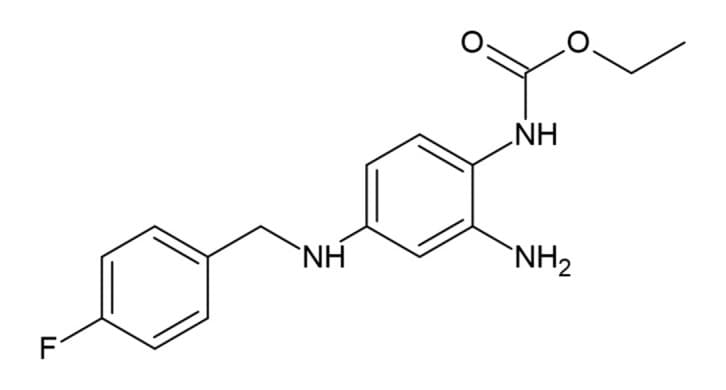
In June 2017, a seizure medicine called Potiga quietly disappeared from American pharmacies. GlaxoSmithKline pulled it worldwide, 6 years after approval, once reports of blue-gray skin discoloration and pigment changes in the retina had shrunk its prescriptions to almost nothing (FDA, 2013). For the small group of patients whose drug-resistant focal seizures had finally responded to it, there was no replacement. Potiga was the only drug of its kind.
The mechanism was the interesting part. Potiga's active ingredient, ezogabine, worked by opening Kv7 potassium channels, tiny gates on nerve cells that act like a natural off switch. Open the gates, potassium flows out, the cell settles down, and the runaway electrical bursts that start a focal seizure become harder to trigger. No other approved epilepsy drug before or since has worked that way. The chemistry failed. The target never did.
Nine years later, two companies are racing to finish what ezogabine started.
The Off Switch That Worked, Until It Didn't
Ezogabine won FDA approval in 2011 for hard-to-treat focal seizures. By 2013 the FDA had flagged something strange in long-term users: bluish skin, discolored nails and lips, and pigment abnormalities in the retina, the light-sensing tissue at the back of the eye (FDA, 2013). The culprit appears to have been a breakdown product of the molecule itself that deposited in tissue. Prescribers fled, and by 2017 GSK ended production for commercial reasons rather than any new efficacy problem.
That distinction matters for what came next. Drug hunters read the ezogabine story not as proof that Kv7 was a dead end but as proof that it worked, published in the strange currency of pharmaceutical failure: a validated target orphaned by a flawed molecule. Ezogabine was also promiscuous. It touched GABA-A receptors, which cause sedation, and it opened Kv7.4 and Kv7.5 channels as well as the 2 brain channels that matter most for seizures. A cleaner molecule that hit only the brain's Kv7.2 and Kv7.3 channels might keep the seizure control and shed the baggage. Two teams set out to build one.
Azetukalner Got to Phase 3 Focal Seizure Data First
On March 9, 2026, Xenon Pharmaceuticals reported topline results from X-TOLE2, the first completed Phase 3 trial of its Kv7 opener azetukalner (Xenon, 2026). The study enrolled 380 adults with focal seizures that had already defeated a median of 5 antiseizure medications. These were not easy patients. At baseline they averaged 12.75 seizures a month while taking their existing drugs.
Azetukalner 25 mg cut monthly seizure frequency by a median of 53.2%, against 10.4% for placebo, a placebo-adjusted difference of 42.7%. The lower 15 mg dose cut it by 34.5%. The high-dose result actually beat the company's own Phase 2b study, which is rare; effect sizes usually shrink as trials get bigger and messier. The most common side effects were dizziness, sleepiness, and headache, with no sign of the pigment problems that sank ezogabine (NeurologyLive, 2026).
“Median percent change in monthly focal onset seizure frequency was -53.2% in the 25 mg group versus -10.4% for placebo, with a p-value of 0.000000000006.”
Xenon Pharmaceuticals, X-TOLE2 topline results, March 2026
Xenon announced on September 17th, 2026 that it had submitted its FDA application. A second focal seizure trial, X-TOLE3, continues in parallel, along with a Phase 3 program in generalized tonic-clonic seizures. Patients from the earliest studies have now been followed on open-label drug for 4 years (Xenon, 2026).
Opakalim Is Biohaven's Bet on Tolerability
Biohaven's opakalim (BHV-7000) is the other horse. It was engineered specifically to avoid GABA-A activity, the pathway behind the sedation and mental fog that make many seizure medicines miserable to take. In May 2026 the company presented data highlighting what it called a markedly differentiated tolerability profile alongside meaningful seizure control: in the open-label extension, 54% of patients taking 75 mg once daily for at least 6 months saw their seizure frequency cut in half or better (Biohaven, 2026).
The retention numbers tell their own story. When Biohaven finished enrolling its RISE 3 pivotal study at the end of June, it reported that roughly 95% of participants completed the double-blind phase and roughly 95% of completers chose to roll over into the open-label extension (Biohaven, 2026). People do not stay on epilepsy drugs that make them feel terrible. A sister study, RISE 2, enrolled adults whose focal seizures persist despite 1 to 3 current medications, and it stopped taking new patients after the FDA placed a partial clinical hold on opakalim in September 2026 (BioPharma Dive, September 10th, 2026). Topline results from the pivotal program are expected before the end of 2026.
Biohaven has scar tissue here. Opakalim failed trials in bipolar disorder and depression in 2025, and the company has since concentrated the program entirely on epilepsy, where the biology of Kv7 is far better matched to the disease. A readout that approaches azetukalner's efficacy with a cleaner side-effect profile would set up a genuine commercial fight. A weak one would hand Xenon the class.
The Benchmark Maker Just Bought a Horse
On the morning of August 26, the race changed shape. SK Biopharmaceuticals, the South Korean company behind Xcopri, agreed to pay Biohaven $350 million upfront for worldwide rights to opakalim and the entire Kv7 platform, with another $50 million due next year and a total package that can reach $795 million (Fierce Biotech, 2026). The signature detail: SK signed before seeing any pivotal data. The topline readout is still months away.
Read that from SK's side. The company that owns the efficacy benchmark both Kv7 drugs are chasing looked at the field and decided it would rather own one of the challengers than compete against the mechanism. SK plans to carry opakalim through FDA submission and launch it in the U.S. as soon as 2029 through SK Life Science, the same subsidiary that commercialized Xcopri (SK Biopharmaceuticals, 2026). Biohaven keeps royalties and milestone payments while sidestepping the cost of building an epilepsy sales force from scratch, freeing its cash for the protein-degrader pipeline that now anchors the company. For patients, the practical meaning is that a positive readout now has an experienced epilepsy commercialization machine already attached to it.
What This Means If Your Focal Seizures Are Not Controlled
Roughly 30% of people with epilepsy never achieve seizure control with existing medications, a figure that has barely moved in 2 decades (Cenobamate and Drug-Resistant Epilepsy review, PMC 2023). For them, the practical question with any new drug is not whether it beats placebo but whether it works through a doorway their previous failures never tried. Every drug they have failed likely worked through sodium channels, SV2A, or GABA. Kv7 is a different doorway. Failing 5 drugs from the old classes says little about whether the sixth, working differently, will fail too. Cenobamate (Xcopri), approved in 2019, was the last genuinely new option to raise the efficacy bar, and it remains the benchmark both Kv7 drugs will be measured against.
There are 2 ways to act on this today rather than in 2027. The RISE 2 trial of opakalim stopped taking new patients in September 2026 under the FDA's partial hold, while Xenon's X-TOLE3 study of azetukalner (NCT05716100) is listed as recruiting on ClinicalTrials.gov. Our focal epilepsy page tracks every actively enrolling focal epilepsy study, with eligibility criteria translated into plain English. For the full story on either molecule, including how each one compares to the drugs you may already have tried, see our Drug Decoder entries for opakalim and azetukalner, or the profile of cenobamate they are both chasing.
The Next 5 Months
Between now and January, expect 3 things: word on whether the FDA accepts Xenon's application for review, opakalim's first pivotal readout, and, if that readout is positive, the first head-to-head arguments between Xenon and SK about which molecule owns the class. Azetukalner's first approval could plausibly arrive in 2027, a decade after the last Kv7 drug vanished, with SK targeting an opakalim launch as soon as 2029.
Somewhere in that gap are the patients who did well on Potiga in 2016 and then watched their only working medicine get discontinued for reasons that had nothing to do with them. For everyone else these two drugs are new. For that group, this is a homecoming, 9 years late.
One email when Focal Epilepsy trials change or an FDA decision lands. No newsletter, no spam.
You'll get new recruiting trials, changes to trials, FDA decisions and condition news for Focal Epilepsy. Turn any of these off from the link in every email.
Frequently Asked Questions About the Kv7 Epilepsy Drugs
What is opakalim (BHV-7000)?
Opakalim is an investigational once-daily oral seizure medication developed by Biohaven that opens Kv7.2/7.3 potassium channels, the natural off switch on overactive nerve cells. It is in two pivotal trials for drug-resistant focal epilepsy (RISE 2 and RISE 3), with first results expected before the end of 2026. In September 2026 the FDA placed a partial clinical hold that stops new enrollment while people already in the trials keep taking the drug. In August 2026, SK Biopharmaceuticals, the maker of Xcopri, licensed it worldwide and plans a U.S. launch as soon as 2029 if it wins approval.
Is azetukalner (XEN1101) FDA approved?
Not yet. Xenon Pharmaceuticals reported positive Phase 3 results in March 2026, with azetukalner 25 mg cutting monthly focal seizure frequency by a placebo-adjusted 42.7% in patients who had failed a median of 5 prior medications. Xenon submitted its FDA application on September 17th, 2026, which makes a first approval plausible in 2027.
What happened to Potiga (ezogabine)?
Potiga was the first Kv7-opening seizure drug, approved in 2011. The FDA warned in 2013 that long-term use could cause blue-gray skin discoloration and pigment changes in the retina, and prescriptions collapsed. GSK withdrew it worldwide in June 2017 for commercial reasons. The problem traced to the molecule's chemistry rather than the Kv7 mechanism, which is why 2 companies built cleaner successors.
Can I join a Kv7 epilepsy trial now?
Yes, though not in the opakalim program right now. The FDA's partial hold in September 2026 stopped new enrollment in RISE 2, while people already enrolled keep taking the drug. Xenon's X-TOLE3 study of azetukalner (NCT05716100) is listed as recruiting adults with focal seizures on ClinicalTrials.gov. Trial Friend's focal epilepsy page lists it alongside every other actively recruiting focal epilepsy study with eligibility criteria in plain English, and the Match Me tool can score your profile against them.