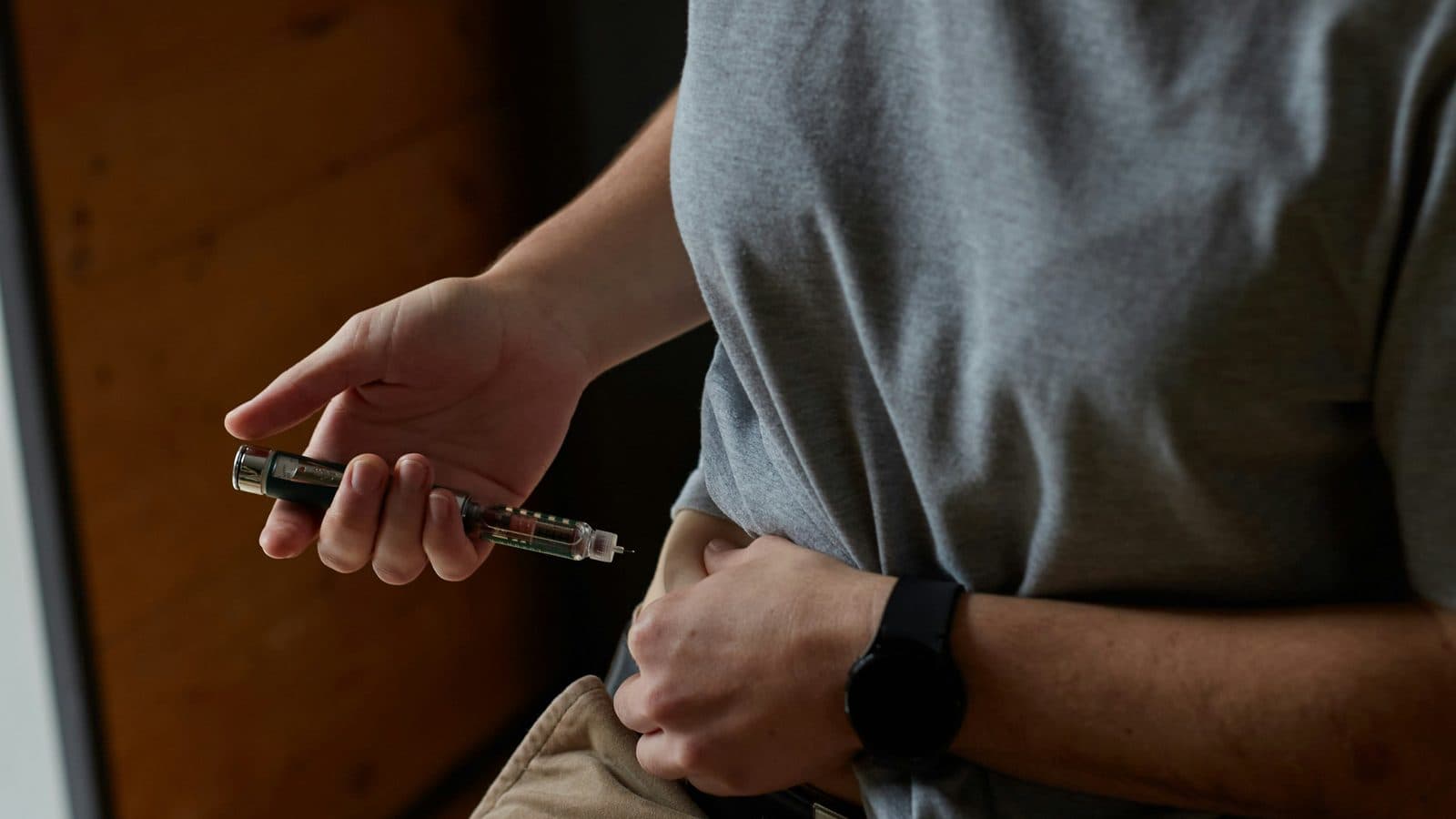
A father in a hemophilia parents' group once described his son's treatment calendar as a wall chart with a pin in every third day. That was factor VIII, infused into a vein 2 or 3 times a week, often through a port in a child's chest. Since 2017 the picture has changed in a way that is easy to miss if you were diagnosed before then: 4 FDA-approved medicines now prevent bleeds, which is what prophylaxis means, with an injection under the skin, none of them replaces factor VIII, and the gap between doses runs from 1 day to 2 months depending on which one you choose.
This guide puts Hemlibra, Hympavzi, Alhemo and Qfitlia side by side on the things that decide the choice in a clinic: who each one is approved for, how often it is injected, what the pivotal trials showed, which warnings sit on the label and what monitoring comes with it. It ends with denecimig, the once-monthly drug from Novo Nordisk that Europe's advisory committee endorsed on September 17th and that Novo expected the FDA to rule on by the end of September 2026.
Hemophilia A Prophylaxis in 2026 Comes in 3 Mechanisms
Hemophilia A means the body makes too little working factor VIII, a protein that holds 2 other clotting proteins, factor IXa and factor X, together long enough for a clot to form. For decades the only prevention was to infuse factor VIII itself. The 4 non-factor drugs take 3 different routes around that gap, and the route explains most of what follows about who can take each drug and what can go wrong with it.
- Factor VIIIa mimetics (Hemlibra, and denecimig if approved)
- An antibody with 2 arms that grabs factor IXa with one and factor X with the other, doing factor VIII's bridging job without being factor VIII. Because it is not factor VIII, inhibitors against factor VIII do not touch it. This route only helps hemophilia A, since hemophilia B is missing factor IX, one of the proteins being bridged.
- Anti-TFPI antibodies (Hympavzi and Alhemo)
- Tissue factor pathway inhibitor is a natural brake on the start of clotting. Blocking it lets the body form more clot-starting enzyme through a side door, which works whether the missing factor is VIII or IX. That is why both drugs are approved for hemophilia A and B, and why both carry a warning about blood clots.
- Antithrombin lowering (Qfitlia)
- Antithrombin is a different brake, one that shuts clotting down once it is running. Qfitlia is a small interfering RNA that tells the liver to make less of it. The dose is steered by a blood test so antithrombin lands in a window of 15% to 35% of normal, high enough to prevent clots and low enough to prevent bleeds.
The one-time gene therapy Roctavian sat outside all 3 groups. The FDA approved it in June 2023 for some adults with severe hemophilia A, and BioMarin withdrew it from the market on February 23, 2026 after failing to find a buyer, a decision the company said was not about safety or effectiveness. It is not an option for new patients today, which is why it does not appear in the comparison below.
- November 16, 2017Hemlibra approvedFirst non-factor prophylaxis, for hemophilia A with factor VIII inhibitors.
- October 4, 2018Hemlibra expandedEveryone with hemophilia A, newborn and older, with or without inhibitors.
- June 29, 2023Roctavian approvedOne-time gene therapy for some adults with severe hemophilia A.
- October 11, 2024Hympavzi approvedPeople 12 and older without inhibitors, hemophilia A or B.
- December 20, 2024Alhemo approvedPeople 12 and older with inhibitors, hemophilia A or B.
- March 28, 2025Qfitlia approvedPeople 12 and older, with or without inhibitors, hemophilia A or B.
- July 2025Alhemo expandedAdded people without inhibitors.
- February 23, 2026Roctavian withdrawnBioMarin pulled it from the market after failing to find a buyer.
- June 5, 2026Hympavzi expandedDown to age 6, with or without inhibitors.
- September 17, 2026Denecimig recommended in EuropeCHMP positive opinion as Frehemgo; US application filed September 2025.
- PendingDenecimig FDA decisionNovo expected it in the third quarter of 2026; none announced by September 30th.
Hemlibra (Emicizumab), the Hemophilia A Drug Approved From Birth
Hemlibra was first. The FDA approved it on November 16, 2017 for people with factor VIII inhibitors and widened the label on October 4, 2018 to everyone with hemophilia A, from newborns up, with or without inhibitors (Drugs@FDA, BLA 761083). Eight years on, it remains the only non-factor drug approved under age 6, and the only one that offers a choice of weekly, every-2-week or every-4-week maintenance after a 4-week loading period (Hemlibra prescribing information, July 2025).
The bleed data come from the HAVEN trials, which randomized people who had been treating bleeds on demand to Hemlibra or to no prophylaxis. In HAVEN 3, in people without inhibitors, the annualized rate of treated bleeds was 1.5 on weekly Hemlibra and 1.3 on every-2-week dosing against 38.2 with no prophylaxis, reductions of 96% and 97%. Between 56% and 60% of people on Hemlibra had no treated bleeds at all during the study. The same trial also compared 48 people with their own records from a prior period on factor VIII prophylaxis, and Hemlibra cut treated bleeds by 68%, from 4.8 a year to 1.5 (Hemlibra prescribing information, HAVEN 3). In HAVEN 1, in people with inhibitors, the rate was 2.9 against 23.3, an 87% reduction (Hemlibra prescribing information, HAVEN 1). The every-4-week schedule was studied in HAVEN 4 and produced a treated bleed rate of 2.6, with 53% of people bleed-free.
Two quieter points matter in daily life. Hemlibra throws off common clotting lab tests, including the aPTT and the usual factor VIII level test, so every lab and emergency room needs to know you take it, and the label says the Bethesda test that measures inhibitors has to be a specific kind, the bovine chromogenic version, to read correctly. Some people also develop antibodies to Hemlibra itself that make it stop working, which shows up as a return of bleeds. The most common side effects were injection site reactions in 22% of people, headache in 15% and joint pain in 15% (Hemlibra prescribing information, 2025).
Hympavzi (Marstacimab), Weekly From Age 6 for Hemophilia A or B
Pfizer's Hympavzi was approved on October 11, 2024 for people 12 and older without inhibitors, and on June 5, 2026 the FDA extended it to people 6 and older with or without inhibitors, in hemophilia A or B (Drugs@FDA, BLA 761369). The dose does not depend on weight the way Hemlibra's does. Adults and teens take a 300 mg loading dose, then 150 mg once a week from a prefilled pen, with an option to go to 300 mg weekly if bleeds continue and the person weighs at least 50 kilograms. Children aged 6 to 11 take half those amounts (Hympavzi prescribing information, June 2026).
The BASIS trial used a design none of the other drugs did: every participant spent 6 months on their usual factor treatment while bleeds were counted, then 12 months on Hympavzi, so each person was compared with themselves. For the 33 people who had been treating bleeds on demand, treated bleeds fell from 39.9 a year to 3.2, a 92% reduction. For the 83 who had already been on factor prophylaxis, the rate went from 7.9 to 5.1, which met the trial's test for being no worse than factor and leaned better. In the 48 people with inhibitors who had been using bypassing agents on demand, bleeds fell from 19.8 to 1.4, a 93% reduction (Hympavzi prescribing information, BASIS). In children aged 6 to 11 without inhibitors who had been on factor prophylaxis, the treated bleed rate on Hympavzi was 1.4, and in the 7 children of that age with inhibitors it was 1.3 (Hympavzi prescribing information, BASIS KIDS interim analysis).
Blood clots were reported in 2 of 259 people in the extension study, 0.8%, and the label tells doctors to weigh that risk in anyone with their own clotting risk factors and to pause the drug at least 7 days before major surgery. Hympavzi also carries a warning that it may harm an unborn baby, with a recommendation for birth control during treatment and for 2 months after. Injection site reactions were the most common side effect at 12%, followed by headache at 7% (Hympavzi prescribing information, 2026).
Alhemo (Concizumab), the Daily Pen With a Week 4 Blood Level Check
Alhemo from Novo Nordisk is the other anti-TFPI antibody and the one with the most frequent dosing: a loading dose of 1 mg per kilogram on day 1, then 0.2 mg per kilogram every day. About 4 weeks in, a blood test measures how much concizumab is circulating, and the daily dose is adjusted by the result: up to 0.25 mg per kilogram if the level is under 200 nanograms per milliliter, the point below which the label says bleed protection falls off, down to 0.15 if it is above 4,000, and unchanged in between. The label asks for repeat level checks at routine follow-ups once the dose is stable. The FDA approved it on December 20, 2024 for people 12 and older with inhibitors and expanded it in July 2025 to those without, for hemophilia A or B (Drugs@FDA, BLA 761315; Alhemo prescribing information, July 2025).
In explorer7, the inhibitor trial, people who had been treating bleeds on demand with bypassing agents were randomized to Alhemo or no prophylaxis. Treated bleeds ran 1.7 a year on Alhemo against 11.8 without, an 86% reduction. In explorer8, the non-inhibitor trial, the hemophilia A result was 2.7 against 19.3, also an 86% reduction (Alhemo prescribing information, explorer7 and explorer8). Clots occurred in 6 of 320 people across the program, 1.9%, and the label notes that in 2 of the 6 the clot followed high or prolonged doses of factor or bypassing agent for a bleed. Injection site reactions were reported by 18% of people on Alhemo in explorer7 against none in the on-demand arm, and hives by 6%.
The daily schedule is the obvious cost, and the label is blunt that missed doses matter, especially in the first 4 weeks while the maintenance dose is being set. The daily pen is also the reason Alhemo can be dialed in so precisely, and some people prefer a small routine every morning to a larger dose they might forget once a month.
Qfitlia (Fitusiran), Every 2 Months but With the Heaviest Monitoring
Qfitlia, from Sanofi and Alnylam, was approved on March 28, 2025 for people 12 and older with hemophilia A or B, with or without inhibitors (Drugs@FDA, NDA 219019). It starts at 50 mg under the skin once every 2 months, which on paper is 6 injections a year. The schedule is only part of the story, because the dose is adjusted to a blood test. Antithrombin activity is measured before the first dose, and the drug cannot be started if it is already below 60%. It is measured again at months 1, 3, 5 and 6 and after any dose change, then once a year. If antithrombin drops under 15%, the dose comes down; if it stays above 35% after 6 months or bleeds are not controlled, the schedule moves to monthly (Qfitlia prescribing information, September 2025).
That window exists because of what happened at the original dose. The pivotal ATLAS trials tested 80 mg every month, and at that dose blood clots occurred in 2.6% of people, including a fatal clot in a vein draining the brain. The 80 mg monthly dose is not approved. Under the antithrombin-guided regimen, clots occurred in 1.4% of people, or 0.8 events for every 100 years of treatment added up across participants. Gallbladder disease is the second boxed warning: gallstones and gallbladder inflammation occurred, some needing surgery or causing pancreatitis, and the label says to consider another hemophilia treatment for anyone with a history of symptomatic gallbladder disease. Liver enzyme rises are not part of the boxed warning but add a third monitoring requirement, liver tests monthly for at least 6 months and after dose increases (Qfitlia prescribing information, boxed warning and section 5).
The bleed data under the approved regimen come from the ATLAS-OLE extension study, compared against the on-demand control groups of the earlier trials. In people with inhibitors, treated bleeds ran 5.1 a year against 19.1 on demand, a 73% reduction. In people without inhibitors, 9.0 against 31.4, a 71% reduction. Across everyone on the antithrombin-guided dose, the median observed treated bleed rate was 3.7 (Qfitlia prescribing information, ATLAS-OLE). Those are the highest bleed rates among the 4 drugs, with the caveat that comes up again below: the trials enrolled different people in different years, and no study has lined the drugs up against each other.
The dosing data are the part most worth knowing before you start. Of the people who began on 50 mg every 2 months, 36% stayed there, 31% were lowered to 20 mg every 2 months, 16% were raised to 50 mg monthly, and 3% ended on 20 mg monthly. Another 15% stopped Qfitlia because their antithrombin fell below 15% more than once (Qfitlia prescribing information, section 14). About two thirds stayed on an every-2-month injection, many at the lower dose, roughly 1 in 5 moved to monthly, and 1 in 7 could not stay on the drug at all.
Denecimig (Mim8) and the FDA Decision Novo Expected in the Third Quarter of 2026
Denecimig is Novo Nordisk's second-generation factor VIIIa mimetic, the same mechanism as Hemlibra, built to be given once a month, once every 2 weeks or once a week from a single-use prefilled pen. Novo filed its application with the FDA in September 2025 and, in its half-year report on August 4, 2026, listed a US decision as expected in the third quarter of 2026 without naming a date (Novo Nordisk, August 2026). On September 17, 2026 the CHMP, the European Medicines Agency's advisory committee, recommended approval under the brand name Frehemgo for adults and children with hemophilia A, with or without inhibitors, and Novo said it expects to launch in the first European countries in the fourth quarter of 2026 (Novo Nordisk, September 2026). As of September 30th, Novo had not announced an FDA decision. The FDA calendar page for denecimig will update the moment it does.
The pivotal trial, FRONTIER2, included 254 people aged 12 and older in its main analysis, 12% of them with inhibitors, and compared 26 weeks of monthly or weekly denecimig with each person's prior treatment. Results were published in the New England Journal of Medicine on April 30, 2026. Monthly denecimig cut treated bleeds by about 99% compared with on-demand treatment and by about 43% compared with the participant's previous factor prophylaxis; weekly denecimig cut them by about 96% and 54%. Between 64% and 95% of people on denecimig had no treated bleeds, depending on the arm, against 0% to 37% on their prior treatment. No blood clots and no clinical evidence of neutralizing antibodies were reported, and 10% of participants had an injection site reaction (Mancuso et al., NEJM 2026, via Novo Nordisk).
The question people on Hemlibra will ask is whether they can switch, and Novo ran a trial for exactly that. FRONTIER5 moved people directly from emicizumab to denecimig, and Novo reported no new safety signals and a preference for the denecimig pen (Hermans et al., Journal of Thrombosis and Haemostasis 2026, via Novo Nordisk). None of that is a US label yet. Until the FDA acts, the once-monthly option in the United States is Hemlibra's every-4-week schedule.
Hemlibra vs Hympavzi vs Alhemo vs Qfitlia, Side by Side
| Hemlibra | Hympavzi | Alhemo | Qfitlia | |
|---|---|---|---|---|
| Generic name and maker | Emicizumab, Genentech (Roche) | Marstacimab, Pfizer | Concizumab, Novo Nordisk | Fitusiran, Sanofi and Alnylam |
| How it works | Bridges factor IXa and factor X in place of factor VIII | Blocks TFPI, a brake on the start of clotting | Blocks TFPI | Lowers antithrombin, a brake that shuts clotting down |
| First FDA approval | November 16, 2017 | October 11, 2024 | December 20, 2024 | March 28, 2025 |
| Hemophilia types | A only | A and B | A and B | A and B |
| Youngest age | Newborn | 6 years | 12 years | 12 years |
| Inhibitors | With or without | With or without | With or without | With or without |
| Maintenance schedule | Weekly, every 2 weeks or every 4 weeks, by weight | 150 mg weekly (75 mg for ages 6 to 11) | 0.2 mg/kg daily, adjusted to a blood level | 50 mg every 2 months, adjusted to antithrombin |
| Injections per year once settled | 13 to 52 | 52 | 365 | 6, or 12 if raised to monthly |
| Treated bleeds vs on demand, no inhibitors | 1.5 vs 38.2 (96%) | 3.2 vs 39.9 (92%, A and B) | 2.7 vs 19.3 (86%) | 9.0 vs 31.4 (71%) |
| Treated bleeds vs on demand, with inhibitors | 2.9 vs 23.3 (87%) | 1.4 vs 19.8 (93%, A and B) | 1.7 vs 11.8 (86%) | 5.1 vs 19.1 (73%) |
| Boxed warning | Yes, clots and thrombotic microangiopathy with high-dose aPCC | None | None | Yes, blood clots and gallbladder disease |
| Clots reported in trials | Only with aPCC | 0.8% (2 of 259) | 1.9% (6 of 320) | 1.4% on the approved regimen |
| Required blood tests | None for dosing; affects clotting tests | None for dosing | Drug level at week 4, then at follow-ups | Antithrombin at months 1, 3, 5, 6, then yearly; liver tests monthly for at least 6 months |
| Trial Friend drug page | Hemlibra | Hympavzi | Alhemo | Qfitlia |
Which Hemophilia A Prophylaxis Fits Which Situation
The labels draw some lines for you. A child under 6 has one non-factor option, Hemlibra. A child aged 6 to 11 has 2, Hemlibra and Hympavzi. Someone with hemophilia B is choosing among Hympavzi, Alhemo and Qfitlia, because a factor VIIIa mimetic cannot help a person missing factor IX. Everything else is a judgment call that depends on the person, and these are the questions that tend to decide it.
- Injection count
- If the answer is as few as possible, Qfitlia's 6 a year is the floor; about two thirds of trial participants stayed on the every-2-month schedule, roughly 1 in 5 moved to monthly, and it comes with the most blood draws. Hemlibra every 4 weeks is 13 a year with no dosing tests.
- FEIBA for breakthrough bleeds
- That bypassing agent is the trigger for Hemlibra's boxed warning at high doses. Treatment centers sometimes steer people with inhibitors who rely on it toward an anti-TFPI drug or Qfitlia, or change the breakthrough plan to recombinant factor VIIa, the other bypassing agent, before starting Hemlibra. The decision belongs with a hemophilia treatment center.
- Your own clot risk
- Hympavzi, Alhemo and Qfitlia all warn about blood clots, and their trials excluded people with a history of them. Qfitlia's label lists 3 more risk factors: a port or other indwelling catheter, antithrombin under 15%, and the period after surgery when the label's bleed management rules are not followed. Someone with a port, a past clot or heart disease needs that conversation before any of the 3.
- Blood tests between doses
- Alhemo needs a drug level test at week 4 to set the dose, then repeat checks at routine follow-ups. Qfitlia needs antithrombin checks before the first dose and 4 more times in the first 6 months, plus liver tests monthly for at least 6 months. Hemlibra and Hympavzi have no dosing blood tests between doses; whether that outweighs the other differences is a question for your treatment center.
- A history of gallbladder trouble
- Qfitlia's label says to consider a different treatment if you have had symptomatic gallbladder disease. The other 3 do not carry that warning.
- Already on Hemlibra and thinking about monthly dosing
- Hemlibra's own every-4-week schedule is approved now. Denecimig, the other monthly option, is still under FDA review as of September 30, 2026, and the switch study that moved people directly from emicizumab is the evidence your hematologist will want to see once denecimig has a US label.
Paying for Hemlibra, Hympavzi, Alhemo or Qfitlia
All 4 makers run copay programs for people with commercial insurance and free-drug programs for people who qualify by income, and all but Genentech list a bridge supply while an insurer decides. Genentech's Hemlibra program is reachable at 877-233-3981, Pfizer Hemophilia Connect at 888-733-2030, NovoCare for Alhemo at 844-668-6732 and Sanofi HemAssist for Qfitlia at 833-723-5463. Trial Friend's patient assistance finder lists each program's offers and the charity funds that cover hemophilia, and re-checks every week whether each fund is open.
Medicare is the harder case, because manufacturer copay cards cannot be used with it. If you are on Medicare and a prior authorization or a formulary exclusion stands between you and one of these drugs, the guide to appealing an insurance denial walks through the letter, the deadlines and the external review.
One email when Hemophilia A trials change or an FDA decision lands. No newsletter, no spam.
Hemophilia A Prophylaxis Questions People Ask
Which hemophilia A drug requires the fewest injections?
Qfitlia starts at 1 injection every 2 months, 6 a year. The dose is adjusted to antithrombin blood tests; about two thirds of trial participants stayed on the every-2-month schedule and roughly 1 in 5 moved to monthly. Hemlibra's every-4-week schedule is 13 injections a year with no dosing blood tests. Hympavzi is weekly and Alhemo is daily. Denecimig, under FDA review, is designed for monthly, every-2-week or weekly dosing.
Is Hemlibra better than Hympavzi?
No trial has compared them. In their own trials, Hemlibra cut treated bleeds by 96% to 97% against no prophylaxis in people without inhibitors, and Hympavzi cut them by 92% against each person's own prior on-demand period. Hemlibra is approved from birth and its clot warning applies only in combination with high doses of the bypassing agent aPCC; Hympavzi is approved from age 6, covers hemophilia B as well, and warns about blood clots, which occurred in 0.8% of people in its extension study.
Can a child with hemophilia A take Hympavzi, Alhemo or Qfitlia?
Hympavzi is approved from age 6. Alhemo and Qfitlia are approved from age 12. Hemlibra is the only non-factor prophylaxis approved for children under 6, and its label says children under 7 should not self-inject.
Does Hemlibra work if you have inhibitors?
Yes. Hemlibra mimics factor VIII rather than being factor VIII, so inhibitors do not block it. In HAVEN 1, people with inhibitors had 2.9 treated bleeds a year on Hemlibra against 23.3 with no prophylaxis. The caution is the bypassing agent aPCC (FEIBA): at more than 100 units per kilogram a day for 24 hours or longer alongside Hemlibra, it caused clots and thrombotic microangiopathy, which is the subject of Hemlibra's boxed warning.
Why does Qfitlia have a boxed warning?
The label gives 2 reasons. At the original 80 mg monthly dose, blood clots occurred in 2.6% of trial participants, including one fatal clot in a brain vein, so the approved regimen keeps antithrombin between 15% and 35% with regular blood tests. On that regimen clots fell to 1.4%. Gallbladder disease, including gallstones and inflammation that sometimes needed surgery, is the second warning. The label also requires monthly liver tests for at least 6 months.
When will the FDA decide on denecimig for hemophilia A?
Novo Nordisk filed in September 2025 and said in August 2026 that it expected a US decision in the third quarter of 2026, which ended September 30th. No decision had been announced by then. Europe's CHMP recommended approval as Frehemgo on September 17, 2026. The Trial Friend FDA calendar page for denecimig is updated when the decision is announced.
Can you switch from Hemlibra to denecimig?
Not in the United States yet, because denecimig is not approved. Novo's FRONTIER5 trial switched people directly from emicizumab to denecimig and reported no new safety signals, which is the evidence a hematologist would use once a US label exists.
Do these drugs replace factor VIII completely?
For routine prevention they take its place; for bleeds and surgery they do not. Each label sets its own waiting period between the last dose of factor or bypassing agent and the first dose of the new drug, from the day before for Hemlibra to up to a week of overlap for Qfitlia, and your treatment center schedules that switch. For a breakthrough bleed or surgery you still need factor VIII or a bypassing agent, and each label has specific rules about which one and how much, because the combination is where the clot risk lives.