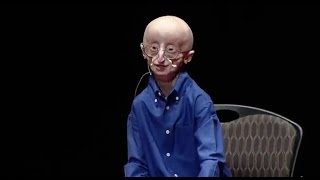
About Progeria
Progeria (Hutchinson-Gilford progeria syndrome, HGPS) is an extraordinarily rare autosomal dominant disorder caused by a point mutation (c.1824C>T) in the LMNA gene occurring de novo in almost all cases. The mutation produces a truncated lamin A protein that accumulates within the nuclear envelope, impairing nuclear function and causing cellular dysfunction.
Affected children appear normal at birth but within the first year develop signs of rapidly accelerated aging: growth failure despite normal appetite, progressive alopecia with characteristic loss of eyebrows and lashes, distinctive facial features (micrognathia, prominent ears), and development of cardiovascular disease. Progressive atherosclerosis leads to myocardial infarction and stroke, typically in early teens.
Children develop age-related diseases including hypertension, stiff joints, and skeletal abnormalities. Median lifespan is approximately 13-14 years, with death usually from cardiac events. The rapidity of aging makes progeria invaluable for studying aging biology.
Common Symptoms of Progeria
Recognizing the signs of Progeria early can lead to faster diagnosis and better outcomes. Symptoms may vary in severity from person to person. If you or a loved one are experiencing any of the following, consider speaking with a specialist.
- Growth retardation and failure to thrive despite normal appetite
- Progressive alopecia (hair loss) and loss of eyebrows
- Distinctive facial features: micrognathia, prominent ears
- Progressive cardiovascular disease and hypertension
- Atherosclerosis and increased stroke risk
- Skeletal abnormalities including stiff joints and hip/knee problems
Who Progeria Affects
Autosomal dominant disorder, almost always due to de novo LMNA mutations. Median age of death about 13-14 years, usually from myocardial infarction or stroke. No ethnic predisposition. Affects males and females equally.
Find Your Next Step
Answer a few questions and we'll point you to the right tools and information for where you are right now.
Help Paying for Progeria Treatment
Charity funds and drugmaker programs for Progeria, checked at the source. Pick your insurance to see what fits.
- From a charity · NORD RareCareProgeria & Progeroid Laminopathies Copay Assistance fundOpen
Pays for: Insurance premiums and copays.
The foundation says: “Accepting new applications and re-enrollments for current year” - From a charity · NORD RareCareProgeria & Progeroid Laminopathies Medical Assistance fundOpen
Pays for: Medical and medication costs.
The foundation says: “Accepting new applications and re-enrollments for current year”
Side Effect Explorer
Real-world side effect reports from the FDA Adverse Event Reporting System (FAERS). Includes both FDA-approved drugs and investigational therapies from active clinical trials. Click any drug to see what patients reported.
Loading side effect data...
Genetic Testing
Genetic testing can confirm a diagnosis, guide treatment decisions, and identify family members who may be at risk.
Finding labs...
Trusted Progeria Resources
Reputable organizations and medical references for learning more about Progeria, including disease registries, foundation resources, and clinical guidelines.